
About David Roediger
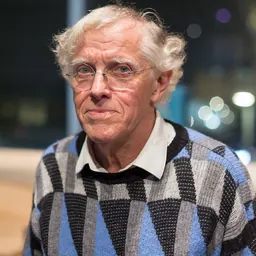
Born 1952. David Roediger is an American historian and university teacher.
David R. Roediger (born July 13, 1952) is the Foundation Distinguished Professor of American Studies and History at the University of Kansas, where he has been since the fall of 2014. Previously, he was an American Kendrick C. Babcock Professor of History at the University of Illinois at Urbana-Champaign (UIUC). His research interests include the construction of racial identity, class structures, labor studies, and the history of American radicalism.
Early life and education Roediger was born on July 13, 1952, in Columbia, Illinois. He attended local public schools through high school. He earned a Bachelor of Science degree in education from Northern Illinois University in 1975. He went on to do graduate study and earned a PhD in history from Northwestern University in 1980, where he wrote a dissertation under the direction of George M. Fredrickson.
Academic career He was assistant editor of the Frederick Douglass Papers at Yale University from 1979 to 1980.
After receiving his doctorate, Roediger was a lecturer and assistant professor of history at Northwestern University from 1980 to 1985. He served as an assistant professor at the University of Missouri in 1985, rising to full professor in 1992. He moved to the University of Minnesota in 1995, and was chair of the university's American Studies Program from 1996 to 2000.
In 2000, he was appointed professor of history at the University of Illinois at Urbana-Champaign. Roediger has also served as the director for the Center on Democracy in a Multiracial Society at UIUC. Beginning in the fall of 2014, he has been the Foundation Distinguished Professor of American Studies and History at the University of Kansas. Roediger is a member of the board of directors of the Charles H Kerr Company Publishers, a position he has held since 1992.
Research Roediger's research interests primarily concern race and class in the United States, although he has also written on radicalism in American history and politics.
In 1989, Roediger and historian Philip Foner co-authored Our Own Time: A History of American Labor and the Working Day, a book that provides a highly detailed account of the movement to shorten the working day in the United States. The work broke new ground by combining labor history with a study of culture and the nature of work. The book also extended the history of the eight-hour day movement to colonial times. The authors argued that debate over the length of the work-day or work-week has been the central issue of the American labor movement during periods of high growth.
The Wages of Whiteness
Roediger's book, The Wages of Whiteness: Race and the Making of the American Working Class, was published in 1991 and is considered one of the most influential works in the field of whiteness studies. Wages of Whiteness won the Merle Curti Award in 1992 from the Organization of American Historians, for the best work of social history in 1991.
Theodore W. Allen's "Class Struggle and the Origin of Racial Slavery: The Invention of the White Race" (1975), a pamphlet that later was expanded into his seminal two-volume work The Invention of the White Race, Vol. 1: Racial Oppression and Social Control (1994, 2012) and The Invention of the White Race, Vol. 2: "The Origin of Racial Oppression in Anglo-America" (1997, 2012); has also been influential in this field. The argument was also in some regards anticipated by Abram Lincoln Harris' radical scholarship in the 1920s. Allen later wrote of Roediger's work: "...because of its almost universal acceptance for use in colleges and universities, has served as the single most effective instrument in the socially necessary consciousness-raising function of objectifying 'whiteness,' and in popularizing the 'race-as-a-social-construct' thesis. As one who has been the beneficiary of kind supportive comments from him for my own efforts in this field of historical investigation, I undertake this critical essay with no other purpose than furthering our common aim of the disestablishment of white identity, and the overthrow of white supremacism in general."
In the work, Roediger argued that "whiteness" is a historical phenomenon in the United States, as many different ethnicities now considered "white" were not initially perceived as such here. The Irish, for example, as Roman Catholics and from rural areas, were not considered "white" – meaning accepted as members of the Anglo-American Protestant majority society – until they began to distinguish themselves from black slaves and freedmen; from the New York Draft riots of 1863, to riots in Philadelphia against black voting, and the Chicago Race riot of 1919, ethnic Irish were prominent in violent confrontations against black Americans, with whom they competed for jobs, physical territory and political power. Roediger believes their struggle reflects the emergence of the modern theory of Color Consciousness, through which notions of "nations" and "races" were increasingly linked to color as the primary category of human difference. Roediger claims that the social construction of the concept of a white race in the United States was a conscious effort by slave owners to gain distance from those they enslaved, who were generally non-European and non-Christian. In addition, white working peoples gained distance from their Southern proletarian complements, the slaves. By the 18th century, he says, "white" had become well-established as a racial term in the United States; by the end of the 19th, it had become an all-encompassing one.
Recent work Roediger is researching the interrelation between labor management and the formation of racial identities in the U.S.
Awards
1992, the Merle Curti Award for his book, The Wages of Whiteness: Race and the Making of the American Working Class, by the Organization of American Historians. 1999, the Carlton C. Qualey Memorial Award for his article "Inbetween Peoples," co-authored with James Barrett. The award is given by the Immigration and Ethnic History Society for the best article in the Journal of American Ethnic History.
Don’t just read it —
keep it.
Full-length biographies made to live with: read them, listen on the way to work, watch them tonight.
- E-book
- Audio
- Video
Instant download · yours to keep · every purchase keeps this site free
Important facts
People in David Roediger's life
Named in this biography and alive at the same time

Related people
Same field, nearest in time



Contemporaries
People whose lives overlapped David Roediger's

Frequently asked questions
Who is David Roediger?
American historian (1952-)
When was David Roediger born?
David Roediger was born on 13 July 1952 in Columbia.
What is David Roediger's occupation?
David Roediger is a historian and university teacher.
What nationality is David Roediger?
David Roediger is American.
Sources & further reading
Cite this page
APA: Biography.guide. (2026). David Roediger. https://biography.guide/david-roediger/
MLA: "David Roediger." Biography.guide, https://biography.guide/david-roediger/.
Chicago: "David Roediger." Biography.guide. https://biography.guide/david-roediger/.
Data last updated: 2026-09-22 · Spot an error? Report a correction.
Page generated 2026-09-27 05:24 UTC