
About David Orton
Lived 1934 – 2011 (aged 77). David Orton was a Canadian ecologist.
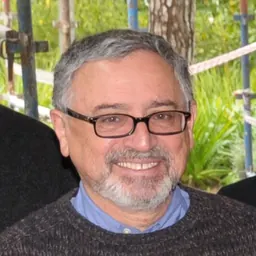
David Keith Orton (January 6, 1934 – May 12, 2011) was a Canadian writer, thinker and environmental activist who played a leading role in developing "left biocentrism" within the philosophy of deep ecology. Orton and his collaborators added the word "left" to biocentrism to indicate their anti-industrial, anti-capitalist orientation and their concern for social justice. Their 10-point Left Biocentrism Primer, published in 1998, accepts the idea that the natural world belongs to all living things, but it also calls for the ethical principles of deep ecology to be applied to sensitive political issues such as working for a reduction in the human population, achieving justice for aboriginal peoples, struggling for workers' rights and redistributing wealth. Orton, however, frequently asserted that the rights of nature had to come first. "Social justice is only possible in a context of ecological justice," he wrote. "We have to move from a shallow, human-centered ecology to a deeper all-species centered ecology." Elsewhere he added: "There is no justice for people on a dead planet." "An industrial capitalist society, that does not recognize ecological limits but only perpetual economic expansion and has the profit motive as driver, will eventually consume and destroy itself," he wrote in an online commentary. "But we will all be taken down with it." Orton himself said that left biocentrism views all living things and the Earth itself as sharing a community. "With such a community," he wrote, "there is a sense of Earth spirituality, as in past animistic indigenous societies, where it acted as a restraint upon human exploitation of nature." Thinkers who influenced Orton and his left-biocentric colleagues included Arne Næss, Richard Sylvan, Rudolph Bahro, and John Livingston.
David Orton practised the voluntary simplicity that is a central tenet of left biocentrism. For 27 years, he lived with his wife and frequent co-author Helga Hoffmann-Orton in a small, 100-year-old farmhouse in Pictou County, Nova Scotia. They grew much of their own food and watched as their 130-acre property gradually reverted to forest habitat for a variety of plants, animals and birds. Orton died of pancreatic cancer in 2011 at age 77. At his own request, he was given a "deep green" burial in the forest near his home.
Making of an activist
Early life and education
David Orton was born in 1934 in the industrial city of Portsmouth, England. He was one of four boys growing up in a working-class family. In an online autobiography he published six weeks before his death, Orton wrote of his early interest in nature. "In Portsmouth, near where I lived, we had the mudflats of Langston Harbour and not too far away was Farlington Marshes, with its many ducks and geese. Opposite our house was Baffin’s Pond – a large pond with willow trees, swans, ducks, geese, carp and eels."
After failing the exams which "streamed" students to academic or technical programs, Orton ended up at a technical school he disliked because it prepared students for industrial work. Its only redeeming feature for him was its field club which undertook expeditions into the English countryside.
Gunilla Larsson joined Orton in New York and they were eventually married. Their son Karl (named after Karl Marx) was born in New York. A daughter, named Johanna, was born later in Montreal. On campus, Orton joined other students in demanding that their professors give them more of a say in the content of the courses they were being taught. "It was an uphill battle," Orton writes.
Orton and Gunilla resigned from the Marxist-Leninists in 1975 because they felt the party organization was undemocratic. The report, entitled "The Case against the Southern Moresby Wilderness Proposal," pointed to a number of contradictions in the naturalists' position.
Orton writes that he and Gunilla Larsson decided to separate shortly after arriving in the Queen Charlotte Islands. "It was a difficult, although friendly, parting," he adds. "(She eventually took our children, Karl and Johanna, back to Sweden.)" Orton decided to move in with Helga Hoffmann, a woman he knew from his days as a Marxist-Leninist. Hoffmann, whom he would later marry, lived in Victoria, B.C.
Helga brought a two-person kayak up to the Charlottes and we took it into the Southern Moresby Wilderness Proposal area. We mainly lived off edible plants and the fish we caught from the kayak. It was a pretty unplanned trip, with no life jackets or signalling gear, just a compass and a map. This forced us to confront and adjust to some extreme weather, plus the natural rhythms of the oceans. I believe this trip was important in developing my environmental consciousness.
In September 1979, Orton, then 45, moved with Helga Hoffmann-Orton to Nova Scotia. By the mid-1980s, they were living with their one-year-old daughter, Karen, on a 130-acre farm in Pictou County.
Orton also contributed to Canadian Dimension, a left-wing, anti-corporate magazine. Some of his articles explored what Orton himself acknowledged was an extremely sensitive topic—relations between environmental groups and aboriginal peoples. While he contended that environmentalists needed to form alliances with aboriginal peoples, he also warned against what he saw as an uncritical endorsement of aboriginal positions that violated biocentric or Earth-first principles. He pointed, for example, to aboriginal support for the fur industry and commercial trapping as well as for the killing of wolves in the Yukon to save a caribou herd. Orton criticized the portrayal of native peoples as having lived in complete harmony with nature before the coming of Europeans. He argued that aboriginal groups had hunted several large animals to extinction including mammoths, mastodons and giant bison. "In Canada, a class-based industrial capitalist society imprints its value system upon Native communities as well as upon the non-Native environmental movement," he wrote. "It is not helpful to present a romanticized view of the past as the contemporary Indigenous reality."
During his years in Nova Scotia, Orton took part in many environmental campaigns against what he saw as destructive practices. He vigorously opposed forest clearcutting and spraying; the slaughter of seals; the widespread use of all-terrain vehicles; uranium mining and the installation of industrial wind turbines.
In his article, My Path to Left Biocentrism: Part II-Actual Issues, Orton writes about living 30 kilometres from a big pulp mill and smelling its hydrogen sulphide emissions when the wind blew in his direction. He could also hear the noises from big forestry machines clearcutting huge areas, many of which were sprayed with biocides:
These clearcuts have also meant extensive wildlife habitat destruction, blowdowns in adjacent woodlots, increased human recreational access, and a significant lowering of water levels in the river, the West River, which runs through the valley. Very large areas around here have absolutely no forest canopy remaining. This environmental vandalism, a direct consequence of the softwood, pulp mill forestry orientation in Nova Scotia, has intensified throughout the province. This is the on-ground reality, no matter the increasing use of "eco-rhetoric" by the companies and their government regulatory partners, e.g. proposed "model forests" or "integrated resource management" of crown lands; no matter the increasing awareness of deep ecology by some environmentalists; or the forestry critiques which have come from a number of people, including myself.
Orton writes that it is these concrete examples of forest and wildlife destruction that form the basis for "mobilizing activists to fight pulp mill forestry and to fight biological and chemical herbicide spraying programs." He adds that the term "pulp mill forestry" encompasses pulp mills themselves as well as industrial practices such as forest spraying and clearcutting. "The issues are interdependent and need to be fought together."
Don’t just read it —
keep it.
Full-length biographies made to live with: read them, listen on the way to work, watch them tonight.
- E-book
- Audio
- Video
Instant download · yours to keep · every purchase keeps this site free
Important facts
People in David Orton's life
Named in this biography and alive at the same time



Related people
Same field, nearest in time



Contemporaries
People whose lives overlapped David Orton's




Frequently asked questions
Who was David Orton?
Canadian ecologist
When was David Orton born?
David Orton was born on 6 January 1934 in Portsmouth.
When did David Orton die?
David Orton died on 12 May 2011.
What was David Orton's occupation?
David Orton was an ecologist.
What nationality was David Orton?
David Orton was Canadian.
Sources & further reading
· DBpedia: David Orton (deep ecology)
Cite this page
APA: Biography.guide. (2026). David Orton. https://biography.guide/david-orton/
MLA: "David Orton." Biography.guide, https://biography.guide/david-orton/.
Chicago: "David Orton." Biography.guide. https://biography.guide/david-orton/.
Data last updated: 2026-09-20 · Spot an error? Report a correction.
Page generated 2026-09-27 05:30 UTC