
About David Morier
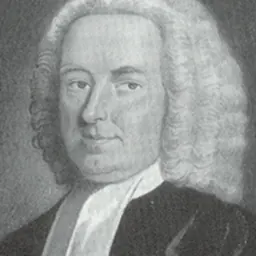
Lived 1705 – 1770 (aged 64–65). David Morier was a Swiss painter.
David Morier (1705? – ) was a Swiss-born British painter who specialised in portraits, military subjects and historical scenes around and after the time of the War of the Austrian Succession and the Jacobite rising of 1745.
Equestrian portraits Considered one of the most expensive paintings by David Morier ever sold at auction: The equestrian portrait of Prince Henry, Duke of Cumberland and Strathearn, wearing the Order of the Garter.
When it came to portraits of kings and nobles, David Morier specialised in equestrian portraits. Morier painted equestrian portraits of some of the most famous aristocratic figures of his time, including King George II, King George III, Frederick, Prince of Wales, Prince William, Duke of Cumberland, Prince Henry, Duke of Cumberland and Strathearn, King Frederick II of Prussia, King Frederick V of Denmark, John Manners, Marquess of Granby, William Kerr, 4th Marquess of Lothian, John Ligonier, 1st Earl Ligonier, Henry Herbert, 10th Earl of Pembroke and Maurice de Saxe.
First notable painting David Morier's first notable painting was an equestrian portrait of King George II, with a view of the Battle of Dettingen beyond. The painting was later engraved by Simon François Ravenet and published by the artist. This equestrian portrait is part of the Royal Collection. A copy of the engraving is in the British Museum.
Early years Little is known of David Morier's early life. Even his exact year of birth is unknown. Born in Bern, Morier initially trained as a miniaturist and portrait painter. Later, he gained prominence for his vivid and detailed depictions of military scenes. Therefore, Morier was predominantly considered a soldiers painter, influenced by the equestrian portraits of Jan Wyck, who, like Morier, made a career in England as a painter of sports and military scenes.
An English career under royal patronage David Morier's patron: Equestrian portrait of Prince William, Duke of Cumberland, by David Morier.
In 1743, David Morier was introduced to Prince William, Duke of Cumberland, by Sir Everard Fawkener, in Germany, where the Duke of Cumberland was on campaign. In the same year, Morier arrived in England, and obtained the patronage of the Duke of Cumberland, who was the effective commander-in-chief of the British Army in the 1750s. From 1752 until 1764 Morier was employed as limner (painter) to the Duke of Cumberland on an annual salary of GBP 100. However, his name also appears regularly in royal accounts from 1764 to 1767.
Kings, dukes, earls, a smuggler – and the Godolphin Arabian David Morier produced a number of equestrian portraits of his patron, the Duke of Cumberland, and other members of the Royal Family, including King George II and King George III. Some of these portraits were later engraved, such as the equestrian portraits of King George II and King George III by Simon François Ravenet and Peter Mazell respectively. Furthermore, some of the equestrian portraits of the Duke of Cumberland were engraved by John Faber the Younger and Louis-Simon Lempereur.
It exists a Chinese reverse-painted mirror after the 1751 engraving by Louis-Simon Lempereur of the Duke of Cumberland's equestrian portrait by David Morier, which the duke commissioned around 1750 to commemorate his victory at the Battle of Culloden. This reverse-painted mirror forms part of the collections of the Metropolitan Museum of Art since 2024.
An exotic element in David Morier's work is the portrait of John Pixley (birth unknown – in or after 1749), a smuggler and custom-house officer. John Pixley's portrait was later engraved by John Faber the Younger.
David Morier also produced several small paintings for King George III for 10 guineas apiece. Furthermore, in the 1760s, Morier was commissioned by Henry Herbert, Earl of Pembroke, to paint several paintings, including eight paintings of the 15th light dragoons.
Soldier portraits An Encampment of British Troops (Royal Artillery) under the command of the Duke of Cumberland in the Low Countries, by David Morer.
David Morier is well known for his soldier portraits, where he placed great emphasis on accurately depicting the details of their uniforms, as well as he did in his equestrian portraits with the horse tack. In 1747, Morier accompanied the Duke of Cumberland to the Low Countries, where he painted portraits of soldiers of the Royal Artillery and a series of sixty paintings of the allied troops under the duke's command. Today, these paintings are all in the Royal Collection.
The Grenadier Paintings The Battle of Dettingen on 27 June 1743, showing King George II on horseback on a gray horse. The rider next to the king in the blue frock is most likely his son, Prince William, Duke of Cumberland. Painted by David Morier.
The Grenadier Paintings are large panels, depicting the uniforms and the equipment of each of the – at that time – 49 regiments of marching infantry, plus the three regiments of the Guards infantry. On each panel three grenadier privates of three different regiments are portrayed, in numerical order and in a variety of poses, from formal drill to route march order. Morier painted the Grenadier Paintings between 1751 and circa 1760. Once again, David Morier's care and attention to detail have provided a very valuable record of the British Armed Forces material culture in this period.
Exhibitions A founder member of the Society of Artists, David Morier exhibited at its first exhibition in 1760, and again in 1762, 1765, and 1768, sending equestrian portraits, and in the last year a painting titled An Old Horse and the Farmer.
Legacy David Morier's legacy endures through his influence on the portrayal of military history in art. His contributions to military art are significant, as his works provide invaluable visual evidence of 18th-century warfare. His attention to detail and careful depiction of military uniforms and equipment have made his paintings important historical documents.
Aside from his military works, Morier also painted landscapes and portraits. His works are held in various collections, including the Royal Collection and the National Army Museum.
Gallery I: The Grenadier Paintings – 49 regiments of marching infantry + the three regiments of the Guards infantry
Gallery II: Further military paintings
Gallery III: Royalty and nobility
Virtual Gallery Selected paintings by David Morier on Militaria Helvetica
Don’t just read it —
keep it.
Full-length biographies made to live with: read them, listen on the way to work, watch them tonight.
- E-book
- Audio
- Video
Instant download · yours to keep · every purchase keeps this site free
Important facts
People in David Morier's life
Named in this biography and alive at the same time





Related people
Same field, nearest in time



Contemporaries
People whose lives overlapped David Morier's


Frequently asked questions
Who was David Morier?
Swiss painter (1705–1770)
When was David Morier born?
David Morier was born in 1705 in Bern.
When did David Morier die?
David Morier died on 8 January 1770 in London.
What was David Morier's occupation?
David Morier was a painter.
What nationality was David Morier?
David Morier was Swiss.
Sources & further reading
Cite this page
APA: Biography.guide. (2026). David Morier. https://biography.guide/david-morier/
MLA: "David Morier." Biography.guide, https://biography.guide/david-morier/.
Chicago: "David Morier." Biography.guide. https://biography.guide/david-morier/.
Data last updated: 2026-09-20 · Spot an error? Report a correction.
Page generated 2026-09-27 05:29 UTC