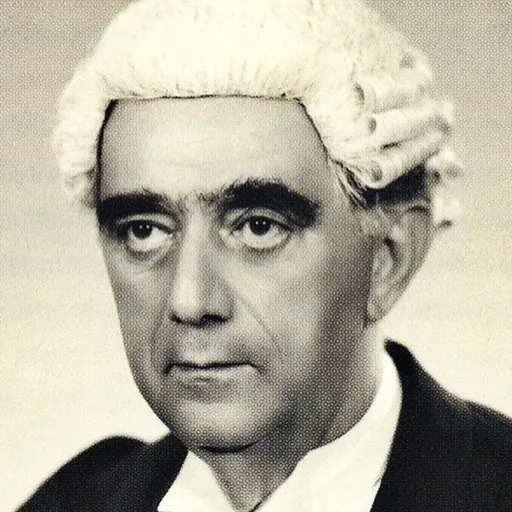
About David Marshall
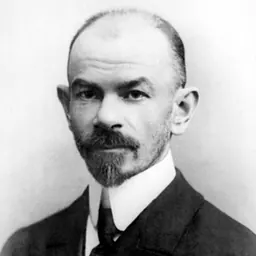
Lived 1908 – 1995 (aged 87). David Marshall was a Singaporean diplomat, politician, lawyer and jurist.
David Saul Marshall (né Mashal; 12 March 1908 – 12 December 1995) was a Singaporean lawyer, politician, and diplomat who served as the first chief minister of Singapore from April 1955 to June 1956. He resigned after just over a year into his chief ministership after his delegation to London regarding negotiations for self-governance was rejected by the British.
Born in colonial Singapore to Jewish parents, he studied at Saint Andrew's Secondary School and Raffles Institution. He held down different jobs from 1926 to 1934, eventually saving up enough money to study law at the University of London. He returned to Singapore in 1937 to begin his law practice. In 1938, Marshall began volunteering with the Singapore Volunteer Corps. Following the surrender of Singapore, Marshall became a prisoner-of-war and was interned at Changi Prison before being sent to Japan. He returned to Singapore in 1946 after the Japanese's surrender, where he joined the newly created Progressive Party (PP) the following year. However, disputes with the PP and its leader C. C. Tan led to Marshall leaving in 1953. He then founded the Labour Front (LF) with Lim Yew Hock and Francis Thomas, serving as its first chairman. The LF contested at the 1955 general election, where they won the most seats with 10, and Marshall was named the first chief minister as the LF's leader.
Marshall's chief ministership was marked with strikes and riots, a constitutional crisis, and internal problems with the LF. His main goal was obtaining self-governance, and he led a delegation to London in 1956 to hold constitutional talks with British authorities. However, the talks broke down and he subsequently resigned as chief minister, having promised to do so if he did not achieve self-governance. He remained a backbencher and was succeeded by Lim. Marshall then resigned from the LF and the Legislative Assembly in 1957, and founded the Workers' Party (WP) to contest in the upcoming 1959 general elections. At the 1959 general elections, he lost to Lim, but won Anson at the 1961 by-elections. Marshall would resign from the WP following internal disputes, and later lost his seat at the 1963 general election.
Afterwards, Marshall left politics and returned to law. In 1978, Marshall became a diplomat at the invitation of foreign minister S. Rajaratnam and was Singapore's inaugural ambassador to various countries, including France, Portugal, Spain, and Switzerland. During this time he defended Singapore's interests abroad, despite his old political opponent Lee Kuan Yew of the People's Action Party having long led the government as prime minister. Nevertheless, he publicly maintained constructive criticism of some domestic policies with which he disagreed. Marshall retired in 1993 and died two years later in 1995, at the age of 87.
Early life
Marshall was born on Selegie Road in British colonial Singapore as David Saul Mashal on 12 March 1908, the second child of seven to Baghdadi Jewish parents Saul Nassim and Flora Ezekiel Mashal (née Guston). His father, Saul, arrived in Singapore in 1900 from Baghdad and established a business at Change Alley. Saul was a Sephardic Jew of Spanish descent from Ottoman Iraq. His business was financially successful, and he later brought his wife Flora over to Singapore. In 1920, his family name, originally Mashal, was anglicised to Marshall on the advice of a family doctor.
Marshall spent his early years moving frequently, depending on his father's fluctuating wealth. His parents were ultra-orthodox Jews and Marshall was given a strict Jewish upbringing, going to the synagogue and observing the Sabbath; he had his bar mitzvah when he was thirteen. Upon his return to Singapore from Baghdad, Marshall attended kindergarten at the Convent of the Holy Infant Jesus at Victoria Street, where he faced anti-semitism. After kindergarten, he began studying at Saint Joseph's Institution in 1918, but was expelled a year later for skipping class.
He then enrolled at Saint Andrew's Secondary School, studying until Standard VII, before transferring to Raffles Institution in 1923 for their science facilities. Marshall initially planned to obtain a Queen's Scholarship for a medical degree, and he studied for fourteen hours a day over six months in 1925. However, before his examinations, Marshall fainted and was unable to take them. He was subsequently sent to Switzerland to recover from his illness, during which he spent his time taking French classes. Upon his return to Singapore, Marshall began working at a stockbroker's firm in 1926, but fell sick with tuberculosis and returned to Switzerland again. He recovered eight months later, travelling to Renaix, Belgium, to study textile manufacturing. thumb Marshall studied at the University of London (pictured) from September 1934 to March 1936. Marshall travelled overseas again before returning to Singapore in 1930, during the Great Depression. He had unsuccessfully held down a job as a textile representative before working as a salesman. He began holding French classes at the YMCA for some extra money as he was saving up to pursue an overseas education. Upon reaching his monetary goals, he decided to study law in London, attending the University of London in September 1934. To get his law degree and join the Bar at the same time, Marshall registered himself with Middle Temple and took his Bachelor of Laws at the University of London externally.
Eighteen months after his arrival, Marshall passed the Bar's finals with honours. Marshall planned to immediately return to Singapore to begin working, but had to participate in eighteen month's worth of dinners (now known as qualifying sessions) with Middle Temple before he could be admitted with them; he was given an exemption of six months after conferring with Middle Temple's under treasurer. Marshall returned to Singapore in 1937.
Law career and war service Upon his return, he was called to the bar in February the following year. He joined law firm Rodyk & Davidson with a monthly salary of . However, he discovered that Rodyk & Davison's chief clerk was paid more than him, and he considered it prejudice for being a local. Marshall subsequently applied to join Aitken & Ong Siang, a law firm co-founded by Sir Song Ong Siang, a prominent member of the Chinese community. With the help of his father, Marshall was eventually accepted by Song to join in a special arrangement; he would be paid no salary and had to pay for his own desk space, office supplies, and secretarial services. Despite this, in his first month, Marshall made . To establish himself in the community, he began taking cases at a low cost of , eventually charging up to per case as his reputation grew.
In October 1938, concluding that the Japanese would soon attack Southeast Asia, Marshall decided to volunteer with the Singapore Volunteer Corps (SVC), which was a branch of the larger Straits Settlements Volunteer Force (SSVF). Within the SVC, Marshall was assigned to the "D" Company, which consisted largely of Eurasians. He objected to this assignment as he was being grouped with Eurasians despite being a Jew and he raised the matter to the commanding officer. Marshall was subsequently transferred to the "B" Company, a European unit that included Czechs, Yugoslavs, and Poles. With "B" Company, Marshall discovered that he was paid a daily salary of , which corresponded to the "Asian" salary, as compared to his fellow European colleagues who earned the "European" salary of daily. After complaining to the commandant about this disparity, he was confined to his barracks, but found his pay increased by more.
During his training with the SVC, Marshall found their schedule to have interfered heavily with his law career and he was unable to continue his business with Aitken & Ong Siang. He applied to join Allen & Gledhill as an assistant as their schedule was more convenient for him, and he was hired with a monthly salary of , the highest at the time for a non-European. He trained weekly with "B" Company at Beach Road. Following the possibility of the war affecting Singapore, by 1941 Marshall had sent his family to Perth to avoid it, with only his mother staying with him in Singapore.
World War II and prisoner-of-war In December 1941, Marshall was mobilised following the Japanese's bombing of Singapore. From his camp in Geylang Serai, he and many others initially mistook the air-raid sirens for a drill, as the street lights remained on. During that time, Singapore's support for the British was still high, but was diminished after learning that the Prince of Wales and Repulse had been sunk. Marshall's role at "B" Company was a runner, as he was regarded to have made noise like a "baby elephant" and ran through active bombing. On 15 February 1942, the day of the British's surrender to the Japanese, he relayed the news to outlying units. After the official surrender at 8:30 pm that day, Marshall, as part of the SSVF, was with a southern garrison that included the 1st and 2nd Malayan Infantry Brigades. On 17 February, he was marched from Pierce Road to Changi Prison as a prisoner-of-war (POW). At Changi, the POWs frequently suffered from a lack of food, water, shelter, and blankets; after only a few months there, Marshall dropped from to . His food was typically rice with boll weevils. thumb The POWs at Nisi-Asibetsu. Marshall is the one with the pipe near the centre. After fifteen months at Changi, Marshall was transferred to a camp at Serangoon Road Race Course, which only had around 3,000 POWs as compared to Changi's 30,000. He spent his time labouring cutting grass for the Japaneses' horses. In August 1942, the Japanese began distributing POWs to camps in Japan and Taiwan, while others were sent to Burma and Siam to work on the Death Railway. In May 1943, Marshall was part of 2,000 POWs drafted to Japan. It took three weeks to reach Honshu by boat, after which they were sent to an industrial camp in Hakodate, Hokkaido. This camp's conditions were poor, and they were subsequently moved to Yakumo, then to Muroran, and lastly to Nisi-Asibetsu.
At Nisi-Asibetsu, they worked at coal mines for the Japanese. By that time, however, Marshall had grown too physically weak to mine and was instead assigned to a pick and shovel group. His duties primarily involved clearing land for airfields and transporting iron delivered from Manchuria. By 1944, as Japan's position in the war began to deteriorate, Marshall became aware of the situation through a Chinese POW who could read Japanese that relayed information from Japanese papers he found in the colonel's office. Following this period, he and his camp began receiving food and supplies from Red Cross parcels and American planes. After Japan's surrender, Marshall was sent to Manila by American officials, where he gave statements of the conditions during the war and requested repatriation to Perth to reunite with his family. By then, he only weighed . He remained with his family in Perth briefly before returning to Singapore in February 1946.
Post-World War II career He found that his original home had been destroyed and looted during the war. Despite widespread unemployment and economic hardships under the British Military Administration (BMA), Marshall was able to resume his legal practice without difficulty, rejoining Allen & Gledhill, which was experiencing increased demand for legal services in the aftermath of the war. Immediately after he joined Allen & Gledhill, his friend Gerald de Cruz recruited him for the Malayan Democratic Union (MDU), a political party that aimed for internal self-governance and public reforms. De Cruz assumed that Marshall would join without delay, but Marshall declined, stating that he required time to recover and rebuild his life after the war. In the post-war period, Marshall also became active within Singapore's Jewish community. He helped establish the Jewish Welfare Board (JWB), an organisation which focused on Jewish interests and issues. Marshall served as its first president on 27 June 1946, being re-elected to the position over the next six years. JWB created an old folk's home at Waterloo Street and formed a Transient's Committee to aid Jewish immigrants travelling through Singapore. With JWB, Marshall remained unaffiliated with politics; he tend to receive visiting Israeli officials, but remained non-partisan.
Following the BMA's choice to not recognise the Japanese government's "banana currency", many who had saved up this type of money were practically poor in post-Japanese occupation Singapore. This included many members of the SVC, who were waiting for payments of their salaries by the British that were interrupted during the Japanese occupation, along with the return of their properties. In March 1946, the British announced that it would pay back members of the British government and army up to per person, for the period of their internment during the war in Malaya. This upset those who had not been interned, mostly consisting of Asians, and the fact that locals were paid less than European POWs, which raised issues on racial discrimination.
As a result, Marshall was involved with other POWs who were against this scheme and they founded the War Prisoners' (Singapore) Association (WPA) on 24 April 1946, with Marshall serving as the honorary secretary. The WPA included POWs, internees, political prisoners, and civilian prisoners, with their main goals focusing on compensation of people affected by the war. As the WPA's secretary, Marshall found himself acting as their main spokesperson, and he typically commented critically on the colonial government. The demographic makeup of WPA had a majority of Europeans, which caused accusations against Marshall of working towards European interests, although most of the Europeans members were poor and the WPA additionally focused on affected Chinese, Eurasian, and Indian POWs.
In August 1946, the Secretary of State for the Colonies George Hall stated that they would repudiate civil liability claims made by SVC volunteers. In response, the WPA informed governor Franklin Gimson in November that the liability claims were still in force as they had not been repealed and asked Gimson to set up a tribunal. Marshall stated in an interview with The Straits Times that Gimson was talking to attorney-general John Davies, but that "we have not heard from the Governor since then [but were] awaiting his promised communication." In March 1947, he sent a letter on behalf of the WPA to the Secretary of State for the Colonies Arthur Creech Jones, writing: "I must be forgiven if I sometimes gather the impression that there is no government in this colony, only a bureaucracy of lazy clerks."
From the late 1940s to early 1950s, Marshall's law career proved to be successful, and he became recognised as a prominent lawyer. In January 1950, by then a partner with Allen & Gledhill, Marshall decided to pursue his original goal of studying medicine. After receiving a correspondence from the University of Sydney, Marshall traveled to Australia to explore this possibility. Upon arrival, he visited his family in Perth, where he met a psychiatrist called White. Marshall sought White's advice about specialising in psychiatry, and was provided with several books on psychiatric theories, particularly relating to the concept of time, for him to read. After reading them, Marshall found the subject difficult to grasp and concluded that psychiatry was not for him. Marshall subsequently abandoned his plans to study medicine and decided to return to his law career in Singapore; he had received a letter from Battenberg and Talma and joined them on 26 January 1950 as a junior partner.
In October 1993, Marshall joined Drew & Napier.
Early political involvement
Progressive Party
In the late 1940s, after Marshall rejected to join the MDU, he decided to join the Singapore Association through his legal connections after a growing interest in local affairs. The Singapore Association was the successor of the Straits Settlements (Singapore) Association, a prominent body in pre-war Singapore that was known for being involved in talks of the colony's progress. He officially joined them in June 1947, after being elected to its committee following Roland Braddell's election as president. Early in his involvement, Marshall opposed the implementation of income tax, a stance that contrasted with later views. Financial secretary W. D. Godsall had proposed the tax to recuperate losses spent in post-war rehabilitation, but Marshall argued that income tax could be avoided and instead suggested a tax on the colony's remittances. He was also active with the Singapore Ratepayers' Association (SRA), which largely consisted of landlords and Europeans, that focused on reducing light, gas, and water costs. thumb Marshall had a poor relationship with PP founder C. C. Tan (pictured), and would go on to contest in his constituency during the 1955 general election.In the lead up to the 1948 general election, political parties began to be formed. As the Association mainly represented European views, they decided to form a party to contest as they were worried that the election would elect a majority of Asians into the Legislative Council and thus misrepresent their views. In May 1947, Singapore Association member E. R. Koek proposed the creation of the Progressive Party (PP) to advocate liberalist views. After Marshall was elected into their committee in June, Braddell supported Koek's suggestion, and the Singapore Association formed the PP with the Straits Chinese British Association on 25 August 1947. The PP consisted largely of legal professionals such as C. C. Tan, John Laycock, N. A. Mallal, and A. P. Rajah, who were all founder members. Marshall joined the PP in November 1949, feeling obliged as a member of the Singapore Association and due to his personal connections with lawyers such as Laycock. After he briefly left to Australia and returned in January 1950, his continued time with PP eventually led him to have conflicting views with its members. In his early involvement, Marshall was seen as a potential party candidate and was asked by Laycock to stand for Municipal Commissioner in 1950 and for the South Ward in 1951; this was supported by Mallal and Tan Soon Kim. Sometime in the early 1950s, after the Legislative Council announced the Rent Control Ordinance, Marshall and other members of the SRA opposed its introduction, which saw support from other local groups. During the campaigning period of the 1951 general election, the Rent Control Ordinance was brought up, and the PP portrayed themselves as supporting the tenants. However, Singapore Tenants' Association secretary P. M. Williams addressed the fact that they supported the Rent Control Ordinance, which suggested that they were more in favour of the landlords instead of the tenants.
As Laycock planned to contest in Katong Constituency against independent G. H. Kiat, who was a member of the SRA, the PP held a meeting to discuss its campaigning strategy. Marshall was the only dissenter to the party's choice of depicting itself as pro-tenant and using the Rent Control Ordinance against Kiat as part of their campaign; he also felt conflicted due to his existing ties to the SRA. After stating his stand at the meeting, Marshall's relationship with PP founder Tan deteriorated, as Tan perceived Marshall to be supporting their opponent. On 1 April, Tan accused Kiat of endorsing the SRA's proposal to increase rent by twenty percent. Kiat responded that he was merely following the SRA's recommendations instead of his own and that he had informed Marshall accordingly, believing Marshall had relayed this to Tan. Tan acknowledged that Marshall had informed him on this, but he did not believe him. Marshall subsequently criticised the both of them: Kiat for distrusting him and Tan for suggesting that he would misrepresent Kiat's position. The PP went on to win six of the nine seats in the 1951 general election.
By 1951, the party's beliefs began to change; in 1948, the PP had set a goal of an elected majority in the Legislature by 1951 to achieve internal self-governance, but by 1952 they withdrew this statement and did not set a new deadline. Marshall observed that they developed more pro-British views, while other organisations such as the UMNO in Malaya pressed for self-governance. Tan had written that "only fools and criminals" would want independence, to which Marshall responded "I'm not a fool [and] I'm certainly not a criminal" and wrote his support towards independence. He subsequently gave his resignation in December 1952, which was accepted by February 1953. While with the PP, Marshall was involved in the creation of the Central Provident Fund (CPF) in 1951, having suggested it to both the PP's committee and the colonial government. He later sent a memorandum to the government supporting the creation of a fund for employees. His suggestion was not fully acknowledged by the government, but through the PP's representation in the Legislature, a bill for the CPF would eventually be created and passed.
Labour Front After he left the PP in February 1953, Marshall divided his time between the JWB, the Rent Control Board, and the Old Rafflesian Association, serving an additional presidential term for the former in April. Due to his status as a respected lawyer, Marshall soon became sought after as a member for political parties, especially since he had just left the PP. As the 1954 Rendel Constitution would soon implement more internal self-governance, the upcoming 1955 general election was seen as an avenue for political parties to control Singapore's future. The PP were predicted to be the most likely to win a majority in the upcoming election, but their maintained support was uncertain. Commissioner-General of Southeast Asia Malcolm MacDonald believed that a left-wing non-communist party would be able to maintain its political influence, but the only non-communist party at the time was the Singapore Labour Party (SLP), which was suffering from internal issues between its members; two prominent SLP members – Lim Yew Hock and Francis Thomas – later separated from the party.
Marshall began getting more involved in politics by 1953, when he attended a meeting with friends S. Rajaratnam, Alex Josey, and Han Suyin in August. He felt influenced by Rajaratnam and Han's political discussions, and decided during that he wanted to further his political career and interests; Marshall was still considering his political stand. In October, Marshall met with Lim and Thomas, and they decided to form a new political party; Marshall knew Lim as a fellow PP member and Thomas through connections with St. Andrew's School and the Rotary Club. Thomas later wrote to Marshall in November, discussing any issues with the party's formation or programmes, where it was also tentatively named the Democratic Labour Party.
In December, Marshall, Lim, and Thomas continued to hold meetings about the party, but its official inauguration remained delayed due to plans to merge with another left-wing party. In January 1954, Lee Kuan Yew met with figures such as Goh Keng Swee, Toh Chin Chye, K. M. Byrne, and Rajaratnam, to discuss forming a party which would later become the People's Action Party (PAP). Marshall and Thomas later held meetings with some of them, as they shared similar goals. However, the two parties did not get along well, with Marshall and Thomas's first meeting with Lee, Goh, and Byrne being described as a "bitter taste" by Marshall. The PAP considered them to have possessed "political naivety", while Marshall saw Lee as an over-confident and mysterious person.
After their unsuccessful negotiations with the PAP, they went on to found the Singapore Socialist Party (SSP) in April 1954. Marshall was seen as a natural leader in the party, but he refused the presidency. Initial support for the SSP was low, so Thomas decided to form an alliance with the SLP ahead of the election. He met with SLP members V. P. Mendis and C. H. Koh, and the two parties officially formed the Singapore Labour Front (LF) on 21 August 1954. Marshall drafted the LF's constitution, and during that time Tan delivered a speech at a PP meeting detailing its stand against internal self-governance. Marshall felt irritated by Tan and the PP's stand, and when later approached by Lim on whether he wanted to lead the LF, Marshall accepted to use it as a platform to contest Tan; Marshall never fully embraced his role as LF's chairman, and neither was he a member of its executive branch. thumb Marshall (left) with John Nicoll (right), 1952As the LF's leader, Marshall wanted to elicit the help of MacDonald and the British Labour Party (BLP) to get a British organising secretary to manage the LF, though this was not agreed on by fellow members. Marshall then decided to travel to London to visit Transport House, the then-BLP headquarters, to learn about party management and election campaigning. By late 1954, Marshall was seen as a political rival to the PP, and on 3 September he was called on by governor John Nicoll to advise on the ongoing conscription riot by Chinese students. On 31 October 1954, Marshall published his political thoughts in The Straits Times with a letter titled "I Believe...", highlighting his anti-colonial views and disdain towards the PP's anti-independence views. His letter was seen as one of the first coherent and important political statements, with The Straits Times Kenneth Hilbourne "[admiring] the spirit and fire of his delivery" in a review. Furthermore, Nicoll met with Marshall on 22 October to urge him not to publish it. Earlier that same month, the LF announced that Marshall would contest in Tan's constituency – Cairnhill Constituency – for the post of chief minister for the election.
On 2 November, Marshall made his promised trip to London, boarding MV Asia. He arrived on 13 November and lived at 44 Curzon Street. On 16 November, he went to Transport House and met BLP politicians Morgan Phillips, Saul Rose, and John Hatch, along with BLP members of parliament Kenneth Younger and John Parker. He additionally met politician Hilda Selwyn-Clarke. Phillips gave him tours of BLP constituencies on weekends, and Marshall spent a total of four months overseas. He returned on 8 February 1955, and during that time the LF had been working on their goals, in which they pledged to remove the Emergency Regulations if they were elected; they also focused on education and the merger with Malaya. However, Marshall disagreed with removing the Regulations due to the recent conscription riot, to which Lim explained that he added it as he believed they would not be elected in the first place.
1955 general election
The Sunday Times reporting on the LF's victory on 3 April 1955, with Marshall slated to serve as the chief minister. The 1955 general election's nomination day was on 28 February, and the LF fielded 17 out of the 79 candidates participating in the election. Marshall chose to specifically contest in PP leader Tan's constituency as he wanted to confront his and the PP's views, which was shown in his speeches where he frequently spoke of self-governance and anti-colonialism. Despite having disagreed earlier with the PAP, the PAP and LF had a mutual understanding of not fielding candidates in each other's constituencies. The PAP themselves stated that in constituencies with none of their candidates, the vote should go to the LF. During the campaign period, The Singapore Free Press described Cairnhill Constituency as where "high political issues [were] on trial".
The results of the election were announced on 3 April, with the LF winning the most seats with 10. The PP performed poorly, with 18 of their 22 candidates being unsuccessful, including Tan. Although the LF won the majority of seats, the PAP's Lee Kuan Yew won the largest majority in a constituency. Marshall himself was surprised by the results and he received congratulations from Lee and Tan; the former pledged cooperation with Marshall and his government. He was also, as the LF's leader, named as the first chief minister. In Cairnhill, Marshall was elected with 3,305 votes. The results of the election were unexpected by governor Nicoll, who had speculated that the pro-British PP would have won ten seats, with five seats each for the remaining parties.
Chief ministership (1955–1956)
Cabinet formation
Following the LF's minor majority of 10 of the 25 seats in the Legislative Assembly, Marshall set up his minority government. He planned to form a coalition with either the Singapore Malay National Organisation (SUMNO)–Malay Union (MU)–Malayan Chinese Association (MCA) alliance or the PAP, eventually settling with the alliance. Marshall met with governor Nicoll on 4 April, where he explained that even with the SUMNO–MU–MCA alliance, they would not obtain a majority in the Assembly. To increase the LF's representation, Marshall requested Nicoll allow him four LF nominees to the Assembly under the Rendel Constitution, but Nicoll refused and instead appointed two LF executive committee members – Thomas and R. C. H. Lim – and two non-partisans – G. A. P. Sutherland and Ong Piah Teng – to represent European and Chinese commercial interests, respectively. He then formed a coalition with the SUMNO and MCA; the MU withdrew. Marshall's cabinet required three colonial officials for the roles of chief secretary, financial secretary, and attorney-general, which were given to William Goode, T. M. Hart, and E. J. Davies, respectively. The rest of Marshall's cabinet was Marshall as the chief minister and commerce and industry minister, Chew Swee Kee as the education minister, Lim Yew Hock as the labour and welfare minister, A. J. Braga as the health minister, Thomas as the communications and works minister, Abdul Hamid Jumat as the local government, lands and housing minister, and J. M. Jumabhoy as the assistant commerce and industry minister. He officially unveiled his cabinet on 7 April at Empress Place, and they were sworn in by Nicoll.
Management of strikes and riots
One of the first things Marshall addressed were the Emergency Regulations. The Marshall government inspected the Regulations and modified them to reduce its powers but extended its period to another three months. Marshall chose to introduce the Regulations' extension himself, despite it being an unpopular choice and the duty of the chief secretary and colonial authorities. Later, in July 1955, Marshall had planned to remove the Regulations but found himself forced to extend them for another three months, as it could have been seen as threatening to the Malayan government, who were trying to stifle communism.
In April, Hock Lee bus workers began strikes against the company, following disputes regarding the dismissals of union officials. Marshall addressed the Hock Lee strikers on a 1 May rally, stating that the government allowed them the right to strike, but that they had to exercise this right responsibly. He then met with Lee, legal adviser of the Singapore Bus Workers' Union (SBWU) and PAP assemblyman; Fong Swee Suan, the SBWU's secretary-general; and Lim Chin Siong, a SBWU committee member, to form a peaceful agreement to end the Hock Lee riots. As the riots escalated with the involvement of sympathising Chinese students, Marshall addressed them on 12 May via radio. On 14 May, Marshall met with the SBWU, Hock Lee Amalgamated Bus Company, and the Hock Lee Employees' Union at Assembly House to discuss an end to the riots, announcing later that day that an agreement had been reached between them.
After managing the Hock Lee bus riots, Marshall focused on the Chinese students who were occupying Chinese schools closed during the Hock Lee riots, namely Chung Cheng High School's main and Yishun branch and The Chinese High School. The schools' boards were ordered by the government to expel the involved students and provide names of those involved in the Hock Lee riots, however this only fuelled the conflict between the students and the authorities, with the Chung Cheng High Schools and The Chinese High School prolonging their sit-ins, with the Nanyang Girls' High School joining in. Following strike threats by the Singapore Factory and Shop Workers' Union in support of the students, Marshall appointed an All-Party Committee to investigate the students' issues, with his first meeting with them advising him to reopen the schools, which he did.
Marshall's management of the Hock Lee riots and the Chinese school sit-ins were met with criticism; letters were sent to The Straits Times detailing his incompetence as chief minister. In the weeks following the quelling of the Hock Lee riots, many expected Marshall and his government to exercise punishments on those involved, but many considered their responses to be small. During that period, the governor and chief secretary had urged him to send in troops, but Marshall withheld as he did not believe in police action. Furthermore, in the Chinese school sit-ins, Marshall was seen to have "meekly obeyed" The British wanted to use local military to ease the situation, but eventually agreed that military force would have tarnished the LF government's reputation, and instead helped to restrain the police force from acting against Marshall's plans. Chinese-language newspapers such as Nanyang Siang Pau and Sin Chew Jit Poh also frowned upon police use as supporters of the rioters, and this move maintained their support towards Marshall's government.
As more strikes broke out across Singapore, with the main unionists being Devan Nair, Lim, and S. Woodhull, Marshall met with them to discuss and prevent a planned general strike on 13 June. Although the meeting was described as cooperative by the unionists, on 11 June Marshall's government arrested five unionists under the Emergency Regulations for being involved in the planning of the general strike. On 5 July, Marshall held a final meeting with the unions, where they outlined the issues they faced. This meeting was successful, as both Marshall and the unions reached an agreement over the final disputed points, officially ending the strikes after 66 days. Following the conclusion of the strikes, Nicoll and The Straits Times both stated that the "unconditional surrender" of the Marshall government led to the strikers fulfilling all of their requests. Conversely, Marshall's government's actions were praised by both Chinese-language and Malay-language newspapers.
Constitutional crisis Following the management of riots, Marshall felt that his government was inadequate and lacked efficiency. His ministers were often overworked and he neglected his second portfolio as commerce and industry minister. Thus, in July 1955, with the arrival of the new governor Robert Black, Marshall spoke at the ceremonial address his want for the Rendel Constitution to be edited. Marshall stated to Black in a letter on 11 July that the Constitution allowed him to create nine new junior ministers, and that he wanted to appoint four first and the rest later. In response, Black allowed him only two junior ministers, leading Marshall to call this issue of "grave constitutional importance", as the governor did not acknowledge the opinion of the Council of Ministers and displayed the Constitution as allowing the governor to ignore the chief minister's suggestions. Marshall was asked to hold off on his resignation until the arrival of Alan Lennox-Boyd (pictured). After Black's rejection, Marshall threatened to resign due to the issues with the Constitution, mainly Section 32 which stated that "the governor after consultation with the chief minister may from among elected members in the Assembly appoint Assistant Ministers to assist ministers in the discharge of their duties and functions." Marshall believed that this allowed him full control of his cabinet appointments, while Black disagreed, as that view suggested that Singapore was a self-governing state. However, his resignation brought along alarm from Singapore and the British, due to the hasty elections that would have to be held. Black then requested that Secretary of State for the Colonies Alan Lennox-Boyd visit Singapore while on his Eastern tour in August and asked Marshall to postpone his resignation till Lennox-Boyd's arrival.
During this period, Marshall held an emergency meeting with the Assembly, where most of them urged him to postpone his resignation. Additionally, both Singaporeans and people abroad encouraged him to stay, such as Gold Coast prime minister Kwame Nkrumah. With this support, Marshall then laid out a three-part motion to the Assembly, detailing that they would end colonial rule, rewrite the Constitution to benefit those elected with the view of self-governance, and that the governor should act on the advice of the chief minister. Marshall's motion saw support from twenty-eight members. Following this, Marshall held off on his resignation till the arrival of Lennox-Boyd.
Lennox-Boyd arrived in Singapore on 31 July, where he and Marshall held a few meetings, before he briefly left again to visit London and Borneo, returning once more on 15 August. In the following days, Lennox-Boyd and the Legislative Assembly discussed the issues, and a statement on 18 August announced that an agreement had been reached. The colonial authorities edited the governor's powers to be in favour of the elected ministers, with the governor required to act in the advice or consultation of the chief minister. For the issue on self-governance, Marshall was invited to send a delegation to London to discuss the situation. In the press, Marshall stated that he was "very pleased with the outcome", however the opposition assemblymen cast doubts on Lennox-Boyd's unclear wordings and the lack of actual self-governance, instead being asked to head to London. The British agreed to Marshall's terms largely due to fear that his resignation would lead to further crisis within Singapore's politics, bring a more "radical and irresponsible government" into power, and ruin the confidence of the British's politics only three months after the general elections.
Party and government issues Throughout the LF's time in office, they faced multiple internal conflicts such as financial issues, leadership issues, and conflicting viewpoints. Marshall himself tend to argue with those going against him and did not hold frequent meetings with his ministers. These problems were addressed in the LF's first annual conference held on 29 October, however it only introduced more financial and management issues. During the conference, executive member C. H. Koh suggested repealing the PPSB and validating the Malayan Communist Party (MCP), which were rejected as it went against the government's policies. Furthermore, during the LF's party president election, Marshall did not contest to promote his chief lieutenant Lim Yew Hock to the position instead. However, Lim lost the election to assemblyman A. R. Lazarous, who was negative of the current government. This prompted Marshall to investigate Lazarous's election, ultimately discovering that Lazarous had paid other members to vote for him, voiding his ballot; Lim was subsequently elected party president.
These internal issues had since been made public, with Marshall suggesting that the disagreements were not due to policy differences, but instead personal ambitions. Lazarous and Koh had been fighting for positions in Marshall's cabinet since April, which was further amplified by the new junior minister posts introduced after the constitutional crisis. After learning of their rejections, Lazarous and Koh rebelled against Marshall, alongside assemblyman Lee Choon Eng, who was similarly rejected of a ministerial position. This eventually culminated into Lazarous and Lee leaving LF on 7 November to join the opposition, significantly affecting the LF government's majority as both sides now had an even 16 seats. abstaining. The talks subsequently broke down on 15 May.
Aftermath and resignation Later that same day, he attended the House of Commons debate on the constitutional talks and found BLP parliamentarians suggesting a reopening of the talks, inspiring Marshall to meet up with his delegates to plan something similar. On 16 May, Marshall discussed reopening the talks with Lennox-Boyd, who was unopposed but wanted to know the opinion of the delegation. In a meeting on 17 May, despite the opposition parties being uninterested in restarting the talks, Marshall outlined his planned negotiation points if they did, namely that new legislature by the Colonial Office should seek the approval of the House of Commons first; that Singapore should no longer be managed by the Colonial Office; and that Singapore's head of state would be a local and unaffiliated with the British.
However, Marshall faced heavy criticism from his delegation for his decision to reopen the constitutional talks. It was seen as "humiliating" and "degrading", with accusations from the opposition that Marshall only wanted to restart the talks to stay in office. Furthermore, he had announced his decision to reopen talks first to the press, before discussing this with his delegation. This undoubtedly halted any possibility of reopening the talks, as Lennox-Boyd would have only been willing if Marshall received the full support of his delegation. Regardless, Marshall noted that Lennox-Boyd was willing to discuss these new proposals, with the only caveat being the lack of support. He returned to Singapore on 21 May, with the plan that Lennox-Boyd would support his plan of moving Singapore from the Colonial Office and grant a local head of state, if he received support.
Marshall continued to preach his plan to the Colonial Secretary to reopen the talks, under the assumption that his plan would succeed and, that if it did not by 6 June, Marshall would resign from his post. During this time, his fellow LF members had been urging him to resign, with arrangements already made to succeed him. By 23 May, Lim Yew Hock was viewed as the next chief minister, receiving support from the LF and Lennox-Boyd. The evening of his return, Marshall contacted Black to inquire whether Lennox-Boyd would receive a new delegation headed by Lim that discussed his originally planned points, if he resigned. On 28 May, Lennox-Boyd replied that he did not want to interfere with Singapore's affairs and, on 30 May, the Colonial Office rejected Marshall's points outright. On 6 June, Marshall requested a censure in the Legislative Assembly regarding his performance at the constitutional talks, but was rejected. On 7 June, he requested a censure again but was similarly refused. Marshall resigned later that day at 5:00 p.m. as chief minister, but remained as a backbencher. He was succeeded by Lim.
Post-chief ministership and career After resigning, Marshall visited China for two months at the invitation of Zhou Enlai, the Chinese Premier. Contacted by a representative of a group of over 400 Russian Jews who were being refused exit from Shanghai by the Chinese authorities, Marshall spoke with Zhou and managed to have them released.
After returning from China, Marshall stayed on the backbenches before quitting the Labour Front and as a member of the Legislative Assembly in 1957. On 7 November 1957, he founded the Workers' Party of Singapore (WP), which has remained one of the major political parties in Singapore, just after the PAP.
Marshall lost his seat in Cairnhill Single Member Constituency to Lim Yew Hock, the chief minister, in the 1959 general election as a WP candidate, but won in Anson Single Member Constituency in the 1961 by-election. He resigned from the Workers' Party in January 1963 after a spat with some members of the party.
After losing his seat again in the 1963 general election as an independent candidate, he decided to return to practice law but would remain active in politics, offering his opinions and viewpoints.
Diplomatic career From 1978 to 1993, at the invitation of foreign minister S. Rajaratnam, Marshall served as the first Singaporean Ambassador to France, concurrently for Portugal, Spain, and Switzerland from 1978 to 1993. As ambassador, Marshall always defended Singapore's interests, despite his differences with Lee Kuan Yew's government. He retired from the diplomatic corps in 1993 after 15 years of service.
Views on Lee Kuan Yew and the PAP While Marshall consistently praised Lee Kuan Yew and the PAP government for developing Singapore along with its economic prosperity, he also condemned the government for limiting freedom of speech and public freedoms. "We should keep in mind the horrors of [China's] Cultural Revolution, brought about by the cult of subservience to authority and primacy of society over the individual before we point the accusing finger at those who believe that respect for the individual is the basis of human civilisation", he said.
Personal life Marshall married Jean Mary Gray in 1961, an Englishwoman. Jean was born on 13 April 1926 in Kent, South East England, and came to Singapore in 1953 to take up a post with the Singapore Red Cross Society as a medical social worker. They had four children and six grandchildren. Marshall died in 1995 of lung cancer. He was 87.
Jean Marshall died in Singapore on 29 March 2021, at age 94.
He was recognised with the following honours: 1965: Dato Kurnia Johan Pahlawan, conferred by the sultan of Pahang. 1978: Legion of Honour, France.
Legacy Peter Lambda's bust of Marshall, created in 1956, at the School of Law, Singapore Management UniversityMarshall has been considered by some Singaporeans as being one of the founding fathers of Singapore. A life-size cutout of him is present at the National Museum of Singapore's Singapore History Gallery, along with some of his favourite iconic smoking pipes that were donated to the museum by his wife which accompanied him wherever he went, as well as other items such as his campaign cards.
He is also well-regarded by lawyers in Singapore. In recognition of his impeccable service, he was appointed as an Honorary Member and Fellow of the Academy of Law in 1992 by the Singapore Academy of Law (SAL), and the David Marshall Professorship in Law was set up in 1995 by the National University of Singapore (NUS). In 2007, the Singapore Management University's School of Law (SMU Law) introduced the David Marshall Prize for the top student in criminal law. In 2017, the Yale-NUS College introduced the David Marshall Scholarship for double degree law students. There is also the David Marshall Scholarship by the School of the Arts, Singapore (SOTA), which are awarded to SOTA students who demonstrate artistic talents and excellent academic standing, as well as maintain excellent conduct and participate actively in school events.
Due to his love of art, Marshall had commissioned and gifted the Botanic Gardens with three bronze statues: Girl on a Swing (1984), Girl on a Bicycle (1987), and Lady on A Hammock (1989) by the British sculptor Sydney Harpley. Through these sculptures, he wanted to inspire the people of Singapore, to smile and feel the excitement and joy of living.
In 2011, the Marshall estate donated a bust of Marshall created by Hungarian sculptor Peter Lambda to the SMU Law's moot court, which is named after Marshall. His widow Jean expressed the hope that the tribute would inspire all law students at SMU to pursue the qualities of passion, diligence, courage and integrity that had distinguished her late husband's remarkable achievements.
Don’t just read it —
keep it.
Full-length biographies made to live with: read them, listen on the way to work, watch them tonight.
- E-book
- Audio
- Video
Instant download · yours to keep · every purchase keeps this site free
Important facts
People in David Marshall's life
Named in this biography and alive at the same time






Related people
Same field, nearest in time

Contemporaries
People whose lives overlapped David Marshall's


Frequently asked questions
Who was David Marshall?
Singaporean politician (1908-1995)
When was David Marshall born?
David Marshall was born on 12 March 1908 in Singapore.
When did David Marshall die?
David Marshall died on 12 December 1995 in Singapore.
What was David Marshall's occupation?
David Marshall was a diplomat, politician, lawyer and jurist.
What nationality was David Marshall?
David Marshall was Singaporean.
Sources & further reading
· DBpedia: David Marshall (Singaporean politician)
Cite this page
APA: Biography.guide. (2026). David Marshall. https://biography.guide/david-marshall-diplomat/
MLA: "David Marshall." Biography.guide, https://biography.guide/david-marshall-diplomat/.
Chicago: "David Marshall." Biography.guide. https://biography.guide/david-marshall-diplomat/.
Data last updated: 2026-09-22 · Spot an error? Report a correction.
Portrait: Wikimedia Commons · author & licence
Page generated 2026-09-27 05:04 UTC