
About David Lisak
Born 1953. David Lisak is an American psychologist.
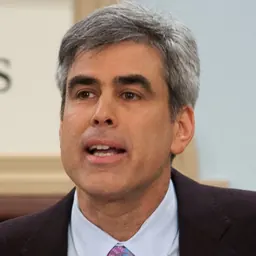
David Lisak is an American clinical psychologist. He received his PhD from Duke University, and is a retired associate professor of psychology at the University of Massachusetts Boston. Lisak's research focuses on "the causes and consequences of interpersonal violence...motives and behaviors of rapists and murderers, the impact of childhood abuse on adult men, and relationship between child abuse and later violence".
Research
Lisak began his research in graduate school at Duke in the 1980s. He had noticed that most of the research on rape and sexual assault consisted of interviews with victims, who reported almost exclusively acquaintance rape rather than stranger rape, and studies on incarcerated rapists, who were almost exclusively stranger rapists. Lisak became interested in studying the rapists who committed the most common form of rape but who did not get caught and go to prison.
Lisak performed a meta-analysis of four surveys conducted from 1991 to 1998, surveying 1,882 male Boston college students, resulting in a landmark study of undetected rapists that was published in 2002. In 2015, Linda M. LeFauve, an Associate Vice President at Davidson College and contributor to the American libertarian think tank Reason Foundation, questioned Lisak about how he conducted follow-up interviews based on responses to an anonymous survey; Lisak refused to comment and hung up the phone.
As with other social science interviews and questionnaires about interpersonal violence, Lisak avoided the use of terms such as "rape", "assault", and "abuse", instead describing in detail the behavior in question, without applying labels that the perpetrators might not identify with. Approximately 5% of the study participants reported having committed rape.
Lisak notes that most rapists who are prosecuted are convicted on a single count of rape, and describes as sobering studies that find incarcerated rapists typically have raped multiple people, with findings ranging from an average of seven to an average of 11 victims. He found that both undetected and convicted rapists held prejudiced attitudes towards women and a need for dominance.
Lisak has also noted that recent research has contradicted the long-held assumption that rapists specialize in particular types of victims with the reality, he says, being "far murkier". "Multiple studies," he has written, "have now documented that between 33% and 66% of rapists have also sexually attacked children; that up to 82% of child molesters have also sexually attacked adults; and that between 50% and 66% of incest offenders have also sexually attacked children outside their families."
Corroboration and criticism Research on campus rape continues, and Lisak's views are still being examined by researchers. Similar results to Lisak's were found in Stephanie McWhorter's 2009 Reports of rape reperpetration by newly enlisted male navy personnel, a study done on Navy recruits at RTC Great Lakes.
In 2015, researcher Kevin Swartout published a study in JAMA Pediatrics that found a higher number of men committing rape in college than had Lisak's study but that most were not repeat offenders. In response, Lisak, along with Jim Hopper and Allison Tracy, sent a letter to the journal that published Swartout et al.'s paper reporting that Swartout's study used a flawed and deceptive methodology involving an entirely new and dubious definition of "serial rape" that undercounted the number of serial rapists
Following Swartout's study, LeFauve published multiple articles in the libertarian magazine Reason that also criticized Lisak's work, finding multiple issues with both Lisak's 2002 study, and with his well-known "Frank" video. LeFauve says that the four studies used by Lisak were not originally about campus sexual assault, and were repurposed by Lisak for such using only a few questions at the very end of the several pages long questionnaire, and thatThe most widely quoted figures—that 90 percent of campus rapes are committed by serial offenders and that they average six rapes each—were calculated on a total of 76 non-traditional students who were not living on a college campus, and whose offenses may or may not have happened on or near a college campus, may or may not have been perpetrated on other students, and may have happened at any time in the survey respondents' adult lives. Himself a survivor of childhood sexual abuse, Lisak was one of three men profiled in the Big Voice Pictures documentary, Boys and Men Healing. He has also been on the faculty of the National Judicial Education Program and American Prosecutors Research Institute, served as a consultant for the U.S. military, universities, and judicial and law enforcement agencies, and appeared as an expert witness.
Publications Book chapters Preview.
Journal articles
Pdf.
Pdf. Pdf. Pdf. Pdf. Pdf.
Don’t just read it —
keep it.
Full-length biographies made to live with: read them, listen on the way to work, watch them tonight.
- E-book
- Audio
- Video
Instant download · yours to keep · every purchase keeps this site free
Important facts
People in David Lisak's life
Named in this biography and alive at the same time

Related people
Same field, nearest in time





Contemporaries
People whose lives overlapped David Lisak's






Frequently asked questions
Who is David Lisak?
American psychologist
When was David Lisak born?
David Lisak was born in 1953.
What is David Lisak's occupation?
David Lisak is a psychologist.
What nationality is David Lisak?
David Lisak is American.
Sources & further reading
Cite this page
APA: Biography.guide. (2026). David Lisak. https://biography.guide/david-lisak/
MLA: "David Lisak." Biography.guide, https://biography.guide/david-lisak/.
Chicago: "David Lisak." Biography.guide. https://biography.guide/david-lisak/.
Data last updated: 2026-09-20 · Spot an error? Report a correction.
Page generated 2026-09-27 05:02 UTC