
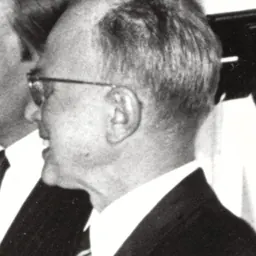
David Klenerman
Professor of Biophysical Chemistry at the University of Cambridge
About David Klenerman
Born 1959. David Klenerman is a chemist, researcher, biophysicist and biochemist, known for Illumina dye sequencing, Scanning ion-conductance microscopy and Solexa.
Sir David Klenerman (born 1959) is a British biophysical chemist and a professor of biophysical chemistry at the Department of Chemistry at the University of Cambridge and a Fellow of Christ's College, Cambridge.
He is best known for his contribution in the field of next-generation sequencing of DNA (that subsequently resulted in Solexa, a high-speed DNA sequencing company that he co-founded), nanopipette-based scanning ion-conductance microscopy, and super-resolution microscopy.
Early life and education Klenerman is the son of two South African-born Jews. He was educated at the University of Cambridge where he was an undergraduate student of Christ's College, Cambridge and received his BA degree in 1982. He earned his PhD degree in chemistry in 1986 as a postgraduate student of Churchill College, Cambridge and was supervised by Ian William Murison Smith.
Klenerman, along with Shankar Balasubramanian, invented a method of next-generation DNA sequencing which is commonly known today as the Solexa sequencing or Illumina dye sequencing. This sequencing by synthesis method gained popularity, and is currently regarded as the most widely used platform to replace conventional Sanger sequencing technique, despite its comparatively low multiplexing capability of samples, as it offers several key advantages: it is automated, quick, highly accurate, capable of sequencing multiple strands simultaneously via massive parallel sequencing, and economically cheaper in case of whole genome sequencing.
He is also known for exploring nanopipette-based (instead of conventional micropipette-based) scanning ion-conductance microscopy methods. His research group was successful in achieving very high resolution topographic images of live-cells, in hopping mode imaging, in precise delivery of small molecules to cell, and in studying real time detailed cell-functioning.
Most recently, his group is focusing on 3D super-resolution microscopy to develop new insights on protein misfolding and neurodegenerative diseases.
In 2004, Klenerman co-founded another spin-out company, Ionscope, to supply assembled scanning ion-conductance microscopes to the research community that looks for high-resolution 3D images of live cells. As per the Biotechnology and Biological Sciences Research Council, as of February 2014, Ionscope sold 35 SICM units worldwide.
Awards and honours The major awards and honours that Klenerman received in recognition of his research work: 2007: Awarded RSC Interdisciplinary Award by the Royal Society of Chemistry. 2012: Elected a Fellow of the Royal Society (FRS). 2015: Elected a Fellow of the Academy of Medical Sciences (FMedSci). 2018: Awarded the Royal Medal by the Royal Society. 2019: knighted in the 2019 New Year Honours for services to science and the development of high-speed DNA sequencing technology 2020: Won Millennium Technology Prize along with Professor Sir Shankar Balasubramanian on their innovation of Next Generation DNA Sequencing 2021: Won the 2022 Breakthrough Prize in Life Sciences along with Professor Sir Shankar Balasubramanian and Pascal Mayer on their innovation of Next Generation DNA Sequencing 2024: Canada Gairdner International Award 2024: Novo Nordisk Prize 2026: Princess of Asturias Award
Don’t just read it —
keep it.
Full-length biographies made to live with: read them, listen on the way to work, watch them tonight.
- E-book
- Audio
- Video
Instant download · yours to keep · every purchase keeps this site free
Important facts
Family & relationships
People in David Klenerman's life
Named in this biography and alive at the same time



Related people
Same field, nearest in time



Contemporaries
People whose lives overlapped David Klenerman's



Frequently asked questions
Who is David Klenerman?
Professor of Biophysical Chemistry at the University of Cambridge
When was David Klenerman born?
David Klenerman was born on 9 September 1959.
What is David Klenerman's occupation?
David Klenerman is a chemist, researcher, biophysicist and biochemist.
What is David Klenerman known for?
David Klenerman is known for Illumina dye sequencing, Scanning ion-conductance microscopy, Solexa and Super-resolution microscopy.
Sources & further reading
Cite this page
APA: Biography.guide. (2026). David Klenerman. https://biography.guide/david-klenerman/
MLA: "David Klenerman." Biography.guide, https://biography.guide/david-klenerman/.
Chicago: "David Klenerman." Biography.guide. https://biography.guide/david-klenerman/.
Data last updated: 2026-09-21 · Spot an error? Report a correction.
Portrait: Wikimedia Commons · author & licence
Page generated 2026-09-27 05:00 UTC