
About David J. Saposs
Lived 1886 – 1968 (aged 82). David J. Saposs was a Ukrainian historian.
David Joseph Saposs (February 22, 1886 – November 13, 1968) was a 20th-century American economist, labor historian, and civil servant, best known as chief economist of the National Labor Relations Board (1935–1940).
Background
David Saposnik was born on February 22, 1886, in the city of Kyiv in the Russian Empire. His parents were Isaac Saposnik, a peddler, and Shima Erevsky. In 1895, the family emigrated to the United States and shortened their name to Saposs. In 1906, at the age of 20, he was elected shop steward for the local Brewery Workers' Union. a student of the nationally known labor economist John R. Commons,
Career
Saposs worked in a variety of positions over the next few years. He was an accident prevention investigator for the New York Department of Labor,
In 1920, he became an economic consultant to the Labor Bureau, Inc. (founded by George Henry Soule Jr. along with Evans Clark and Alfred L. Bernheim) through 1922.
In 1934, Saposs became research director for the Twentieth Century Fund's newly founded labor unit and remained an associate there through 1945. The research conducted under Saposs' leadership proved critical to winning over the Supreme Court of the United States, which held in National Labor Relations Board v. Jones & Laughlin Steel Corporation, 301 U.S. 1 (1938) that the National Labor Relations Act (NLRA) was constitutional. However, Saposs' tenure at the NLRB proved short. Although it had once supported the NLRA, the American Federation of Labor (AFL; which supported craft unionism) became convinced that the Board and its staff (including Saposs) were more supportive of the industrial unionism of its competitor, the Congress of Industrial Organizations. The AFL allied with anti-union Democratic Representative Howard W. Smith to attack the National Labor Relations Board. Saposs was a leader among anti-communist leftists. He had even been surreptitiously assessed by members of the Communist Party USA for membership, and rejected as a prospect. He had also tried to expose those individuals at the Board who he felt were communists. But Smith and others attacked Saposs as a communist, and the United States Congress defunded his division and his job on October 11, 1940.
Other federal positions
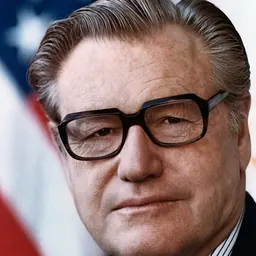
Later in 1940, Republican Nelson Rockefeller hired Saposs as a consultant on labor issues to him for the Office of the Coordinator of Inter-American Affairs in the White House through 1942.
In 1945, Saposs became Chief of the Reports and Statistics Office in the Manpower Division of the Office of Military Government, United States, in post-World War II Germany. He left that position after a year to become Special Assistant to the Commissioner of Labor Statistics in the United States Department of Labor.
History of Labour in the United States (1921) Left Wing Unionism (1926) Readings in Trade Unionism with Bertha Tigay Saposs (1926) Union Responsibility and Incorporation of Labor Unions (1938) Effective Collective Bargaining with Lyle Winston Cooper (1938) Current Anti-labor Activities (1938) Effective Collective Bargaining (1940) Labor Racketeering: Evolution and Solutions (1958) Communism in American Union (1959) Communism in American Politics (1960) Case Studies in Labor Ideology: Denmark, Finland, Iceland, Norway, and Sweden (1964) Case Studies in Labor Ideology: Central European countries: Austria and Western Germany (1965) Case Studies in Labor Ideology (1971)
Articles "The Packers Break the Peace," Labor Age (1922) "The Line-up at Cincinnati," Labor Age (1922) "Unionizing the 'Brain Worker'," Labor Age (1922) "In the Wake of the Big Strike," Labor Age (1923) "The Need for a Labor Culture," Labor Age (1923) "Cut the Racket," Labor Age (1930) "The Rise and Decline of the A.F. of L." in Labor Age (1930) "Opposition in Socialist International," Labor Age (1931)
Don’t just read it —
keep it.
Full-length biographies made to live with: read them, listen on the way to work, watch them tonight.
- E-book
- Audio
- Video
Instant download · yours to keep · every purchase keeps this site free
Important facts
People in David J. Saposs's life
Named in this biography and alive at the same time


Related people
Same field, nearest in time


Contemporaries
People whose lives overlapped David J. Saposs's





Frequently asked questions
Who was David J. Saposs?
historian
When was David J. Saposs born?
David J. Saposs was born on 22 February 1886 in Kyiv.
When did David J. Saposs die?
David J. Saposs died on 13 November 1968 in Washington, D.C..
What was David J. Saposs's occupation?
David J. Saposs was a historian.
What nationality was David J. Saposs?
David J. Saposs was Ukrainian.
Sources & further reading
Cite this page
APA: Biography.guide. (2026). David J. Saposs. https://biography.guide/david-j-saposs/
MLA: "David J. Saposs." Biography.guide, https://biography.guide/david-j-saposs/.
Chicago: "David J. Saposs." Biography.guide. https://biography.guide/david-j-saposs/.
Data last updated: 2026-09-22 · Spot an error? Report a correction.
Page generated 2026-09-27 05:23 UTC