
David H. Jarvis
United States Revenue Cutter Service officer
About David H. Jarvis
Lived 1862 – 1911 (aged 48). David H. Jarvis was an American sea captain.
David Henry Jarvis (August 24, 1862 – June 23, 1911) was a captain in the United States Revenue Cutter Service. During the harsh winter of 1897–1898, Jarvis, then serving as a first lieutenant aboard the U.S. Revenue Cutter Bear, led the Overland Relief Expedition, bringing a three-man rescue team with a herd of about 400 reindeer across 1,500 miles of tundra and pack-ice to Point Barrow, Alaska, to bring needed food to 265 whalers whose ships had become stranded in the ice off the northern Alaska coast.
Early career Jarvis was born at Berlin, Maryland, on August 24, 1862. On June 18, 1883, he was commissioned as a temporary third lieutenant and his first assignment was aboard , reporting at Philadelphia, Pennsylvania on July 5, 1883. This assignment lasted a little more than two months as he was transferred from the cutter on September 11 for an undisclosed reason only to be reassigned to Hamilton again on November 24. #tag:ref|USRC Stevens was constructed in 1871 and is not to be confused with USRC E.A. Stevens. According to Canney, E.A. Stevens was broken up about 1872. Accordingly, Jarvis would have never served aboard her. USRC Stevens was constructed about 1871. Records from the 19th century show both vessels as being the same, however construction details differ significantly between the two vessels. Coincidentally both cutters served at New Bern, North Carolina at some point in their career. Aboard Bear, Jarvis made the first of many cruises on the Bering Sea Patrol. On January 2, 1890 he reported aboard based in San Francisco. While assigned to Rush, Jarvis received orders promoting him to temporary second lieutenant. While assigned to Bear in August 1891, Jarvis helped load reindeer purchased in Siberia onto the decks of the cutter. The reindeer were transported to Unalaska in an effort to establish a herd and teach animal husbandry to the Eskimo natives. The experiment station was eventually moved to Teller Reindeer Station with the assistance of personnel from Bear. It was too late in the year for the cutter to push through the ice, so it was decided the party must go overland, enlisting the help of natives, stopping by a reindeer station to purchase a herd of reindeer. They were also assisted by William Thomas Lopp, the superintendent of the Teller Reindeer Station, and Charlie Antisarlook, a native reindeer herder. The distance to Point Barrow overland from Cape Vancouver was roughly 1,500 miles.
The rescue party traveled and carried the provisions using dog sleds, sleds pulled by reindeer, snowshoes, and skis.
The group reached Point Barrow on March 29, 1898, having walked most of the distance and endured temperatures as low as −45 degrees Fahrenheit. Jarvis assumed command in accordance with orders from the Secretary of the Treasury.
Recognition
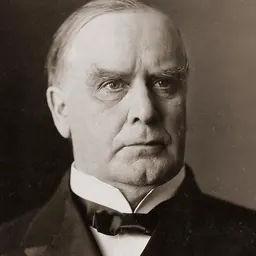
President William McKinley recognized the achievements of the rescue in a letter dated January 17, 1899 to the United States Congress, in which he requested of Congress "That gold medals of honor of appropriate design, to be approved by the Secretary of the Treasury, be awarded to Lieutenants Jarvis and Bertholf and Dr. Call, commemorative of their heroic struggles in aid of suffering fellow-men." The enabling statute reads as follows:
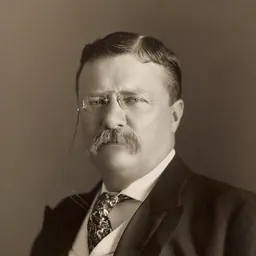
Later career and death Three years later, Jarvis stood by his post as a special government agent at Nome, Alaska during a smallpox epidemic. In February 1902, he was named collector of customs for the District of Alaska by President Theodore Roosevelt. President Roosevelt, who had recommended Jarvis for the position with the syndicate, twice offered him the governorship of Alaska. The U.S. Coast Guard's "Captain David H. Jarvis Inspirational Leadership Award" is presented annually and recognizes an officer that consistently demonstrates outstanding leadership skills which motivate and inspire personnel to strive for excellence. Mount Jarvis, a shield volcano in the Wrangell Mountains of eastern Alaska, was named for him in 1903 by F. C. Schrader of the United States Geological Survey. Jarvis's Congressional Gold Medal is now part of the collection of the U.S. Coast Guard Museum.
Personal life Jarvis married Ethel Taber on April 2, 1896. They had three children: Anna (born during the Overland Relief Expedition), David H., and William.
Don’t just read it —
keep it.
Full-length biographies made to live with: read them, listen on the way to work, watch them tonight.
- E-book
- Audio
- Video
Instant download · yours to keep · every purchase keeps this site free
Important facts
People in David H. Jarvis's life
Named in this biography and alive at the same time



Related people
Same field, nearest in time


Contemporaries
People whose lives overlapped David H. Jarvis's





Frequently asked questions
Who was David H. Jarvis?
United States Revenue Cutter Service officer (1862-1911)
When was David H. Jarvis born?
David H. Jarvis was born on 24 August 1862 in Berlin.
When did David H. Jarvis die?
David H. Jarvis died on 23 June 1911 in Seattle.
What was David H. Jarvis's occupation?
David H. Jarvis was a sea captain.
What nationality was David H. Jarvis?
David H. Jarvis was American.
Sources & further reading
Cite this page
APA: Biography.guide. (2026). David H. Jarvis. https://biography.guide/david-h-jarvis/
MLA: "David H. Jarvis." Biography.guide, https://biography.guide/david-h-jarvis/.
Chicago: "David H. Jarvis." Biography.guide. https://biography.guide/david-h-jarvis/.
Data last updated: 2026-09-20 · Spot an error? Report a correction.
Page generated 2026-09-27 05:29 UTC