
David Funchess
American Vietnam War veteran executed for murder
About David Funchess
Lived 1947 – 1986 (aged 39).
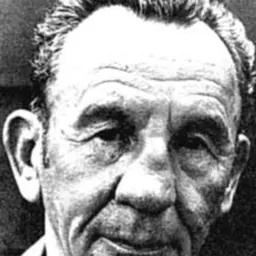
David Livingston Funchess (March 16, 1947 – April 22, 1986) was an American war veteran, self-confessed war criminal, and convicted murderer who was executed by the state of Florida. Funchess was convicted of and sentenced to death for the 1974 murders of 52-year-old Anna Waldrop and 56-year-old Clayton Keaton Ragan during a robbery of his former workplace. Funchess also severely injured 62-year-old Bertha McLeod, who died of her injuries in 1977; however, Funchess never went to trial or received a conviction in McLeod's murder. He was sentenced to death in 1975 – and resentenced to death in 1979 – for Waldrop and Ragan's murders.
Funchess's case gained significant press coverage and controversy because he was a Vietnam War veteran who was diagnosed with an extreme case of post-traumatic stress disorder (PTSD) as a result of his service. At the time of the murders, the disorder was not fully recognized; the American Psychiatric Association added PTSD to the third edition of the Diagnostic and Statistical Manual of Mental Disorders (DSM-III) in 1980, several years after Funchess was sentenced to death. Funchess was diagnosed with the disorder in 1982. Courts and Florida Governor Bob Graham repeatedly denied Funchess's clemency requests due to him and his legal team not having brought up PTSD as a mitigating factor at the time of his 1975 trial. These decisions prompted criticism from Funchess's defense attorneys, war veterans, and anti-death penalty activists, who argued that his PTSD diminished his culpability in the murders and that his sacrifice on behalf of the country's military should have earned him clemency, and that Funchess could not have brought up PTSD during his trial as it was not recognized in the DSM-III at the time.
Funchess's execution made him the first Vietnam War veteran to be executed in the United States.
Early life and Vietnam War Funchess was born on March 16, 1947, in Jacksonville, Florida, to Alice and Venis (or Wenis) Funchess, the latter of whom operated tractors for a fertilizer plant. David Funchess had at least two older siblings, Mary and Willie J. Funchess; Willie was 2 years old at the time of David Funchess's birth. At the time of his enlistment, Funchess had no criminal record.
Vietnam War experiences During Funchess's time in Vietnam, he was exposed to Agent Orange, a toxic herbicide, defoliant, and chemical agent linked to physical and neurological problems in veterans and their offspring. While on death row, Funchess told his sister that he had very few memories of his time in Vietnam but could remember watching a fellow Marine being decapitated by a missile, having his own body blown into the air by the force of a mortar explosion, and being ordered to shoot a pajama-clad elderly man who was too physically disabled to escape: Two and a half months into his service, Funchess received severe injuries to his ankle and leg from stepping on a land mine. A medical report described that he was medically evacuated to a naval hospital in Japan for three months and subsequently sent to a naval hospital in Virginia, where he was housed in a psychiatric ward with a diagnosis of "Psychoneurotic Depressive Reaction," a precursor to post-traumatic stress disorder. However, he received a Purple Heart due to his wounds. He also received the Vietnam Service Medal and the Republic of Vietnam Campaign Medal. One sister, Queenie, described incidents wherein Funchess would "go blank" and become unresponsive for several minutes at a time in the middle of conversations, and that she would hear him crying in his room at night. He also disclosed to her that he had recurring nightmares involving the unarmed Vietnamese civilians whom he had been ordered to kill. On separate occasions, he was arrested for loitering, obstructing traffic, public intoxication, and other crimes, although whether or not he was convicted of any of those crimes is unclear.
Crime Sometime before 9:15 am on Monday, December 16, 1974, Funchess entered the lounge and encountered Waldrop, McLeod, and Ragan. He beat and stabbed all three of them on various parts of their bodies; he also slashed all three of their throats. Police later found a bloodstained grapefruit knife, which they believed Funchess used to carry out the murders. He stole between $5,500 and $6,500 USD from the bar, mostly in canceled checks, before leaving.
After the murders, Funchess shared some of the money from the robbery with two women he had met on the street minutes prior to the murders. He used some more of the money to take a cab and travel to Ocala, Florida. A court-appointed psychiatrist, Dr. Ernest Miller, described Funchess as a "sociopath" who was "dangerous to society." Circuit Judge Gordon A. Duncan agreed with the jury's recommendation. In imposing Funchess's death sentence, Duncan called Funchess's crimes "some of the most senseless, heinous, and horrible murders that have ever taken place in Jacksonville." He called the murders "premeditated" and said, "The Defendant selected the place for a robbery and like a cobra, he carefully chose the time to strike while casually drinking a cup of coffee across the street from the scene of the crimes." He also acknowledged that McLeod was still in a persistent vegetative state.
Early appeals In December 1976, the Florida Supreme Court upheld Funchess's death sentence in a unanimous 7–0 vote. One justice, Arthur England, warned prosecutors against showing jurors inflammatory photographs of the victims, as had happened at Funchess's trial, but concurred with the decision to uphold Funchess's sentence; during his trial, jurors were shown images of Waldrop's body and close-ups of her deceased face while prosecutors commented on the "helpless horror she must have felt while attempting to defend herself from brutal assault."
PTSD awareness, diagnoses, and clemency requests At the time of Funchess's death sentence, PTSD was not fully understood; one of his appellate attorneys, Michael Mello, stated that the general perception of Vietnam War veterans at the time was that they were "either violent or drug addicts, or both," who received ostracism and a hostile reception upon their return. Another separate doctor, when discussing Funchess's crimes with the added context of Funchess's PTSD, remarked that Funchess likely committed the murders in the middle of "a prolonged episode of cognitive confusion and dissociation,"
Governor Graham signed Funchess's second and final death warrant in February 1986, scheduling Funchess's execution to take place at 7:00 am on April 22, 1986, alongside John Earl Bush (whose execution was ultimately delayed until October 21, 1996). After Governor Graham signed Funchess's death warrant, the Florida Office of Capital Collateral Representatives (CCR) again argued that Funchess deserved a new trial because PTSD was not fully recognized at the time of his original trial and that his moral culpability for the murders could not be assessed without taking his PTSD into account. Appellate courts rejected Funchess's arguments because he did not bring up PTSD at the time of his trial, a decision Funchess's attorneys criticized as being based on a "legal technicality," about which one of Funchess's attorneys asked, "How can trial lawyers in 1986 be blamed for not raising a claim that did not exist in 1976? How can courts in 1986 use that prior failure as a basis for refusing to consider powerful evidence of PTSD? And the ultimate question: why should a condemned person have to pay with his life for the mistakes of his lawyers?"
Execution Anna Waldrop's daughter wrote a letter to the Florida Attorney General's office asking for permission to witness Funchess's execution, although the Florida Department of Corrections had a policy at the time prohibiting the families of victims or the condemned party from witnessing executions; Waldrop's daughter said that if her request was rejected, she would stand outside Florida State Prison among other death penalty supporters while his sentence was carried out. She also told reporters that she supported Funchess's execution and wanted to watch it for closure.
Patricia Frank of the Florida chapter of Pax Christi, an international Catholic peace organization, protesting Funchess's execution with a sign reading, "Florida Says Thanks to a "Purple Heart" Vet"
Funchess spent his final hours with his parents, his wife, two sisters, and three brothers.
Funchess was led to the electric chair shortly afterwards. Reporters observed him smiling at his attorney Susan Cary, who witnessed the execution alongside Jeff Thompson, and mouthing, "It's OK, it's OK. I love you." He declined to make a formal final statement. He was pronounced dead at 5:11 pm. Clayton Ragan's daughter and Anna Waldrop's daughter were outside the prison during the execution and expressed relief at the execution and sympathy for Funchess's family for their loss, although Ragan's daughter later expressed disapproval of the crowd of death penalty supporters who erupted into cheers at the news of Funchess's death, saying, "I would never do that. To even be a part of the execution is so degrading. No death is a reason to be happy." She also said, "I don't like being here, but I felt I owed it."
Funchess was buried on Jeff Thompson's land in a rural north Florida county; a group of veterans and anti-death penalty citizens arranged the burial, as Funchess's siblings did not wish to return his body to Jacksonville.
Don’t just read it —
keep it.
Full-length biographies made to live with: read them, listen on the way to work, watch them tonight.
- E-book
- Audio
- Video
Instant download · yours to keep · every purchase keeps this site free
Important facts
People in David Funchess's life
Named in this biography and alive at the same time





Contemporaries
People whose lives overlapped David Funchess's


Frequently asked questions
Who was David Funchess?
American Vietnam War veteran executed for murder (1947–1986)
When was David Funchess born?
David Funchess was born on 16 March 1947.
When did David Funchess die?
David Funchess died on 22 April 1986.
Sources & further reading
Cite this page
APA: Biography.guide. (2026). David Funchess. https://biography.guide/david-funchess/
MLA: "David Funchess." Biography.guide, https://biography.guide/david-funchess/.
Chicago: "David Funchess." Biography.guide. https://biography.guide/david-funchess/.
Data last updated: 2026-09-20 · Spot an error? Report a correction.
Page generated 2026-09-27 05:23 UTC