
About David Friedland
Lived 1937 – 2022 (aged 84). David Friedland was an American lawyer and politician.
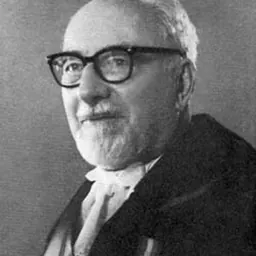
David Joel Friedland (December 20, 1937 – April 21, 2022) was an American lawyer and Democratic Party politician who represented Hudson County, New Jersey in the New Jersey General Assembly from 1966 to 1974 and the New Jersey Senate from 1978 until his conviction on racketeering charges in 1980. While awaiting sentencing, Friedland disappeared in September 1985 by faking his death in a supposed drowning incident off Grand Bahama. He was one of the United States government's most wanted fugitives until 1987, when he was captured in the Maldives, where he had drawn attention to himself after establishing a successful chain of scuba diving shops.
Early life and education David Joel Friedland was born on December 20, 1937, in Jersey City, New Jersey. His father, Jacob Friedland, was a labor attorney who later served in the New Jersey General Assembly from 1939 until 1952.
Legal career
Jackman v. Bodine In 1964, Friedland represented labor leaders Christopher Jackman and Winfield Chasmar Jr. in a lawsuit challenging the apportionment of the New Jersey Senate under the principle of one man, one vote, which the United States Supreme Court had applied to state legislatures in Reynolds v. Sims. In Jackman v. Bodine (1964), the Supreme Court of New Jersey ruled that the state's legislative apportionment formula, which was based on historical county boundaries and provided each county with a single state senator but weighted the vote of such senator according to the county's population, was unconstitutional under the Equal Protection Clause of the Fourteenth Amendment to the United States Constitution. The December 15, 1964 ruling resulted in the reapportionment of the New Jersey legislature. Subsequent rulings in the case, also argued before the state courts by Friedland, led to the appointment of a special commission in 1967 and further adjustments to ensure population equality between districts in 1969.
Ethical problems and suspension On December 30, 1968, while Friedland was serving in the New Jersey General Assembly, assistant attorney general William J. Brennan III testified against Friedland as one of three legislators who were "entirely too comfortable with members of organized crime." The testimony stemmed from New Jersey State Police files alleging that Friedland acted as a middleman to suppress loan sharking charges against Joseph Zicarelli, the alleged boss of Hudson County organized crime. Friedland denied the allegations, claiming that he had been attempting to settle a usurious loan and had not talked to any witnesses against the loan shark. He demanded Brennan's resignation.
In February 1971, the New Jersey Supreme Court found that he had violated judicial ethics in his efforts to get charges against the alleged loan shark dropped. On July 27, 1971, the Court suspended Friedland from the practice of law for a period of six months. Friedland asserted that he had done nothing wrong and, claiming that "here had been no charge of impropriety in connection with [his] legislative duties," stated that he would run for re-election and that he expected the Assembly would take no action against him.
Political career
New Jersey General Assembly Following the Jackman v. Bodine decision, Friedland was elected to the New Jersey General Assembly in 1965. He was re-elected in 1967, 1969, and 1971, serving from 1966 until 1974.
After the 1969 election, Friedland was elected minority leader of the Assembly by one vote against John J. Horn of Camden County. Despite the suspension of his law license during his third term in office, Friedland won re-election in 1971 by a wide margin over an independent challenger, with 47 percent of the vote.
In 1973, Friedland chose not to seek re-election after reformer Paul T. Jordan was elected mayor of Jersey City. However, his term in the Senate was cut short and overshadowed by his indictment for federal tax evasion and witness tampering charges.
In 1978, Friedland was one of twenty-six senators to vote in favor of a bill restoring the death penalty for first degree murder. He cited the popular will and stated, "The fallacy of elitism is that it believes its judgments are superior to those of the common herd."
Conviction and disappearance In October 1979, Friedland and his father Jacob were indicted for accepting $360,000 in bribes to arrange a $4 million loan to companies controlled by Barry S. Marlin from the pension fund of Teamsters Local 701 in North Brunswick. Marlin was an attorney who had been convicted of stealing $43 million in various schemes. After his indictment, Friedland expressed confidence that he would be exonerated.
On April 11, 1980, Friedland and his father were convicted by a jury for accepting bribes, income tax evasion and obstruction of justice for asking a witness to lie to the grand jury. Friedland maintained his innocence but resigned immediately from office to devote his time to appealing the verdict. In 1982, he reached an agreement under which he would avoid prison in exchange for cooperation, including recording incriminating conversations with his former associates. In 1983, United States Attorney for the District of New Jersey W. Hunt Dumont was reported by The New York Times to be pursuing a major investigation of as many as 50 individuals based on evidence that Friedland had provided. The government later argued that Friedland deceived them and did not in fact cooperate.
While in the United States Federal Witness Protection Program, Friedland was hired by his former colleague and ally Joseph J. Higgins, and they made additional efforts to defraud the same pension fund. Friedland was said to have taken pain killers before diving with a friend twelve miles off of the coast and had failed to surface. His body was not discovered in an air-sea search, and a warrant was issued for his arrest.
In fact, Friedland went on the run, using a fake United States passport and traveling under the alias of Richard Smith Harley. Over the next several years, he was traced to Kenya, Paris, Venice, Hong Kong and Singapore and became the fugitive most wanted by the United States Marshals Service. In December 1987, two years after his disappearance, he was arrested by officials in Malé, where he had been working as a scuba dive master. While in the Maldives, Friedland had done little to avoid attention, posing for a post card in which he was in scuba gear feeding a live shark with food held in his own mouth.
In a January 1988 preliminary hearing in Friedland's trial for conspiracy to defraud the union pension fund, assistant U.S. Attorney Michael Chertoff told judge John F. Gerry that Friedland had contacted Libyan leader Muammar al-Gaddafi during his time in the Maldives as part of an effort to arrange "asylum in Libya or any anti-American country". In September 1988, Friedland entered a guilty plea to a count of conspiracy under the Racketeer Influenced and Corrupt Organizations Act (RICO) as part of deal with authorities under which mail fraud and wire fraud charges would be dropped. On December 2, 1988, he was sentenced on the RICO count to a fifteen-year sentence, to be served concurrently with the seven-year term applied by Debevoise for his original conviction.
On April 3, 1989, after Friedland declined an offer to pass on details of illegal drug activity in prison, U.S. Attorney Samuel Alito stated that his office would not make any promise to assist Friedland. However, Friedland later claimed that he had made a deal directly with Drug Enforcement Administration special agent Anthony Longarzo, under which he provided information leading to several arrests and drug seizures. In exchange, Longarzo was supposed to recommend to the court and the United States Parole Commission that Friedland's incarceration be shortened. He was released from the halfway house in July 1997, after serving a total of nine years of his 15-year sentence. He found work with an advertising firm.
He died on April 21, 2022.
Don’t just read it —
keep it.
Full-length biographies made to live with: read them, listen on the way to work, watch them tonight.
- E-book
- Audio
- Video
Instant download · yours to keep · every purchase keeps this site free
Important facts
People in David Friedland's life
Named in this biography and alive at the same time



Related people
Same field, nearest in time



Contemporaries
People whose lives overlapped David Friedland's


Frequently asked questions
Who was David Friedland?
American politician
When was David Friedland born?
David Friedland was born on 20 December 1937 in Jersey City.
When did David Friedland die?
David Friedland died on 21 April 2022.
What was David Friedland's occupation?
David Friedland was a lawyer and politician.
What nationality was David Friedland?
David Friedland was American.
Sources & further reading
Cite this page
APA: Biography.guide. (2026). David Friedland. https://biography.guide/david-friedland/
MLA: "David Friedland." Biography.guide, https://biography.guide/david-friedland/.
Chicago: "David Friedland." Biography.guide. https://biography.guide/david-friedland/.
Data last updated: 2026-09-20 · Spot an error? Report a correction.
Page generated 2026-09-27 05:32 UTC