
David Baker
American jazz composer, trombonist, professor of music and author
About David Baker
Lived 1931 – 2016 (aged 84). David Baker was an American composer, professor, jazz musician, conductor and writer.
David Nathaniel Baker Jr. (December 21, 1931 – March 26, 2016) was an American jazz composer, conductor, and musician from Indianapolis, as well as a professor of jazz studies at the Indiana University Jacobs School of Music. Baker is best known as an educator and founder of the jazz studies program. From 1991 to 2012, he was conductor and musical and artistic director for the Smithsonian Jazz Masterworks Orchestra. He has more than 65 recordings, 70 books, and 400 articles to his credit.
He received the James Smithson Medal from the Smithsonian Institution, an American Jazz Masters Award, a National Association of Jazz Educators Hall of Fame Award, a Sagamore of the Wabash award, and a Governor's Arts Award from the State of Indiana. Baker also held leadership positions in several arts and music associations. The Indiana Historical Society named Baker an Indiana Living Legend in 2001. The John F. Kennedy Center for the Performing Arts named him a Living Jazz Legend in 2007.
Early life and education David Nathaniel Baker Jr. was born in Indianapolis, Indiana, on December 21, 1931, to Patress Lasley Baker and David N. Baker Sr., a postal carrier. His siblings included two sisters, Shirley and Clela, and a brother, Archie.
Baker attended Indianapolis Public Schools and graduated from Crispus Attucks High School, a segregated public school for African American students. He continued his education at Indiana University in Bloomington, Indiana, where he earned a bachelor's degree in music education in 1953 and a master's degree in music education in 1954. Baker also studied with J. J. Johnson, János Starker, and George Russell and attended the Lenox School of Jazz in Lenox, Massachusetts, from 1959 to 1960 on a scholarship.
Marriage and family Baker eloped from Missouri, where he began working as a university professor in 1955, to Chicago, Illinois, to marry Eugenia ("Jeanne") Marie Jones. Baker and his first wife, Jeanne, were the parents of a daughter, April. The marriage ended in divorce. Baker had a granddaughter, Kirsten, and a great-grandson, Dylan. Baker's second marriage was to flautist Lida Belt. Baker returned to Indiana and taught private music lessons in Indianapolis and performed in local bands. He did not resume his academic teaching career until 1966.
During the 1950s Baker played in several big bands, including Lionel Hampton's orchestra. After moving to California in 1956, he played with the West Coast jazz orchestras of Stan Kenton and Maynard Ferguson before returning to Indianapolis to lead his jazz band for two years. He performed in clubs across the United States, including the Five Spot Café in New York City with George Russell in the late 1950s. In 1960 he toured Europe as a member of Quincy Jones's band. Baker was also able to play trombone with Russell's orchestra on Living Time (1972), a collaboration with Bill Evans, before the jaw injury finally caused him to give up the trombone and focus on teaching and composition.
Baker is credited on sixty-five recordings, including performances on two of Russell's albums, Stratusphunk (1960) and The Stratus Seekers (1962). He is also credited with writing 400 articles.
Baker's best-known composition, which also received significant media attention, was Concertino for Cell Phones and Orchestra, a commission from Chicago Sinfonetta. Baker's other compositions include a tribute to Martin Luther King Jr. in 1968, a violin concerto for Josef Gingold, a flute concerto for James Pellerite, as well as Cello Concerto (1975), which he dedicated to cellist János Starker, and "Ode to Starker" (1999).
Death and legacy Baker died on March 26, 2016, at the age of eighty-four in Bloomington from complications due to Parkinson's disease and Lewy body dementia.
Awards and honors Lifetime Achievement Award, Jazz Education Hall of Fame (1994), New Star Award for trombonists (1962), DownBeat magazine Arts Midwest Jazz Masters Award (1990)
Memberships Former Member, National Council on the Arts Former Board member, American Symphony Orchestra League Former Board member, Arts Midwest Former Board member, Afro-American Bicentennial Hall of Fame/Museum Past chairperson, Jazz Advisory Panel to the Kennedy Center Former chairperson, Jazz/Folk/Ethnic Panel of the National Endowment for the Arts Past president and vice president, International Association for Jazz Education Founding president, National Jazz Service Organization Senior music consultant for the Smithsonian Institution Conductor and musical and artistic director, Smithsonian Jazz Masterworks Orchestra, from 1991 to 2012
Selected discography Steppin' Out (Liscio, 1998) How to Learn Tunes (2000)
With John Lewis The Golden Striker (Atlantic, 1960)
With George Russell Jazz in the Space Age (Decca, 1960) George Russell Sextet at the Five Spot (Decca, 1960) Stratusphunk (Riverside, 1960) George Russell Sextet in K.C. (Decca, 1961) Ezz-thetics (Riverside, 1961) The Stratus Seekers (Riverside, 1962)
Selected published works Baker wrote more than sixty books, including: Jazz Styles & Analysis – Trombone: A History of the Jazz Trombone via Recorded Solos (1973) Jazz Improvisation (1988) David Baker's Jazz Pedagogy (1989)
He is also credited with authoring 400 articles.
Selected compositions
Orchestra Alabama Landscape (1990) Alto Saxophone Concerto (1989) Concert Piece for Trombone and String Orchestra (1991) Concertino for Cellular Phones (2006) Concerto for Trumpet, String Orchestra, and Jazz Band (1987) Concerto for Two Pianos, Jazz Band, Strings, and Percussion (1976) Concertpiece for Viola and Orchestra (1989) Homage: Bartok, Bird, Duke (1988) Images of Childhood (1990) Jazz Suite for Clarinet and Orchestra: Three Ethnic Dances (1993) Life Cycles (1988) Parallel Planes (1992) Piece for Brass Quintet and Orchestra (1988) Refractions (1998) Shades of Blue (1993) Suite from The Masque of the Red Death Ballet (2002)
Jazz Band An Evening Thought (1978) Concerto for Cello and Jazz Band (1987) Concerto for Violin and Jazz Band (1969) Honesty (1961) Soft Summer Rain (1977)
Vocal Give and Take for soprano and chamber ensemble (1975) Some Not So Plain Old Blues for Voice and Violin Soli with Mixed Sextet (1989) Through this Vale of Tears: In Memoriam: Martin Luther King, Jr. for Tenor or Soprano and Piano Quintet (1986) Witness: Six Original Compositions in Spiritual Style for Baritone and Double Bass (1990)
Solo/chamber Blues (Deliver My Soul) for violin and piano (1991) Clarinet Sonata (1990) Concertpiece for Viola, Piano (1989) Contrasts for Piano Trio (1976) Duo for Clarinet and Cello (1988) Ethnic Variations on a Theme of Paganini for Violin, Piano (1982) Faces of the Blues for solo alto sax and satb sax quartet (1988) Five Short Pieces for Solo Piano (1970) Flute Sonata (1989) Impressions for 2 Cello (1988) Inspiration for Flute, Piano (1987) Jazz Dance Suite for Solo Piano (1989) Jazz Suite for Violin, Piano (1979) Piano Sonata No. 1 (1968) Piece for Solo Tuba/ Tuba Quartet (1990) Reflections on a Summer's Day for 8 Celli (1986) Roots II for Violin, Cello, Piano (1992) Singers of Songs, Weavers of Dreams for Cello and Percussion (1981) Six Poemes Noir for Flute, Piano (1981) Sonata for Cello and Piano (1973) Sonata for Solo Cello (1990) Sonata for Tuba & String Quartet (unspec.) Suite for Unaccompanied Violin (1981) Summer Memories for string quartet (1988) Theme and Variations for Woodwind Quintet (1971) Violin Sonata (1991) Woodwind Quintet No. 1 (1971) Woodwind Quintet: From "The Black Frontier" (1971)
Don’t just read it —
keep it.
Full-length biographies made to live with: read them, listen on the way to work, watch them tonight.
- E-book
- Audio
- Video
Instant download · yours to keep · every purchase keeps this site free
Important facts
People in David Baker's life
Named in this biography and alive at the same time





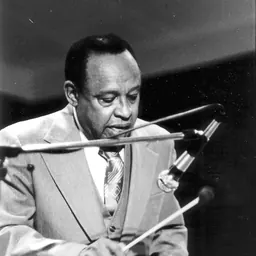
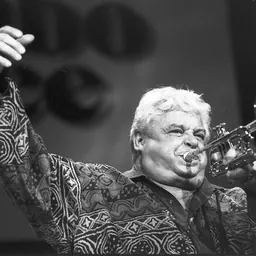
Related people
Same field, nearest in time
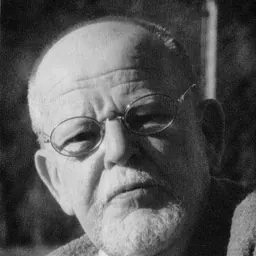
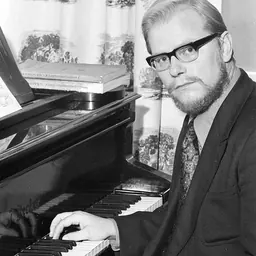


Contemporaries
People whose lives overlapped David Baker's
Frequently asked questions
Who was David Baker?
American jazz composer, trombonist, professor of music and author (1931-2016)
When was David Baker born?
David Baker was born on 21 December 1931 in Indianapolis.
When did David Baker die?
David Baker died on 26 March 2016 in Bloomington.
What was David Baker's occupation?
David Baker was a composer, professor, jazz musician, conductor and writer.
What nationality was David Baker?
David Baker was American.
Sources & further reading
· DBpedia: David Baker (composer)
Cite this page
APA: Biography.guide. (2026). David Baker. https://biography.guide/david-baker/
MLA: "David Baker." Biography.guide, https://biography.guide/david-baker/.
Chicago: "David Baker." Biography.guide. https://biography.guide/david-baker/.
Data last updated: 2026-09-20 · Spot an error? Report a correction.
Page generated 2026-09-27 05:18 UTC