
About David Anthony King
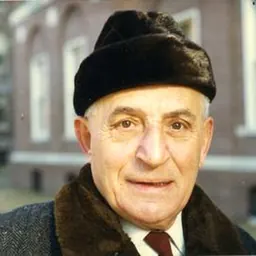
Born 1939. David Anthony King is a British chemist and university teacher.
Academic career After his PhD, King moved to the United Kingdom where he was a Shell Scholar at Imperial College, London, from 1963 to 1966. He was appointed Brunner Professor of Physical Chemistry at the University of Liverpool in 1974. He was a member of the National Executive of the Association of University Teachers from 1970 until 1978, and served as its president for the 1976/77 academic year. and was Chancellor of the University of Liverpool from 2010 to 2013.
Research King has published over 500 papers on his research in chemical physics and on science and policy.
Career outside academia King was the Chief Scientific Adviser to the UK Government and Head of the Government Office for Science from October 2000 to 31 December 2007, under prime ministers Tony Blair and Gordon Brown. In that time, he raised the profile of the need for governments to act on climate change and was instrumental in creating the £1 billion Energy Technologies Institute. In 2008 he co-authored The Hot Topic on this subject.
During his tenure as Chief Scientific Adviser, he raised public awareness for climate change and initiated several foresight studies. As director of the government's Foresight Programme, he created an in-depth horizon scanning process which advised government on a wide range of long-term issues, from flooding to obesity. He also chaired the government's Global Science and Innovation Forum from its inception. King advised the government on issues including: the foot-and-mouth disease epidemic 2001; post 9/11 risks to the UK; GM foods; energy provision; and innovation and wealth creation. He was heavily involved in the government's Science and Innovation Strategy 2004–2014. He suggested that scientists should honour a Hippocratic Oath for Scientists.
In April 2008, King joined UBS, a Swiss investment bank, as senior science advisor. He left UBS to return to the UK government when he was appointed the Foreign Secretary's Special Representative for Climate Change in September 2013.
From 2013 to 2016, King was the first chairman of the Future Cities Catapult, a government-funded body conducting research into smart cities.
In May 2020, in response to the COVID-19 pandemic, King formed and led Independent SAGE, a committee of unpaid experts which acts as a "shadow" of the UK government's SAGE group to address concerns of lack of transparency and political influence on that body.
Views
Climate change In his role as scientific advisor to the UK government King was outspoken on the subject of climate change, saying "I see climate change as the greatest challenges facing Britain and the World in the 21st century" and "climate change is the most severe problem we are facing today – more serious even than the threat of terrorism".
He strongly supports the work of the IPCC, saying in 2004 that the 2001 synthesis report "is the best current statement on the state of play of the science of climate change, and that really does represent 1,000 scientists".
King criticised the Bush administration for what he saw as its failures in climate change policy, saying it is "failing to take up the challenge of global warming".
In 2004, King gave evidence to a House of Commons select committee confirming his view that "on a global and geological scale that climate change is the most serious problem we are faced with this century", and illustrated it with a statement that "Fifty-five million years ago was a time when there was no ice on the earth; the Antarctic was the most habitable place for mammals". The Independent on Sunday reported that King had at a later event compared current and projected carbon dioxide levels with the record over the past 60 million years, and in an indirect quote suggested King implied that Antarctica was likely to be the world's "only" habitable continent by the end of this century if global warming remains unchecked. At the end of the 2007 programme "The Great Global Warming Swindle", broadcast on Channel 4, Fred Singer ridiculed the reported view of the "chief scientist"; King's complaint to Ofcom that the programme was unfair and had not given a chance to clarify was upheld, despite Channel 4's arguments that King was not named and had not challenged earlier reporting.
King became head of the Climate Crisis Advisory Group in 2021, basing public meetings on a similar format to Independent SAGE, and publishing reports advising emission cuts and carbon dioxide removal. He promotes the CCAG's 4R planet pathway: Reducing emissions; Removing the excess greenhouse gases (GHGs) already in the atmosphere; Repairing ecosystems; strengthening local and global Resilience against inevitable climate impacts.
Food production King told The Independent newspaper in February 2007 "he agreed that organic food was no safer than chemically-treated food" and openly supported a study by the Manchester Business School that implicated organic farming practices in unfavourable CO2 comparisons with conventional chemical farming.
In an article published in The Guardian in February 2009, King is quoted as saying that "future historians might look back on our particular recent past and see the Iraq war as the first of the conflicts of this kind – the first of the resource wars" and that this was "certainly the view" (that the invasion was motivated by a desire to secure energy supplies) he held at the time of the invasion, along with "quite a few people in government".
Energy King is a strong supporter of nuclear electricity generation, arguing that it is a safe, technically feasible solution that can help to reduce emissions from the utilities sector now, while the development of alternative low-carbon solutions is incentivised. In the transport sector, King has warned governments that conventional oil resources are more scarce than they believe and that peak oil might approach sooner than expected. Moreover, he has criticised first generation biofuels due to the effect on food prices and subsequent effect on the developing world. He strongly supports second generation biofuels, however, which are manufactured from inedible biomass such as corn stover, wood chips or straw. These biofuels are not made from food sources (see food vs fuel).
King is a member of the Global Apollo Programme and headed its public launch in 2015. The programme calls for multinational research into reducing the cost of low-carbon electricity generation.
Humanism
King is a Distinguished Supporter of Humanists UK.
Covid response
In July 2020 King advocated for school closures in the UK until covid cases were reduced to 1 in a million.
Honours and awards King was knighted in the 2003 New Year honours. In 2009, he was made a Chevalier of the Légion d'Honneur by the French government. a Foreign Fellow of the American Academy of Arts and Sciences in 2002,
In media King appears in the film The Age of Stupid, released in February 2009, talking about Hurricane Katrina. He was portrayed by David Calder in the 2021 BBC television film The Trick.
Personal life By his first marriage, which ended in divorce, King has two sons. In 1983, he married, secondly, charity administrator and former head of a commercial law team, Jane Margaret, daughter of general practitioner Hans Eugen Lichtenstein, OBE, of Llandrindod Wells, Powys, Wales, a Holocaust survivor from a family that owned leather goods shops and an umbrella factory in Berlin. They have a son and a daughter.
Books published
Sir David King, Gabrielle Walker, The Hot Topic: how to tackle global warming and still keep the lights on, Bloomsbury London 2008 Oliver Inderwildi, Sir David King, Energy, Transport & the Environment, 2012, Springer London New York Heidelberg
Don’t just read it —
keep it.
Full-length biographies made to live with: read them, listen on the way to work, watch them tonight.
- E-book
- Audio
- Video
Instant download · yours to keep · every purchase keeps this site free
Important facts
People in David Anthony King's life
Named in this biography and alive at the same time





Related people
Same field, nearest in time



Contemporaries
People whose lives overlapped David Anthony King's



Frequently asked questions
Who is David Anthony King?
British academic and scientific adviser
When was David Anthony King born?
David Anthony King was born on 12 August 1939 in Durban.
What is David Anthony King's occupation?
David Anthony King is a chemist and university teacher.
What nationality is David Anthony King?
David Anthony King is British.
Sources & further reading
· Wikipedia: David Anthony King
· DBpedia: David King (chemist)
Cite this page
APA: Biography.guide. (2026). David Anthony King. https://biography.guide/david-anthony-king/
MLA: "David Anthony King." Biography.guide, https://biography.guide/david-anthony-king/.
Chicago: "David Anthony King." Biography.guide. https://biography.guide/david-anthony-king/.
Data last updated: 2026-09-25 · Spot an error? Report a correction.
Page generated 2026-09-27 05:11 UTC