
About David Andrews
Lived 1935 – 2026 (aged 91). David Andrews was an Irish barrister, politician and diplomat.
David Andrews (15 March 1935 – 30 June 2026) was an Irish Fianna Fáil politician who served as Minister for Foreign Affairs from 1992 to 1993 and 1997 to 2000, Minister for Defence from 1993 to 1994 and June 1997 to October 1997, Minister for the Marine from 1993 to 1994, Minister of State at the Department of Foreign Affairs from 1977 to 1979 and Government Chief Whip and Minister of State at the Department of Defence from 1970 to 1973. He served as a Teachta Dála (TD) from 1965 to 2002.
Life and career Early life Andrews's father was the Irish republican and public servant Todd Andrews, who had been active during the War of Independence and the Civil War before going on to head several state bodies, including the Irish Tourist Association, the ESB, Bord na Móna, and CIÉ, as well as chairing the RTÉ Authority. His mother, Mary Coyle, had been a member of Cumann na mBan and had been held in Kilmainham Gaol.
Political career Andrews was first elected to Dáil Éireann at the 1965 general election as a Fianna Fáil TD for the Dún Laoghaire and Rathdown constituency. In May 1970, in a reshuffle following the Arms Crisis, he was appointed Parliamentary Secretary to the Taoiseach, He served until Fianna Fáil left office in 1973.
Following the 1977 general election, Fianna Fáil was back in office and Jack Lynch appointed Andrews as Parliamentary Secretary to the Minister for Foreign Affairs. the favoured candidate of the existing leadership. However, Charles Haughey, in a close vote, was elected party leader and Taoiseach.
He was confined to the backbenches during Haughey's thirteen-year period as leader. During this period he maintained his legal practice as a barrister and campaigned for the Guildford Four, the Birmingham Six, and Brian Keenan. later that year, after the resignation of Ray Burke, he was appointed Minister for Foreign Affairs for the second time. His period as Foreign Minister was successful regarding the Northern Ireland peace talks. In April 1998, the Good Friday Agreement was signed and was later approved in referendums in Ireland and Northern Ireland; Andrews played a significant part in the negotiations that brought it about.
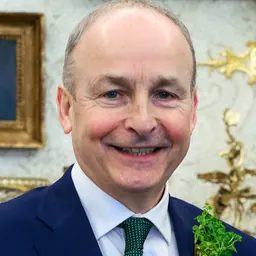
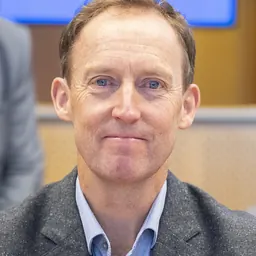
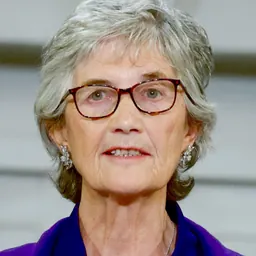
In May 2000, he was appointed to the non-executive position as Chairman of the Irish Red Cross Society, a role during which he campaigned on behalf of those affected by humanitarian crises in Somalia, Darfur, and East Timor, serving until 2009. Ryan Tubridy, the former RTÉ broadcaster, and Chris Andrews, a Sinn Féin politician, were among his nephews. Sean Barrett Taoiseach Micheál Martin said Andrews left "an enormous footprint" on Irish life, and recalled his sharpness, hard work, and dedication to the peace process, alongside his career as a barrister and his advocacy on human rights cases such as the Birmingham Six and Guildford Four. President Catherine Connolly described Andrews as someone who would be remembered for his integrity and his lifelong dedication to human rights, pointing to his contribution during the Good Friday Agreement talks and his concern for humanitarian crises in Rwanda, Somalia, and Palestine. Former president Michael D. Higgins said Andrews had made a major contribution to Irish politics, recalling that working with him in cabinet during the 1990s had been a positive experience, and citing his help in securing Collins Barracks for public use and arranging for the Irish Reserve Forces to take part in the filming of Braveheart. Tánaiste Simon Harris said Andrews had given decades of service to public life and had played a key role at an important time for the country, particularly in the talks that led to the Belfast Agreement. Fianna Fáil MEPs Billy Kelleher, Cynthia Ní Mhurchú, and Barry Cowen also offered their condolences to their European Parliament colleague Barry Andrews and his family, with Kelleher describing Andrews as a major figure in Irish politics whose dedication to the country, to Fianna Fáil, and to his Dún Laoghaire constituency was widely respected across party lines.
Don’t just read it —
keep it.
Full-length biographies made to live with: read them, listen on the way to work, watch them tonight.
- E-book
- Audio
- Video
Instant download · yours to keep · every purchase keeps this site free
Important facts
Family & relationships
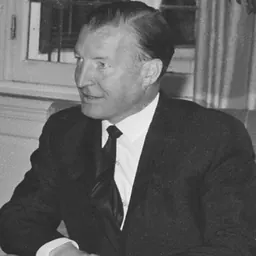
People in David Andrews's life
Named in this biography and alive at the same time



Related people
Same field, nearest in time



Contemporaries
People whose lives overlapped David Andrews's

Frequently asked questions
Who was David Andrews?
Irish politician (1935-2026)
When was David Andrews born?
David Andrews was born on 15 March 1935 in Dublin.
When did David Andrews die?
David Andrews died on 27 June 2026 in County Dublin.
What was David Andrews's occupation?
David Andrews was a barrister, politician and diplomat.
What nationality was David Andrews?
David Andrews was Irish.
Sources & further reading
· DBpedia: David Andrews (politician)
Cite this page
APA: Biography.guide. (2026). David Andrews. https://biography.guide/david-andrews-barrister/
MLA: "David Andrews." Biography.guide, https://biography.guide/david-andrews-barrister/.
Chicago: "David Andrews." Biography.guide. https://biography.guide/david-andrews-barrister/.
Data last updated: 2026-09-20 · Spot an error? Report a correction.
Page generated 2026-09-27 05:17 UTC