
About Darrell Robinson
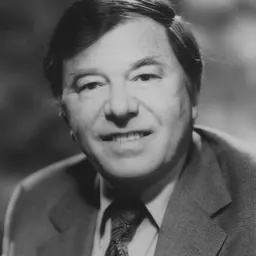
Born 1963. Darrell Robinson is an American athletics competitor.
Darrell Robinson (born December 23, 1963) is an American former track and field athlete who specialized in the 400-meter dash. He set a US high school national record of 44.69 seconds in the 400 m at the age of 18. He was in the world's top-five 400 m runners in 1985 and 1986. He won a bronze medal at the 1986 Goodwill Games, and won races at numerous high-profile track meetings.
In 1989 he accused Carl Lewis, Florence Griffith-Joyner, and Bob Kersee (among others) of using or distributing performance-enhancing drugs. The accusations, which were never substantiated, brought an end to his career at the age of 25.
Early life While attending Woodrow Wilson High School in Tacoma, Washington, Robinson ran a United States high school record of 44.69 seconds in the 400 m at the age of eighteen. This mark, set at the 1982 National Sports Festival in Indianapolis, was also a world junior record for the distance. Furthermore, his time was the second fastest 400 m run by any athlete that year, one-hundredth behind Sunder Nix who had beaten him in the race. He also received the Governor's Trophy for Outstanding Male Athlete for his performance in the 400 m at the Golden West Invitational that year. He was Track and Field News "High School Athlete of the Year" in 1982.
Robinson went on to study at the University of Houston, but he left after the sprint coach who recruited him resigned. After a short stint at the University of Washington, he went to UCLA in mid-1985, majoring in music. He missed making the final of the 1984 Olympic Trials, finishing 6th in the semis.
Breakthrough season In 1985, Robinson ran a season's best of 44.71 seconds to finish behind Innocent Egbunike in Los Angeles – a time which ranked him as the fifth fastest 400 m runner that year. He began training with Chuck DeBus and 1986 proved to be a breakthrough for Robinson. He competed at the Mt. SAC Relays in early May and recorded 20.41 seconds over 200 meters. He joined a strong 400 m line-up at the Pepsi Invitational later that month, which also featured Gabriel Tiacoh, Antonio McKay, Michael Franks and Egbunike, and all were intent on breaking Alberto Juantorena's time of 44.26 (the fastest run at sea level). Robinson led over the first 200 m at a world-record-pace of 21.4 seconds. However, Tiacoh managed to overhaul him in the last straight, but Robinson's time of 44.45 seconds to finish as runner-up was a still personal record. The race was the quickest that year, and Tiacoh and Robinson's times ranked them first and second on the season's lists, respectively. Next came the inaugural 1986 Goodwill Games and he won the 400 m bronze medal behind compatriots McKay and Clarence Daniel. Robinson took on an intensive schedule on the European track and field circuit during the months of August and September that year. He ran a number of sub-45 second times and won races at: the Weltklasse Zürich meeting (44.69), the ISTAF meet in Berlin (44.86), the Memorial Van Damme in Brussels (44.82), and Athletissima in Lausanne (44.96). His winning streak was brought to a halt at the London Grand Prix, where he and Andre Phillips both ran 45.00 seconds, but Phillips was awarded the victory. He closed his season with another 400 m win in 45.15 seconds at a meeting in Tokyo in mid-September. In October, The Athletics Congress (later USA Track & Field) had allowed the voluntary resignation of Robinson's former coach Chuck DeBus for giving banned substances to his athletes. Robinson said in Stern that, while staying at his house in 1982, he had seen Carl Lewis inject himself with a white fluid – what he believed to be testosterone. Furthermore, he said he had seen Tom Tellez (Lewis' coach) distribute blue pills to his athletes and claimed that these were banned steroids. Robinson had begun training with Bob Kersee in 1987 and he claimed that the coach had advised him on steroid use and given him two types of tablets: oxandrolone and metandienone. Robinson also claimed that he had personally sold a 10-cubic centimetre vial of human growth hormone to Florence Griffith-Joyner in March 1988, just months before she ran two world records and won an Olympic gold medal.
Lewis levelled a libel suit worth US$182 million against the German magazine in December 1989. Griffith-Joyner, Tellez and Bob Kersee denied the claims, but Florence Griffith-Joyner did not issue legal proceedings. The accused questioned Robinson's motives in that he received $50,000 for the interview with Stern, as well as $10,000 for appearing on Today on NBC to discuss the matter. Robinson was also close friends with Charlie Francis – the former coach of Ben Johnson.
Don’t just read it —
keep it.
Full-length biographies made to live with: read them, listen on the way to work, watch them tonight.
- E-book
- Audio
- Video
Instant download · yours to keep · every purchase keeps this site free
Important facts
People in Darrell Robinson's life
Named in this biography and alive at the same time




Related people
Same field, nearest in time






Contemporaries
People whose lives overlapped Darrell Robinson's



Frequently asked questions
Who is Darrell Robinson?
American sprinter
When was Darrell Robinson born?
Darrell Robinson was born on 23 December 1963 in Tacoma.
What is Darrell Robinson's occupation?
Darrell Robinson is an athletics competitor.
What nationality is Darrell Robinson?
Darrell Robinson is American.
Sources & further reading
Cite this page
APA: Biography.guide. (2026). Darrell Robinson. https://biography.guide/darrell-robinson/
MLA: "Darrell Robinson." Biography.guide, https://biography.guide/darrell-robinson/.
Chicago: "Darrell Robinson." Biography.guide. https://biography.guide/darrell-robinson/.
Data last updated: 2026-09-20 · Spot an error? Report a correction.
Page generated 2026-09-27 04:58 UTC