
Darlene Ka-Mook Nichols
Native American activist and FBI informant
About Darlene Ka-Mook Nichols
Born 1955. Darlene Ka-Mook Nichols is an activist, civil rights activist and federal Bureau of Investigation, known for Wounded Knee incident.
Early life Darlene "Ka-Mook" Ecoffey was born Darlene Pearl Nichols She is from the Pine Ridge Indian Reservation. Sources vary on the exact age Nichols was when she first met Dennis Banks. Some sources say she met Banks at 17, some sources state 16,
Personal life Nichols had previously lived with AIM leader Dennis Banks for 17 years and is mother of four of Banks' thirteen children. Shortly after the conviction of Arlo Looking Cloud on 8 February 2004 for the first-degree murder of Anna Mae Aquash, Nichols would marry Robert Ecoffey, who served as the lead investigator into Aquash's murder and now Bureau of Indian Affairs superintendent for the Pine Ridge Indian Reservation in September 2004.
Aquash's affair with Banks began while he was still in a common-law marriage with Nichols. Aquash's relationship with Banks was viewed with contempt and consternation by women of different tribal affiliations within the movement, as they believed the relationship represented a threat to AIM's stability at a time when AIM had become "a vortex of paranoia."
In 1973, when Nichols met Aquash, they wound up becoming friends.
In 1975, Nichols's second daughter, Ta Tiyopa Maza Win (or Iron Door Woman), was born while Nichols was taken to a jail in Wichita, Kansas on a firearms charge. and water rights The Longest Walk was thought of with the Trail of Broken Treaties of 1972 in mind, a similar form of protest which consisted of a caravan by car and subsequent march in Washington, D.C. and occupation of the Bureau of Indian Affairs to protest the government's during the throes of the Termination Era. The Longest Walk also symbolized the last major event of the Red Power Movement. The Longest Walk came to an end on 15 July 1978 when approximately 2,000 people entered the United States nation's capital, traveled to Meridian Hill Park and stopped at the Washington Monument. The Longest Walk was a resounding success, as the demonstration brought international attention and outrage against the federal paternalism the nation's Native Americans were facing, and resulted in the bills being defeated.
FBI informant Nichols originally served as a staunch supporter of the American Indian Movement. Even while one of her daughters was born in federal prison, Nichols refused to cooperate with the FBI. Nichols contacted the FBI, agreed to cooperate in Aquash's murder investigation recordings of Banks' conversation appear to suggest otherwise. In 2001, Nichols interviewed Banks while trying to learn more about the 1975 murder of AIM activist Anna Mae Aquash. Although Banks refused to discuss Aquash, he directed the conversation to Robinson, saying that he had been shot by another AIM officer and bled to death because the group was under siege and had no way to treat him adequately. Banks said he saw Robinson's body and ordered a subordinate, Chris Westerman, to "bury him where no one will know." (Westerman is the brother of activist, actor and musician Floyd Red Crow Westerman.)
Testimony
Testimony About Leonard Peltier Nichols testified in three trials concerning the murder of Anna Mae Aquash. Arlo Looking Cloud and John Graham were convicted of first degree murder while Richard Marshall was acquitted. Some of her testimony involved Leonard Peltier, who received a life sentence for the 1975 murder of two FBI agents
In the Graham trial, Nichols described an exchange between Pictou-Aquash and another AIM member, Leonard Peltier, in which Pictou-Aquash told Peltier to either shoot her or defend her. Nichols testified that Leonard Peltier said "he believed [Aquash] was a Fed and that he was going to get some truth serum and give it to her so she would tell the truth." According to Nichols, "She was upset, she was crying, she was afraid. I knew she was scared of Leonard and Dennis at that point." It was also the last time she saw Aquash alive.
United States v. Looking Cloud Fritz Arlo Looking Cloud, an Oglala Sioux and adopted brother of former American Indian Movement member Richard Two Elk, was arrested 27 March 2003 in Denver, Colorado on a warrant issued by federal authorities in South Dakota, in which Looking Cloud and another man were accused of shooting Pictou-Aquash during a kidnapping in December 1975 near Wanblee, South Dakota.
Nichols-Ecoffey testified that Peltier told her and Aquash that he killed two FBI agents during a June 1975 shootout (known as the Jumping Bull Compound Shootout) at a Pine Ridge ranch. According to Nichols-Ecoffey's testimony, "He said the (expletive) was begging for his life, but I shot him anyway." According to Nichols-Ecoffey, she, along with Leonard Peltier, her sisters, Bernie Nichols-Lafferty and Barbara Robideau, Nichols-Ecoffey also testified that she had heard Peltier say he thought Aquash was a snitch.
During the trial, Nichols-Ecoffey testified about several incidents of violence involving the American Indian Movement. Three of these incidents were The Custer Courthouse Riot Incident which involved several hundred people, the seventy-one day occupation of Wounded Knee, and a shoot-out near her home, during which two FBI agents were killed. Nichols-Ecoffey testified that Leonard Crow Dog and Leonard Peltier thought Aquash was an informant, and that Nichols-Ecoffey, her daughter, and Dennis Banks heard Peltier say that he thought Aquash was an informant.
In February 2004, a federal jury composed of seven women and five men deliberated for approximately seven hours before convicting Arlo Looking Cloud in the 1975 execution-style slaying of Anna Mae Pictou Aquash. Looking Cloud appealed to the United States Eighth Circuit Court of Appeals in 2005, but his appeal was struck down and his mandatory life prison term was affirmed.
State of South Dakota v. Graham John Graham, of Southern Tutchone ethnicity, a native of the Yukon and father of eight, was living in Vancouver when he was charged in the United States on 30 March 2003, with the 1975 first-degree murder/pre-meditated murder of Anna Mae Aquash.
On 6 December 2007, Graham was extradited from Canada to the United States based on the pre-mediated murder charge. After protracted litigation in the federal courts, the federal pre-meditated murder charge was dismissed in United States v. Graham, 572 F.3d 954 (8th Cir.2009). Before Graham could return to Canada, however, he was indicted by a Pennington County grand jury on state charges of premeditated murder and felony murder. The underlying felony was alleged to be the kidnapping of Anna Mae Pictou Aquash.
On 2 December 2010, South Dakota Judge John Delaney forbade any mention to jurors of a finding in the first autopsy report for Aquash suggesting that she may have had sex shortly before her death, a finding that prosecutors believed originated from Graham allegedly raping Aquash during her kidnapping. Nichols-Ecoffey was forbidden by Circuit Court Judge John Delaney from telling jurors exactly what she alleged group member Leonard Peltier told her six months before Pictou-Aquash was killed. The judge deemed it hearsay, but under questioning from prosecutors, she was allowed to say that Peltier made an "incriminating" statement.
Legacy Nichols-Ecoffey has been both praised and condemned for cooperating with the federal government and testifying against John Graham, Richard Marshall, and Arlo Looking Cloud. Her testimony implicated Leonard Peltier in the separate murder of two FBI agents. She has also been castigated by some American Indians for cooperating with the FBI. Barry Bachrach, one of Leonard Peltier's defense lawyers, claimed Nichols had received money from the FBI in exchange for her testimony. According to Bachrach, "This case was nothing more than smearsay. They coached Kamook and she admitted she had been paid $40,000 by the FBI. Her evidence should never have seen the light of day." to Leonard Peltier, also claimed that Nichols accepted $47,000.00 to say Peltier bragged about killing two agents.
During United States v. Looking Cloud, Nichols acknowledged receipt of $42,000 from the FBI in connection with her cooperation on the case, money she explained was compensation for the expenses she incurred while traveling to collect evidence by wearing a wire while visiting her ex-husband, Dennis Banks. The money was also paid to her to cover relocation expenses due to her fear of Banks. which served as a recount of the events which surrounded the Pine Ridge Indian Reservation and the American Indian Movement during the 1970s from the perspective of a former FBI Chief Agent.
On 27 August 2008, Nichols-Ecoffey and her husband opened a Subway restaurant on the Pine Ridge Indian Reservation.
Don’t just read it —
keep it.
Full-length biographies made to live with: read them, listen on the way to work, watch them tonight.
- E-book
- Audio
- Video
Instant download · yours to keep · every purchase keeps this site free
Important facts
Family & relationships
People in Darlene Ka-Mook Nichols's life
Named in this biography and alive at the same time



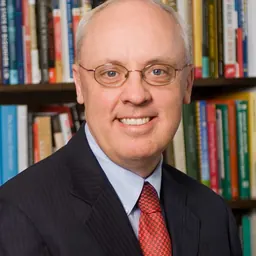
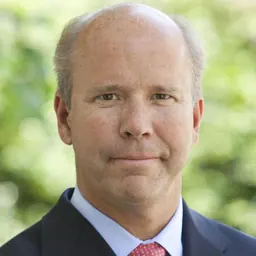

Related people
Same field, nearest in time
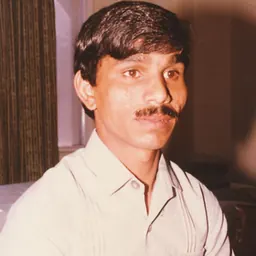


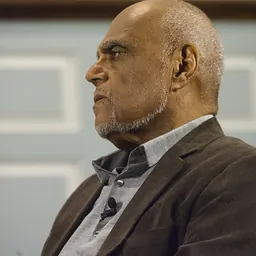
Contemporaries
People whose lives overlapped Darlene Ka-Mook Nichols's

Frequently asked questions
Who is Darlene Ka-Mook Nichols?
Native American activist and FBI informant
When was Darlene Ka-Mook Nichols born?
Darlene Ka-Mook Nichols was born in 1955 in Scottsbluff.
What is Darlene Ka-Mook Nichols's occupation?
Darlene Ka-Mook Nichols is an activist, civil rights activist and federal Bureau of Investigation.
What is Darlene Ka-Mook Nichols known for?
Darlene Ka-Mook Nichols is known for Wounded Knee incident.
What nationality is Darlene Ka-Mook Nichols?
Darlene Ka-Mook Nichols's recorded nationality: Native Americans in the United States.
Sources & further reading
· Wikipedia: Darlene Ka-Mook Nichols
· DBpedia: Darlene Ka-Mook Nichols
Cite this page
APA: Biography.guide. (2026). Darlene Ka-Mook Nichols. https://biography.guide/darlene-ka-mook-nichols/
MLA: "Darlene Ka-Mook Nichols." Biography.guide, https://biography.guide/darlene-ka-mook-nichols/.
Chicago: "Darlene Ka-Mook Nichols." Biography.guide. https://biography.guide/darlene-ka-mook-nichols/.
Data last updated: 2026-09-22 · Spot an error? Report a correction.
Page generated 2026-09-27 05:19 UTC