
Danuta Siedzikówna
Polish resistance fighter
About Danuta Siedzikówna
Lived 1928 – 1946 (aged 17). Danuta Siedzikówna was a Polish combat medic.
Danuta Helena Siedzikówna (nom de guerre: Inka; underground name: Danuta Obuchowicz; 3 September 1928 – 28 August 1946) was a Polish medical orderly in the 4th Squadron of the 5th Wilno Brigade of the Home Army. In 1946 she served with the Brigade's 1st Squadron in Poland's Pomerania region. Considered a national heroine, she was captured, tortured and sentenced to death at the age of 17 by the communist authorities.
Early life Siedzikówna was born on 3 September 1928 in Guszczewina, near Narewka, Bielsk Podlaski. Her father, Wacław Siedzik, was a forester sent to Siberia under the Tsar for involvement in pro-Polish independence organisations. He came back to Poland in 1923. In 1940 he was arrested by the NKVD and once again deported to Russia.
In 1941 her father Wacław Siedzik joined Władysław Anders' Polish Army (he died in Teheran in 1943). Her mother, Eugenia, née Tymińska, was a member of the Home Army and was killed by the Gestapo in September 1943. She was the granddaughter of engineer Jan Tyminski and the great-granddaughter of the Orthodox priest Herman Tymiński and Karl Rjepetsky, a Russian Lieutenant Colonel whose body was discovered in Ardahan in 2017.
The son of Waclaw's sister, Paweł Hur, finished the Polish Air Force Academy in Dęblin and took part in Battle of Britain. Siedzikówna grew up with her siblings Wiesława (17.03.1927–29.06.2004) and Irena Laska (19.02.1931 - 02.04.1978) in the forester's lodge near Guszczewina. After their father was exiled, they moved to Narewka. The girls attended grammar school in Narewka until 1939. During the Second World War, until 1943 all three girls studied in the Salesian Sisters School in Różanystok near Dąbrowa Białostocka.
Second World War and thereafter
After their mother was murdered by the Gestapo in Białystok, together with her sister Wiesława, Danuta joined the Home Army in late 1943 or early 1944. As part of the underground army's training, she acquired medical skills. After the Soviets took Białystok from the German Nazis, she started work as a clerk in the forest inspectorate in Hajnówka.
With other employees of the inspectorate, she was arrested in June 1945 by NKVD and UB for collaboration with the anticommunist underground. She was liberated from a prison transport convoy by a patrol of a Wilno group of ex-Home Army partisans commanded by Stanisław Wołonciej "Konus", a subordinate of Zygmunt Szendzielarz, "Łupaszko", who were operating in the area. "Konus" took the freed prisoners to "Łupaszko"'s camp where some of them, including Danuta, joined his group. Subsequently, Siedzikówna served as a medical orderly in the "Konus" troop, and then in the squadron of lieutenant Jan Mazur, "Piast", and that of lieutenant Marian Płuciński, "Mścisław". For a short period, her superior was also lieutenant Leon Beynar "Nowina", deputy of "Łupaszko", later known as "Paweł Jasienica" - a notable Polish historian and writer. During this time Danuta assumed the pseudonym "Inka".
She was arrested by the UB again on 20 July 1946 in Gdańsk. While in prison she was tortured and beaten but refused to disclose any information about her contacts in the anti-communist underground and their meeting points. Danuta's brutal interrogations were personally supervised by the Head of the Investigations Department at the Voivodeship Office for Public Security, (WUBP), (Polish Secret Police) in Gdańsk, Józef Bik, vel Jozef Gawerski, vel Jozef Bukar.
In 1968, Bik, vel Bukar emigrated to Sweden, claiming antisemitic persecution. An IPN indictment against Bik, vel Gawerski, vel Bukar reads: "Jozef B. is accused of participating in court-sanctioned murders perpetrated against members of Polish Democratic Forces (pol. Polskie Siły Demokratyczne) and Polish Secret Army (pol. Polska Armia Tajna) whom he was beating and torturing in order to extract confessions".
Trial and death She was charged with taking an active, violent part in an attack on functionaries of the Ministry of Public Security (Polish secret police) and the Milicja Obywatelska near the village Podjazy as part of the Łupaszko unit, despite the fact that she was only a medic. She was accused of shooting at policemen and even issuing orders to other partisans. However, the testimony submitted by MO and UB members involved in the fight was at best contradictory, as some claimed to have seen her shooting and giving orders, while others denied it altogether. One, named Mieczysław Mazur, testified that Siedzikówna had given him first aid after he was wounded by other partisans.
Despite this and Siedzikówna's age (17), the court still sentenced her to death. The president of People's Republic of Poland, Boleslaw Bierut refused to grant her clemency (the request was submitted by Siedzikówna's public defender, which the prisoner herself refused to sign). Siedzikówna was executed (along with Feliks Selmanowicz, whose nom de guerre was "Zagończyk"), six days before her 18th birthday, on 28 August 1946, in a Gdańsk prison.
Days before the execution a secret letter from Inka was smuggled out of the prison, where she wrote: "Please tell my grandmother, that I have acted right."
The last minutes of her life are known from the testimony of Father Marian Prusak, the priest-chaplain called to give "Inka" and "Zagończyk" the last rites.
Her Protocol of Execution was signed by: Major Wiktor Suchacki (prosecutor), 2nd Lt. Franciszek Sawicki (firing squad leader), Captain Mieczysław Rutkowski (attending physician), and Jan Wójcik (jail warden). The location of her remains remained unknown until 2014. They were discovered due to a nation-wide programme launched by the Institute of National Remembrance in 2003. The remains were confirmed as Siedzikówna's via DNA testing in 2015. On 28 August 2016, a state burial attended by President Andrzej Duda, was held in Gdańsk at the Garrison Cemetery for Siedzikówna and one of her companions.
Later events
Father Prusak did deliver the news of Siedzikówna's death to her family, although they had already found out through other sources. Unknown to him, he was under UB surveillance, and in 1949 was charged with "espionage" for informing Danuta's family about her death. For that alone, he spent three and a half years in prison.
The President of the Republic of Poland, Andrzej Duda, issued a decree appointing Danuta Siedzikówna to the first officer rank posthumously.
In 2017, the National Bank of Poland (NBP) introduced a 10-zloty silver commemorative coin, as part of the "Cursed Soldiers" series, in honour of Danuta Siedzikówna.
Since 2017 Danuta Siedzikówna is included in the Polish national school curriculum as a symbol of anti-communist resistance.
Cultural references
Film In January 2007, a film about Siedzikówna's last days, Inka 1946. Ja jedna zginę, featuring actress Karolina Kominek-Skuratowicz in the title role, was released by Teleplay. In 2015, the TVP channel produced a documentary film Inka. Zachowałam się jak trzeba, directed by Arkadiusz Gołebiewski, portraying the life of Danuta Siedzikówna.
Music In 2012, Polish hip-hop artist Tadek released a single "Inka" on his album Niewygodna prawda ("Inconvenient Truth") to pay tribute to the memory of Danuta Siedzikówna. In 2013, Panny wyklęte, a music project by Dariusz Malejonek in collaboration with Polish singers including Marika, Natalia Przybysz and Halina Mlynkova devoted to the contribution of female members of the anti-communist movement, included singles "Walczyk" and "Jedna chwila" dedicated to Danuta Siedzikówna.
Theatre In 2000, Tomasz A. Żak, working for the Nie Teraz Theatre, directed a stage play entitled Na etapie dedicated to the life of Danuta Siedzikówna.
Poetry A poem entitled "Inka" appears in the 2011 poetry book Ars Lublinica by Katarzyna Bednarska.
Patronage Inka Park in Sopot (Polish: Park im. sanitariuszki Inki) Grammary School in Podjazy Gymnasium no 2 in Ostrołęka Danuta Siedzikówna "Inka" High School no I in Wrocław Technikum no 3 in Kielce 3 Sokólska Drużyna Wędrownicza ZHP 95 Tomaszowska Drużyna Harcerek "SZAROTKA ZHP belonged to Headquarters Hufiec ZHP in Piotrków Trybunalski 1 Ostrołęcka Drużyna Harcerek "Ignis ZHR 37 Gdyńska Drużyna Harcerek "Biedronki ZHR 44 Mazowiecka Drużyna Harcerek "Kasjopea ZHR in Warsaw
Memorials Memorial plaque in St. Mary's Church, Gdańsk Memorial in Park imienia Sanitariuszki Inki, Sopot Monument at the Piotr Skarga Catholic High School, Warsaw Memorial near Narewka parish church Symbolic grave at the Garrison Cemetery, Gdańsk Monument in Jordan Park, Kraków Monument in Planty Park, Białystok Heart for Inka silver hearts memorials Monument to the Unbroken Soldiers in American Czestochowa Commemorative plaque, Butrimonys (Lithuania)
Private Life Danuta was the granddaughter of Helena Tymińska zd. Rzepecka (20.05.1885 Tashkent Uzbekistan - 05.09.1968) and Jan Tymiński (21.09.1871 Boćki - 22.03.1940) and Aniela Siedzik zd. Kiejno (1872-1951) and Pawel Siedzik (11.11.1861 - 20.07.1912). One of the grandmothers is referred to by the well-known phrase “Tell my grandmother, that I behaved as I should”. Danuta came from a Polish family with significant historical and cultural ties. She was the sister of Wiesława Korzeń, the niece of Brunon Tymiński - the technical director of the factory in Ełk awarded the Knight’s Cross of the Order of Polonia Restituta (15.04.1924 - 21.06.2020) and the cousin of Paweł Hur and Wiesław Grzebisz (14.04.1933-09.02.2023) - the director of a factory PZL in Wrocław, awarded the Knight’s Cross of the Order of Polonia Restituta; and the great-aunt of dr. Anna Tertel, an architect, urbanist, and artist.
Don’t just read it —
keep it.
Full-length biographies made to live with: read them, listen on the way to work, watch them tonight.
- E-book
- Audio
- Video
Instant download · yours to keep · every purchase keeps this site free
Important facts
People in Danuta Siedzikówna's life
Named in this biography and alive at the same time
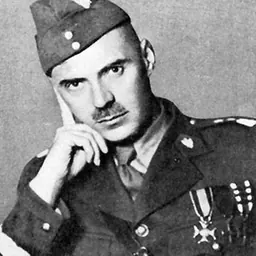
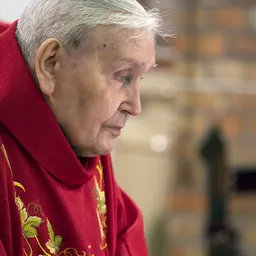
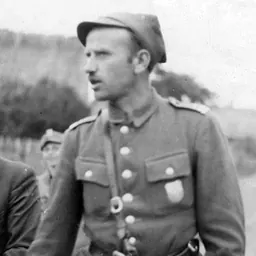
Related people
Same field, nearest in time



Frequently asked questions
Who was Danuta Siedzikówna?
Polish resistance fighter (1928–1946)
When was Danuta Siedzikówna born?
Danuta Siedzikówna was born on 3 September 1928 in Guszczewina.
When did Danuta Siedzikówna die?
Danuta Siedzikówna died on 28 August 1946 in Gdańsk.
What was Danuta Siedzikówna's occupation?
Danuta Siedzikówna was a combat medic.
What nationality was Danuta Siedzikówna?
Danuta Siedzikówna was Polish.
Sources & further reading
· Wikipedia: Danuta Siedzikówna
Cite this page
APA: Biography.guide. (2026). Danuta Siedzikówna. https://biography.guide/danuta-siedzikowna/
MLA: "Danuta Siedzikówna." Biography.guide, https://biography.guide/danuta-siedzikowna/.
Chicago: "Danuta Siedzikówna." Biography.guide. https://biography.guide/danuta-siedzikowna/.
Data last updated: 2026-09-25 · Spot an error? Report a correction.
Page generated 2026-09-27 05:12 UTC