
About Daniel Webster Davis
Lived 1862 – 1913 (aged 51). Daniel Webster Davis was an American poet and educator.
Daniel Webster Davis (March 25, 1862 – October 25, 1913) was an American educator, minister, and poet. He taught and ministered in Richmond, Virginia, and became a popular author and speaker, going on several speaking tours around the United States and Canada. He also published two volumes of poetry that have received mixed critical assessment; some scholars have criticized him for perpetrating stereotypes of African Americans while others have argued that he was as radical as he could have been in his era.
Biography Daniel Webster Davis was born in Caroline County, Virginia, or Hanover County, Virginia, on March 25, 1862, to Randall or John Davis and Charlotte Ann (Christian Davis), who were both enslaved. Davis generally went by Webster. He moved to Richmond, Virginia, while the American Civil War was ongoing or shortly after its end, with his mother. By this point, his father had died. Davis was educated in the Richmond public school system and eventually earned a high school degree from the Richmond High and Normal School, graduating with honors when he was sixteen in June 1878. He worked odd jobs for several years after graduation. The history professor John T. Kneebone writes that while Davis later said he had degrees from Guadalupe College (AM and DD), these were "probably honorary". He was involved in the foundation of the Garrison Lyceum, a literary society.
Davis began teaching in Virginia in 1879, at the Navy Hill School in Richmond, He contributed to publications including The Voice of the Negro and The Colored American Magazine.
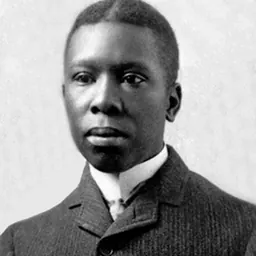
Davis published two volumes of poetry, Idle Moments, Containing Emancipation and Other Poems (1895), and 'Weh Down Souf and Other Poems (1897). His first volume included 37 poems; the second was 21 republished and 21 new poems. Davis sought to attract the same readers that had given Paul Laurence Dunbar success around the same era with 'Weh Down Souf; its cover was drawn by William Ludwell Sheppard. In 1908 he published The Industrial History of the Negro Race of the United States with Giles B. Jackson. In 1910 he published a biography of William Washington Browne, Life and Public Services of Rev. Wm. Washington Browne.
Three schools in Virginia were named after Davis.
Critical assessment Popular in his day, Davis saw wide publication of his work, particularly in African-American publications. The two dialect poems included in John Edward Bruce's Anthology of Negro Poetry were both written by Davis.
Davis's work, particularly his second volume of poetry, has been criticized as subscribing and perpetrating many stereotypes of African Americans. The anthology The Book of American Negro Poetry included two of his poems. Around two-thirds of his poems were written in African-American Vernacular English and a profile by the scholar Jean Wagner noted that it was hard to tell whether he was "completely sincere or [...] set out to win easy popularity from an audience whose demands were slight." It went on to describe him as the most conformist contemporary African-American poet and as writing with "scarcely any other concern than to flatter the white majority." Sterling Brown deemed him "the Negro Thomas Nelson Page." His work, both in publications and speeches, has been described as similar to Booker T. Washington's in adopting a "conciliatory" attitude to race relations. Dickson D. Bruce Jr. in 1992 described him as "the poet of accommodation."
However, some of his writing has been compared to that of W. E. B. Du Bois with a "mixed moderate-militant ideology". He often advocated for racial pride and rights. His profile in The Virginia Magazine argues that he was "as race proud and militant as a public utterance by a southern black man could be" in his era. Some of Davis's poems argued that white Americans would eventually be forced to pay for subjugating Black people and some of his speeches advocate in favor of Black voting rights and recognizing the progress of Black people in America.
Don’t just read it —
keep it.
Full-length biographies made to live with: read them, listen on the way to work, watch them tonight.
- E-book
- Audio
- Video
Instant download · yours to keep · every purchase keeps this site free
Important facts
People in Daniel Webster Davis's life
Named in this biography and alive at the same time



Related people
Same field, nearest in time

Contemporaries
People whose lives overlapped Daniel Webster Davis's




Frequently asked questions
Who was Daniel Webster Davis?
American educator, minister, and poet
When was Daniel Webster Davis born?
Daniel Webster Davis was born on 25 March 1862 in Virginia.
When did Daniel Webster Davis die?
Daniel Webster Davis died on 25 October 1913 in Richmond.
What was Daniel Webster Davis's occupation?
Daniel Webster Davis was a poet and educator.
What nationality was Daniel Webster Davis?
Daniel Webster Davis was American.
Sources & further reading
· Wikipedia: Daniel Webster Davis
· DBpedia: Daniel Webster Davis
Cite this page
APA: Biography.guide. (2026). Daniel Webster Davis. https://biography.guide/daniel-webster-davis/
MLA: "Daniel Webster Davis." Biography.guide, https://biography.guide/daniel-webster-davis/.
Chicago: "Daniel Webster Davis." Biography.guide. https://biography.guide/daniel-webster-davis/.
Data last updated: 2026-09-25 · Spot an error? Report a correction.
Page generated 2026-09-27 05:11 UTC