
About Daniël van Vlierden
Lived 1651 – 1716 (aged 64–65). Daniël van Vlierden was a sculptor and woodworker.
Daniël van Vlierden (1651, Hasselt – 1716, Hasselt) was a Flemish sculptor who is mainly known for his Baroque sculpture in churches in the Prince-Bishopric of Liège. The style of van Vlierden is characterized by a sober realism in both the decorative elements as the figure sculptures.
The mother of Daniël van Vlierden was Elisabeth Pijlmans. Daniël had two brothers and two sisters. He was barely seven years old when his father died. There is no information about his training as a sculptor. Daniël married Catherine Gielen in Hasselt on 9 May 1676. Seven children were born from this marriage between 1678 and 1691. After their marriage, the couple moved to the 'Witte Haen' (White cock) in the Demerstraat in Hasselt. Van Vlierden was appointed steward of the Saint Quentin Church in Hasselt in 1678, a position he held until 1685.
He participated as a member of the Chamber of Bachelors in the battle of the Planck Meadow on New Year's Day 1682. He made a hole in the city walls so that the guns could be brought out. Apparently his actions were not held against him for long after the cessation of hostilities and he could take advantage of the general amnesty.
Work
Van Vlierden was more than a skilled woodworker although he lacked the virtuosity of his contemporary Flemish Baroque sculptors.
Van Vlierden sculpted in the period 1682–1683 and in 1689 four side altars in the St. Catherine Church in Tongeren, which he completed with the assistance of Jan Caproens, a local carpenter.
The only work that has been signed by van Vlierden are seven confessionals that he made for the Dominican church in Maastricht and are now in the Basilica of Saint Servatius. One of the seven confessionals has a sculpture of King David holding a harp. On the body of the harp is written: d. van vlierden fecit hasselen. This ensemble can be dated between 1695 and 1706 on the basis of the dates that are painted on the confessionals. The iconography of the confessionals constitutes a coherent whole. The Dominicans for whom van Vlierden made the confessionals in Maastricht also subscribed to the view that the confessionals should clarify the deeper meaning of the confession to the faithful. A similar programmatic scheme of confessionals and interior decoration had been implemented previously in the St. Paul's Church in Antwerp. The seven Maastricht confessionals follow this example.
H. Jaminé and J.-G. the Corswarem attribute to van Vlierden the equestrian statue of St. George and the Dragon above the altar in the chapel of St. Sebastian and St. George along the south portal of the St. Quentin Cathedral in Hasselt.
Van Vlierden also created a side altar in the St. Quentin Cathedral together with Tillman Janssens. This side altar that was likely similar to the main altar in the church in Beringen was sold at the end of the 19th century and has disappeared.
Style
Van Vlierden's style is represented most clearly in the confessionals he made for the churches in Beringen and Maastricht. The treatment of garments typical of the high Baroque was alien to him. He draped the garments of the figures in a natural way around the bodies, without, however, accentuating the bodyparts. At the height of the hip of the static leg the busy folds, along with the movement of the arm, compensate the dynamics of the moving leg. The Contrapposto pose is used in all the figures of the confessionals and the two figures on each side of the confessionals always mirror each other. The muscles of the upper body, abdomen, arms and legs are represented in an almost anatomically exact manner. By respecting the general proportions and a natural posture the sculptures appear lifelike. Each figure is typified as an individual through the appropriate clothing and attributes. In the small-scale sculptures van Vlierden dared to emphasize movement which he, however, downplayed in the life-size sculptures.
The style of van Vlierden is characterized by a sober realism in both the decorative elements as the figure sculptures. In Beringen he worked after a design by Artus Quellinus II. As a result he was confronted directly with the prevailing high Baroque idiom which he followed faithfully in the decorative elements but not in the depiction of the angels and saints. These are as austere as the images of the penitents, which he executed some 15 years later in Maastricht where he even omitted the high Baroque decorative elements. Compared to his contemporaries from Flanders and the Prince-Bishopric of Liège, he lacked the exuberant flourish and movement. His decorations and figure sculptures aimed to be functional within the macro-framework of the church and the micro-context of the confessional and the altar. The Baroque element was clearly present, but did not dominate.
Don’t just read it —
keep it.
Full-length biographies made to live with: read them, listen on the way to work, watch them tonight.
- E-book
- Audio
- Video
Instant download · yours to keep · every purchase keeps this site free
Important facts
Related people
Same field, nearest in time

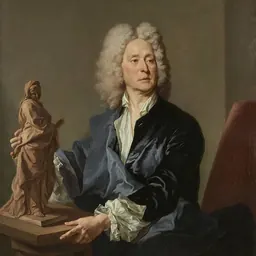
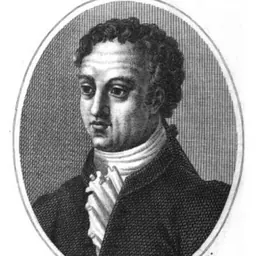

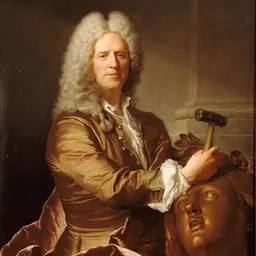
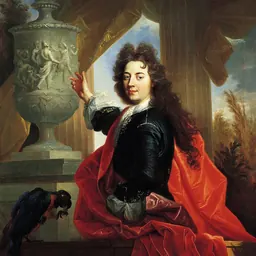
Contemporaries
People whose lives overlapped Daniël van Vlierden's



Frequently asked questions
Who was Daniël van Vlierden?
Flemish sculptor
When was Daniël van Vlierden born?
Daniël van Vlierden was born in 1651.
When did Daniël van Vlierden die?
Daniël van Vlierden died on 21 July 1716 in Hasselt.
What was Daniël van Vlierden's occupation?
Daniël van Vlierden was a sculptor and woodworker.
What nationality was Daniël van Vlierden?
Daniël van Vlierden's recorded nationality: Prince-Bishopric of Liège.
Sources & further reading
· Wikipedia: Daniël van Vlierden
· DBpedia: Daniël van Vlierden
Cite this page
APA: Biography.guide. (2026). Daniël van Vlierden. https://biography.guide/daniel-van-vlierden/
MLA: "Daniël van Vlierden." Biography.guide, https://biography.guide/daniel-van-vlierden/.
Chicago: "Daniël van Vlierden." Biography.guide. https://biography.guide/daniel-van-vlierden/.
Data last updated: 2026-09-20 · Spot an error? Report a correction.
Page generated 2026-09-27 05:05 UTC