
About Daniel Kirkwood
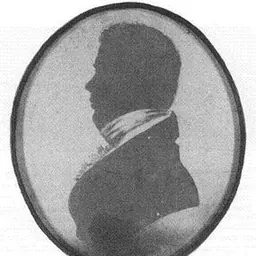
Lived 1814 – 1895 (aged 80). Daniel Kirkwood was an American astronomer, mathematician, writer and university teacher, known for Kirkwood Gaps.
Daniel Kirkwood (September 27, 1814 – June 11, 1895) was an American astronomer.
Kirkwood was born in Harford County, Maryland, to John and Agnes (née Hope) Kirkwood. He graduated in mathematics from the York County Academy in York, Pennsylvania, in 1838. After teaching there for five years, he became Principal of the Lancaster High School in Lancaster, Pennsylvania, and after another five years he moved on to become Principal of the Pottsville Academy in Pottsville, Pennsylvania. In 1851, he was elected as a member to the American Philosophical Society. The same year he became Professor of Mathematics at Delaware College and in 1856 Professor of Mathematics at Indiana University in Bloomington, Indiana, where he stayed until his retirement in 1886, with the exception of two years, 1865–1867, at Jefferson College in Canonsburg, Pennsylvania.
Kirkwood's most significant contribution came from his study of asteroid orbits. When arranging the then-growing number of discovered asteroids by their distance from the Sun, he noted several gaps, now named Kirkwood gaps in his honor, and associated these gaps with orbital resonances with the orbit of Jupiter. Further, Kirkwood also suggested a similar dynamic was responsible for Cassini Division in Saturn's rings, as the result of a resonance with one of Saturn's moons. In the same paper, he was the first to correctly posit that the material in meteor showers is cometary debris.
Kirkwood also identified a pattern relating the distances of the planets to their rotation periods, which was called Kirkwood's Law. This discovery earned Kirkwood an international reputation among astronomers; he was dubbed "the American Kepler" by Sears Cook Walker, who claimed that Kirkwood's Law proved the widely held Solar Nebula Theory. The "Law" has since become discredited as new measurements of planetary rotation periods have shown that the pattern doesn't hold.
In 1891, at age 77, he became a lecturer in astronomy at Stanford University. He died in Riverside, California, in 1895.
Altogether he wrote 129 publications, including three books. The asteroid was named 1578 Kirkwood in his honor and so was the lunar impact crater Kirkwood, as well as Indiana University's Kirkwood Observatory. He is buried in the Rose Hill Cemetery in Bloomington, Indiana, where Kirkwood Avenue is named for him.
Kirkwood was a cousin of Iowa governor Samuel Jordan Kirkwood who became United States Secretary of the Interior under President James A. Garfield and President Chester A. Arthur.
Don’t just read it —
keep it.
Full-length biographies made to live with: read them, listen on the way to work, watch them tonight.
- E-book
- Audio
- Video
Instant download · yours to keep · every purchase keeps this site free
Important facts
People in Daniel Kirkwood's life
Named in this biography and alive at the same time


Related people
Same field, nearest in time
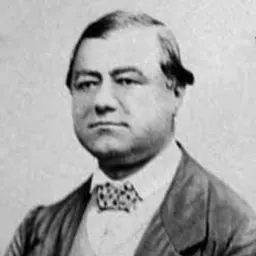
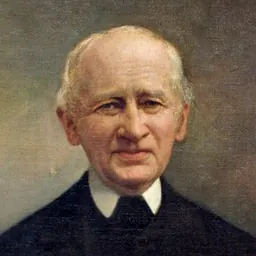
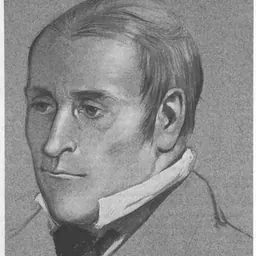

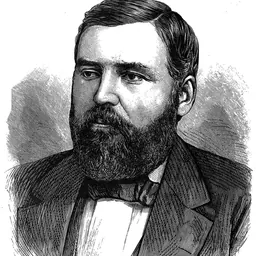
Contemporaries
People whose lives overlapped Daniel Kirkwood's





Frequently asked questions
Who was Daniel Kirkwood?
American astronomer (1814–1895)
When was Daniel Kirkwood born?
Daniel Kirkwood was born on 27 September 1814 in Harford County.
When did Daniel Kirkwood die?
Daniel Kirkwood died on 11 June 1895 in Riverside.
What was Daniel Kirkwood's occupation?
Daniel Kirkwood was an astronomer, mathematician, writer and university teacher.
What was Daniel Kirkwood known for?
Daniel Kirkwood was known for Kirkwood Gaps.
What nationality was Daniel Kirkwood?
Daniel Kirkwood was American.
Sources & further reading
Cite this page
APA: Biography.guide. (2026). Daniel Kirkwood. https://biography.guide/daniel-kirkwood/
MLA: "Daniel Kirkwood." Biography.guide, https://biography.guide/daniel-kirkwood/.
Chicago: "Daniel Kirkwood." Biography.guide. https://biography.guide/daniel-kirkwood/.
Data last updated: 2026-09-20 · Spot an error? Report a correction.
Page generated 2026-09-27 05:27 UTC