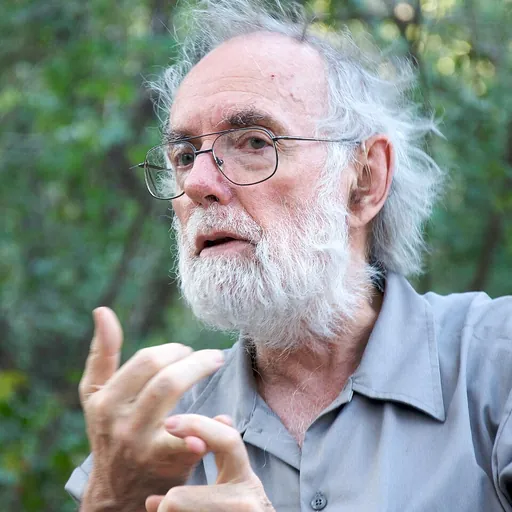
About Daniel H. Janzen
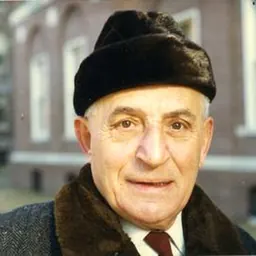
Born 1939. Daniel H. Janzen is an American biologist, university teacher, professor, entomologist, ecologist and botanist.
Área del Conservación de Guanacaste (ACG) The Área de Conservación de Guanacaste (ACG) is a prominent conservation area in northwestern Costa Rica, encompassing over 163,000 hectares of diverse ecosystems, including tropical dry forests, rainforests, and marine areas. Established in the 1990s, the ACG unifies several national parks, such as Santa Rosa, Guanacaste, Rincón de la Vieja, and Junquillal Bay, into a single administrative entity. This integration aims to protect and restore the region's unique biodiversity and facilitate natural ecosystem regeneration. The ACG is recognized as a UNESCO World Heritage Site, highlighting its global ecological significance and Costa Rica's commitment to environmental conservation.
Dr. Daniel Janzen, recognizing the necessity for a cohesive conservation strategy in Guanacaste, along with his wife, biologist Dr. Winnie Hallwachs, championed the establishment of a contiguous conservation area to facilitate natural ecosystem regeneration.
Their comprehensive strategy encompassed several key initiatives:
Restoring Tropical Dry Forests: Acquiring degraded pastures and enabling the recovery of natural vegetation. Integrating Local Communities: Training local residents to serve as park guards, educators, and conservation advocates. Fundraising for Land Purchases: Securing donations and forming partnerships with international organizations to purchase private lands and integrate them into the protected area.
Research Janzen's early work focused on the careful and meticulous documentation of species in Costa Rica, and in particular on ecological processes and the dynamics and evolution of animal-plant interactions. amongst them a "kind of mass flowering", which Alwyn Howard Gentry in his classification of flowering named Type 4 or "big bang" strategy. Janzen proposed many hypotheses that inspired decades of work by tropical and temperate ecologists (see below).
Miguel Altieri in his textbook Agroecology: The Science of Sustainable Agriculture says: "Janzen's 1973 article on tropical agroecosystems was the first widely read evaluation of why tropical agricultural systems might function differently from those of the temperate zones".
In 1985, realizing that the area in which they worked was threatened, Janzen and Hallwachs expanded the focus of their work to include tropical forest restoration, expansion (through land purchases) and conservation. As of 2017, some 10,000 new species in the Area de Conservacion Guanacaste have been identified thanks to the efforts of parataxonomists. Janzen and Hallwachs have supported species barcoding initiatives at both national and international levels through the Instituto Nacional de Biodiversidad (INBio), CBOL (Consortium for the Barcode of Life) and iBOL (International Barcode of Life).
Influential hypotheses Janzen is known for proposing "characteristically imaginative and unorthodox" hypotheses. These hypotheses have received varying degrees of support, but are notable for having inspired a large and sustained body of research, as evidenced by the extremely high citation rates of many of his papers for decades after they are published. is now known as the Janzen-Connell hypothesis, as Janzen and Joseph Connell independently proposed the idea in 1970-1971. They both suggested that the high diversity of tropical trees was due, in part, to specialist enemies attacking seeds or seedlings that were particularly close to the parent tree or particularly densely clustered, thus preventing any one species from becoming dominant.
Another influential idea comes from Janzen's 1967 paper 'Why mountain passes are higher in the tropics'. It proposes that tropical mountains are more of a barrier to species dispersal than temperate mountains because tropical species are less able to tolerate changes in temperature with elevation, having evolved and lived in relatively stable climates.
In a 1977 paper 'Why fruits rot, seeds mould, and meat spoils', Janzen proposed that microbes render food inedible (or at least distasteful) to vertebrates not just as a by product of microbe-microbe competition or accidental waste products, but as an evolutionary strategy to repel vertebrates consumers, who would otherwise eat the food resource and the microbes themselves. Evidence is mixed, and it is hard to test whether compounds evolved to deter other microbes or vertebrates, but the idea has been widely incorporated into studies of vertebrate feeding from humans to dinosaurs.
Coevolution of plants and animals Coevolution of a mutualistic system in New World tropics between species of Acacia (Mimosoideae; Leguminosae), v. gr., Acacia cornigera, and the ant Pseudomyrmex ferruginea (Formicidae). Acacia spp in the Neotropics are protected by ants against defoliation; for this, the ants are rewarded by means of special organs and physiology that Acacia has evolved.
Tropical habitat restoration Tropical dry forests are the world's most threatened forest ecosystems. In middle America there were 550 000 km2 of dry forests at the beginning of the 16th century; today, less than 0.08% (440 km2) remains. They have been cleared, burnt and replaced by pastures for cattle raising, at an ever-faster rate during the last 500 years. It is one of the oldest, largest and most successful habitat restoration projects in the world. As of 2019, it consists of . One is also faced with the difficulties of changing a culture that coevolved with, profited from, and can become miserable with such a system.
For this reason ACG was conceived as a cultural restoration project, which, to paraphrase its natural counterpart, ought to be grown as well. ACG integrates complementary processes of experimentation, habitat restoration and cultural development. The techniques used include: Active restoration, artificial dispersal of propagules from plant species native to the Guanacaste habitats
Personal life Janzen is married to ecologist Winifred Hallwachs, who is also his frequent research partner. Of Hallwachs, Janzen has said, "We did these things together," 1985, Distinguished Teaching Award, University of Pennsylvania 1987, The Berkeley Citation for Distinguished Achievement and Notable Service to the University, University of California, Berkeley 1987, Hijo Ilustre de Guanacaste (awarded by the Governor of Guanacaste province) 1989, Leidy Award, Philadelphia Academy of Natural Sciences 1991, Founder's Council Award of Merit, Field Museum of Natural History 1992, Member, National Academy of Sciences, USA 1993, Award for Improvement of Costa Rican Quality of Life, Universidad de Costa Rica (co award with W. Hallwachs). 1994, Silver Medal Award, International Society of Chemical Ecology. 1995, Global Service Award, Society for Conservation Biology 1996, Honorary Doctor of Science, University of Minnesota. 1996, Thomas G. and Louise E. DiMaura Endowed Term Chair, University of Pennsylvania 1997, Kyoto Prize (Basic Sciences Field), Inamori Foundation 2002, Albert Einstein World Award of Science, Consejo Cultural Mundial, (Mexico) 2002, Honorary Fellow of the Association for Tropical Biology (and Conservation) (ATBC) 2006, Winner, National Outdoor Book Awards (NOBA), for 100 Caterpillars: Portraits from the Tropical Forests of Costa Rica (2006), Design & Artistic Merit Category. 2011, BBVA Foundation Frontiers of Knowledge Award of Ecology and Conservation Biology for his pioneering work in tropical ecology and his contributions to the conservation of endangered tropical ecosystems throughout the world, drawing on an understanding of plant-animal interactions. Janzen acknowledged the role of his wife and long-term research partner, ecologist Winnie Hallwachs, to the work being recognized. 2013, Wege Foundation $5 million grant to the Guanacaste Dry Forest Conservation Fund (GDFCF), founded in 1997 by Dan Janzen and Winnie Hallwachs. 2014, Blue Planet Prize, from the Asahi Glass Foundation
Don’t just read it —
keep it.
Full-length biographies made to live with: read them, listen on the way to work, watch them tonight.
- E-book
- Audio
- Video
Instant download · yours to keep · every purchase keeps this site free
Important facts
Family & relationships
People in Daniel H. Janzen's life
Named in this biography and alive at the same time


Related people
Same field, nearest in time




Contemporaries
People whose lives overlapped Daniel H. Janzen's




Frequently asked questions
Who is Daniel H. Janzen?
American biologist
When was Daniel H. Janzen born?
Daniel H. Janzen was born on 18 January 1939 in Milwaukee.
What is Daniel H. Janzen's occupation?
Daniel H. Janzen is a biologist, university teacher, professor, entomologist, ecologist and botanist.
What nationality is Daniel H. Janzen?
Daniel H. Janzen is American.
Sources & further reading
Cite this page
APA: Biography.guide. (2026). Daniel H. Janzen. https://biography.guide/daniel-h-janzen/
MLA: "Daniel H. Janzen." Biography.guide, https://biography.guide/daniel-h-janzen/.
Chicago: "Daniel H. Janzen." Biography.guide. https://biography.guide/daniel-h-janzen/.
Data last updated: 2026-09-21 · Spot an error? Report a correction.
Portrait: Wikimedia Commons · author & licence
Page generated 2026-09-27 05:00 UTC