
About Daniel H. Coakley
Lived 1865 – 1952 (aged 86). Daniel H. Coakley was an American politician and journalist.
Daniel Henry Coakley (December 10, 1865 – September 18, 1952) was an American Democratic politician and attorney from Massachusetts. He was a key figure in early 20th century Boston politics, as an ally to District Attorney Joseph C. Pelletier and as an on-again-off-again ally to Mayor James Michael Curley. As an attorney, Coakley took part in numerous badger game extortion schemes and was disbarred in 1922 for deceit, malpractice, and gross misconduct.
Coakley later was elected to the Massachusetts Governor's Council, where he secured a pardon for mobster Raymond L. S. Patriarca.
Coakley read law at his brother Timothy's law firm. He failed his first three attempts at the bar exam but was finally admitted to the Massachusetts bar on July 9, 1897, and the federal bar on January 25, 1911. Battis was found guilty on two charges of larceny.
In 1909, Coakley also served as defense counsel for Michael J. Mitchell, former head of Boston's supply department, who was found guilty of conspiracy to defraud the city and conspiracy to commit larceny. Coakley also served as counsel for William J. "Big Bill" Keliher, who was convicted of aiding in the looting of the National City Bank of Cambridge. He and Coakley later had a disagreement, and the police were called to remove Keliher from Coakley's office. Keliher accused Coakley of taking money from him to bribe United States Attorney Asa P. French, one French's assistants, and the jury. French did not believe Keliher's accusations and chose not to investigate.
In 1914, Coakley was sued by the widower of one of his clients, to recover the full amount of the $15,952 awarded to her in a suit against the Boston Elevated Railway. Coakley, who defended himself, received a favorable verdict.
In 1915, Coakley was hired to represent the Tylose Contracting Company before the Boston Finance Commission, which was investigating the usefulness and cost of the company's floor preservative. The Commission's public hearings lasted over 30 days and more than 65 witnesses were called. The commission found that tylose was a suitable floor preservative, and found no graft, though it criticized its price.
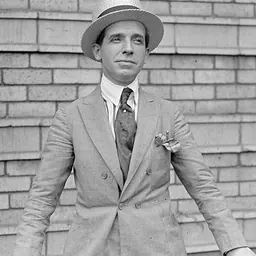
In 1920, Coakley served as an attorney for financier Charles Ponzi. Along with fellow attorney Daniel V. McIsaac, he advised Ponzi not to fight the case, which, along with the urging of his wife, convinced Ponzi to plead guilty to federal charges in hopes of receiving a lighter sentence. Coakley was later called as a witness in the Commonwealth of Massachusetts' case against Ponzi. As Ponzi's attorney, he received $25,000 a year from Ponzi in legal fees. Coakley turned in the money he had received from Ponzi to the receivers in Ponzi's bankruptcy case.
Alliance with James Michael Curley
"Toodles" affair Coakley turned against Mayor John F. Fitzgerald after Fitzgerald testified in court against one of Coakley's clients, Michael J. Mitchell, as part of an investigation into corruption during Fitzgerald's first term as mayor. Curley announced he would deliver a series a public lectures, including one entitled "Great Lovers in History: From Cleopatra to Toodles." Fitzgerald dropped out of the 1913 mayoral race (which Curley went on to win) and Curley never delivered the lecture. Pursuant to that investigation, Michael J. Hayes stole papers from Coakley's office and turned them over to Godfrey Lowell Cabot of the Watch and Ward Society.
In 1920, attorney Alvah G. Sleeper accused Coakley and Pelletier of extorting his client. Sleeper alleged that his client was being blackmailed by a mistress, and that Sleeper had followed his client to the payment point at the Parker House where he saw Coakley, Joseph Pelletier, and another attorney accept the payment. Shortly after witnessing this meeting, Sleeper was visited by the alleged blackmailer, who asked how much Coakley had received. Sleeper told her that the amount was $150,000, and she replied that Coakley had not given her a fair share.
Facing increased scrutiny, Coakley decided to press the matter of his stolen papers in response. On November 18, 1920, a grand jury indicted on Hayes, Cabot, and three other men on charges of conspiracy to steal Coakley's papers and larceny of property. Hayes and other defendant, Oswin T. Bourdon, pleaded guilty, but Cabot chose to go to trial, where he was found not guilty.
On September 29, 1921, the Boston Bar Association filed disbarment petitions against Coakley, Daniel V. McIssac, and former Middlesex District Attorney William J. Corcoran, along with a recommendation that Pelletier be removed from office, alleging that all four were guilty of deceit, malpractice, and gross misconduct. The allegations included: In 1915, he convinced William De Ford Bigelow to pay him $50,000 in exchange for Coakley using his influence with Pelletier to prevent indictment. Between 1916 and 1917, he and McIssac conspired to extort $116,000 from a client by fomenting a contest of her deceased husband's will. In October 1916, he extorted $20,500 from the Emerson Motors Company in exchange for using his personal influence with Pelletier to save the company from indictment. In November 1916, he attempted to extort $10,000 in legal fees from Warren C. Daniel of the Metropolitan Motors Company in exchange for convincing Pelletier not to indict the company. In 1917, he, James Curley, Corcoran, and Nathan A. Tufts (Corcoran's successor) extorted large sums of money from Paramount Studio executives who attended a party at a brothel. In 1918, while defending a client in a replevin suit brought by Dorothy Cote, he threatened Cote with indictment by the district attorney's office, which led her to drop the suit. On April 21, the Massachusetts Supreme Judicial Court found that Coakley was guilty of deceit, malpractice, and gross misconduct. On May 12, he was disbarred.
Pelletier was removed from office and died shortly thereafter. Coakley was also indicted for perjury in connection with his testimony in the Berman case, but the charges were dropped in February 1924. In 1933, Thomas C. O'Brien, who was Suffolk District Attorney at the time Coakley was charged, stated that subsequent evidence had cleared Coakley.
In 1926, Coakley was criminally charged with fraud after he was sued by another former client, Oda Pappathanos, for recovery of money she alleged Coakley had obtained by misrepresenting the size of the settlement of her claim against a wealthy Maine man. Coakley was found not guilty of the criminal charges on July 31, 1926.
On November 14, 1934, a jury awarded $77,433.33 to Francis D. Reardon of Emerson & Co. for failure to pay a $50,000 note owed by Coakley and his son-in-law, Charles L. Murdock, to the company's deceased president, Bartholomew Crowley.
Petition for reinstatement In 1933, with written support from a number of notable individuals including Cardinal O'Connell, Thomas Francis Lillis, Louis J. Gallagher, Edwin Stark Thomas, William Robinson Pattangall, Eugene N. Foss, Thomas C. O'Brien, Alfred E. Smith, James Roosevelt, 65 judges, and 3,470 attorneys, Coakley petitioned for reinstatement to the bar. Governor Joseph B. Ely appeared in court on Coakley's behalf. His petition was denied by Judge Fred T. Field on March 28, 1934. Field wrote that Coakley's "deliberate misstatements" regarding his disbarment and his offer to admit guilt in exchange for readmission while also asserting his innocence showed a "lack of respect for the truth inconsistent with fitness for readmission to the bar".
Later political career Mayoral campaigns
Several of Coakley's 1925 mayoral opponents pose together during their campaigns (left to right, in foreground): Malcolm Nichols, John Keliher, Theodore Glynn, Thomas C. O'Brien
In 1925, Coakley ran for Mayor of Boston on a platform of clearing the name of Joseph Pelletier. He ran again in 1929, but finished a distant third with 1% of the vote. He ran a third time in 1933, but dropped out of the race, stating that he feared his "candidacy was likely to result in the election of an enemy of the plain people." Coakley's purpose in all three campaigns was to siphon votes away from Curley or his proxy. The Governor's Council approved Patriarca's pardon, and he was released after only 84 days in jail.
On December 4, 1940, State Representative Roland D. Sawyer called for Coakley's impeachment, alleging that Coakley had attempted to "thwart" the Special Legislative Pardon-Probe Commission by contacting witnesses, threatening them, and advising them to commit perjury. On June 9, 1941, a special House committee found that Coakley had used his position and influence to secure pardons for Patriarca, Maurice Limon, and Frank W. Porter in exchange for financial gain and recommended his impeachment. On June 13, 1941, the Massachusetts House of Representatives voted 144 to 75 in favor of impeachment.
Coakley's impeachment trial was the first in Massachusetts since 1821. The trial lasted six weeks. On October 2, 1941, the Massachusetts Senate found Coakley guilty on 10 of the 14 articles on impeachment. The Senate voted 28 to 10 to remove Coakley from office and 23 to 15 to bar him for life from holding a place of "profit or honor or trust" in the Commonwealth.
Later life Following his impeachment, Coakley ran for the United States Senate. In the Democratic primary, he finished fourth out of four candidates with 7% of the vote.
During his final years, Coakley appeared less frequently in the public eye. By 1946, he was complaining about his poor financial state. However, he was still able to keep a suite at the Parker House, a townhouse in Brighton, and a cottage in Cape Cod. He spent the final five years of his life in Buzzards Bay, Massachusetts, where he died on September 18, 1952.
Don’t just read it —
keep it.
Full-length biographies made to live with: read them, listen on the way to work, watch them tonight.
- E-book
- Audio
- Video
Instant download · yours to keep · every purchase keeps this site free
Important facts
Family & relationships
People in Daniel H. Coakley's life
Named in this biography and alive at the same time



Related people
Same field, nearest in time





Contemporaries
People whose lives overlapped Daniel H. Coakley's



Frequently asked questions
Who was Daniel H. Coakley?
politician, journalist in Massachusetts, US (1865–1952)
When was Daniel H. Coakley born?
Daniel H. Coakley was born on 10 December 1865 in Cambridge.
When did Daniel H. Coakley die?
Daniel H. Coakley died on 18 September 1952.
What was Daniel H. Coakley's occupation?
Daniel H. Coakley was a politician and journalist.
What nationality was Daniel H. Coakley?
Daniel H. Coakley was American.
Sources & further reading
· Wikipedia: Daniel H. Coakley
Cite this page
APA: Biography.guide. (2026). Daniel H. Coakley. https://biography.guide/daniel-h-coakley/
MLA: "Daniel H. Coakley." Biography.guide, https://biography.guide/daniel-h-coakley/.
Chicago: "Daniel H. Coakley." Biography.guide. https://biography.guide/daniel-h-coakley/.
Data last updated: 2026-09-25 · Spot an error? Report a correction.
Page generated 2026-09-27 05:09 UTC