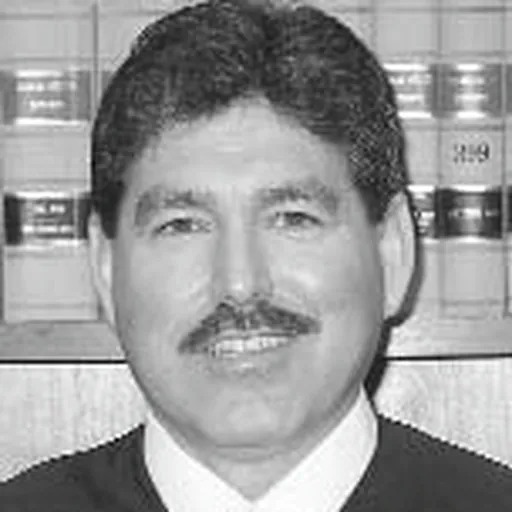
About Dana Makoto Sabraw
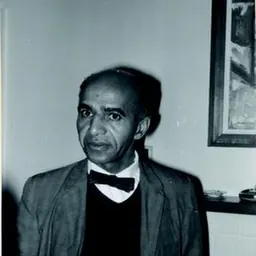
Born 1958. Dana Makoto Sabraw is an American lawyer and judge.
Dana Makoto Sabraw (born July 3, 1958) is a United States district judge of the United States District Court for the Southern District of California. He was nominated by President George W. Bush in 2003.
Early life and education Sabraw is half-Japanese; his Japanese mother met his father in 1954 when he was a United States Army soldier stationed in Japan during the Korean War. They married in 1955. His father was a teacher of special-needs students and his mother taught English as a second language.
Sabraw was born in San Rafael, California in 1958, and grew up in the Sacramento suburb of Carmichael, California. He received an Associate of Arts degree from American River Junior College in 1978, a Bachelor of Science degree from San Diego State University in 1980, and a Juris Doctor from the McGeorge School of Law at University of the Pacific in 1985.
From 1977 to 1982, he worked at many businesses and colleges which included Westmont and the University of the Pacific. Sabraw was unanimously confirmed by the United States Senate in a 95-0 vote on September 25, 2003. Sabraw rejected the activists' claim that the law was a violation of the constitutional rights to free exercise of religion or to equal public education, writing that "the fundamental rights under the First Amendment to the United States Constitution do not overcome the State's interest in protecting a child's health" and that the Constitution "does not require the provision of a religious exemption to vaccination requirements, much less a personal belief exemption."
In February 2018, Sabraw was assigned a case in which the American Civil Liberties Union (ACLU) sued the Donald Trump administration on behalf of a Congolese woman who had been separated from her 7-year-old daughter in November when she presented herself at the San Ysidro Port of Entry seeking asylum. The case later became a class-action suit challenging the administration's policy of separating families who cross the U.S.-Mexico border. In June 2018, Sabraw denied the government's motion to dismiss the case, finding that plaintiffs alleged sufficient grounds to proceed with their claim that the policy violates plaintiffs' constitutional right to due process. Later that month, Sabraw entered a nationwide injunction ordering an end to most family separations at the border and requiring the immediate reunification of all children separated from their family members under the policy. He continued to oversee the process of family reunification, requiring regular reports from the administration. In July 2018, Sabraw suspended family deportations for one week, until family unifications could be completed. In August 2018, Sabraw ruled that it is the government's burden to reunite separated migrant families.
However, in January 2020, he ruled in support of the Trump administration's separation of 900 children from their parents on the grounds that the parents were unfit or dangerous, given doubts about paternity, criminal history, or having communicable diseases. He distinguished these cases from those where he had earlier ruled against the Trump administration because their purpose had been to deter immigration across the southern border altogether. In so ruling, he rejected the ACLU's claim that the administration had reverted to previous abusive family separations, although he did also grant the ACLU position that the government would have to administer DNA tests to remove paternity doubts, something the Trump administration had fought.
In April 2018, he presided over the case of a U.S. Border Patrol agent who pleaded guilty to smuggling drugs across the border, sentencing him to 70 months in federal prison.
On March 31, 2023, he granted a preliminary injunction against major portions of California's handgun roster in a case called Renna v. Bonta.
Recognition The San Diego Union-Tribune named Sabraw its 2018 "San Diego Person of the Year" for his order ending the Trump administration's family separation policy, stating that Sabraw's ruling "ended a shameful chapter in our country's history" and adding: "His honest, thoughtful oversight of a complex case shouldn't be forgotten."
Personal life Sabraw lives in Scripps Ranch, San Diego. They have three children. Sabraw's aunt, uncle and cousin are also judges, serving on the bench in Northern California.
Don’t just read it —
keep it.
Full-length biographies made to live with: read them, listen on the way to work, watch them tonight.
- E-book
- Audio
- Video
Instant download · yours to keep · every purchase keeps this site free
Important facts
People in Dana Makoto Sabraw's life
Named in this biography and alive at the same time


Related people
Same field, nearest in time


Contemporaries
People whose lives overlapped Dana Makoto Sabraw's



Frequently asked questions
Who is Dana Makoto Sabraw?
United States federal judge
When was Dana Makoto Sabraw born?
Dana Makoto Sabraw was born on 3 July 1958 in San Rafael.
What is Dana Makoto Sabraw's occupation?
Dana Makoto Sabraw is a lawyer and judge.
What nationality is Dana Makoto Sabraw?
Dana Makoto Sabraw is American.
Sources & further reading
· Wikipedia: Dana Makoto Sabraw
Cite this page
APA: Biography.guide. (2026). Dana Makoto Sabraw. https://biography.guide/dana-makoto-sabraw/
MLA: "Dana Makoto Sabraw." Biography.guide, https://biography.guide/dana-makoto-sabraw/.
Chicago: "Dana Makoto Sabraw." Biography.guide. https://biography.guide/dana-makoto-sabraw/.
Data last updated: 2026-09-21 · Spot an error? Report a correction.
Portrait: Wikimedia Commons · author & licence
Page generated 2026-09-27 04:59 UTC