
About Dana D. Nelson
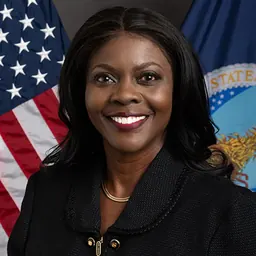
Born 1962. Dana D. Nelson is an American scientist, known for Bad for Democracy.
Dana D. Nelson is a professor of English at Vanderbilt University and a prominent progressive advocate for citizenship and democracy. She is notable for her criticism—in her books such as Bad for Democracy—of excessive presidential power and for exposing a tendency by Americans towards presidentialism, which she defines as the people's neglect of basic citizenship duties while hoping the president will solve most problems. Her scholarship focuses on early American literature relating to citizenship and democratic government.
Academic career
Nelson earned a bachelor's degree from Indiana University of Pennsylvania in 1984 and master's (1986) and doctoral degrees (1989) from Michigan State University. She was associate professor of English at the University of Kentucky in 1998. Nelson's The Word in Black and White: Reading "Race" in American Literature, 1638–1867 was named "an Outstanding Academic Book of 1992–1993 by Choice." The book explored how eleven "Anglo-American authors constructed 'race, including a study of The Last of the Mohicans and Incidents in the Life of a Slave Girl, and earned positive reviews. In 2007, she wrote an essay entitled "Democracy in Theory" in the journal American Literary History.
In 2009, Nelson was the Gertrude Conaway Vanderbilt professor of English and American studies at Vanderbilt University. She has published numerous books, essay collections, and articles on U.S. literature and the history of citizenship and democratic culture.
Books, scholarship, activism
In her 2008 book Bad for Democracy, Nelson criticizes presidentialism which she sees as worship of the presidency and federal politics to the exclusion of all else. She believes the presidency has become too powerful. One reviewer wrote that Nelson's conception was that presidentialism was a "result of the American citizenry's tendency to look to the sitting president as simultaneously a unifier of the citizenry and a protector from political threats." Another reviewer wrote: "Bad for Democracy surveys the evolving role of the president in the national psyche, and examines how presidential powers have expanded far beyond the intentions of the Constitution's framers ... Nelson combines her analysis with a plea for a return to grassroots democracy and activism."
Nelson explained in an interview: "My book argues that our habit of putting the president at the center of democracy and asking him to be its superhero works to deskill us for the work of democracy. And, it argues that the presidency itself has actually come to work against democracy." She argues Americans tend to "super-size the presidency" and this is at odds with what the founding fathers might have wanted. Newspaper columnist David Sirota wrote "this culture of 'presidentialism,' as Vanderbilt Professor Dana Nelson calls it, has justified the Patriot Act, warrantless wiretaps and a radical theory of the unitary executive that aims to provide a jurisprudential rationale for total White House supremacy over all government." Nelson advocates a grassroots effort to restore democracy. She explained in 2009: "We stop waiting for someone else to do it for us. We organize together, using public spaces and the internet. We form blogs, we write letters to the editor, we show up at Congress, we protest, we call, we lobby, we boycott, we buycott, we email our representatives, we find supporters, we get them moving, we grow the movement. We ignore the idea that the right president will do it for us and find every way we can to do it ourselves. Great if the president will help but totally unnecessary." Proponents of the unitary executive "want to expand the many existing uncheckable executive powers – such as executive orders, decrees, memorandums, proclamations, national security directives and legislative signing statements – that already allow presidents to enact a good deal of foreign and domestic policy without aid, interference or consent from Congress." 2001, (co-edited with Houston Baker) Violence, the Body and The South 1998, National Manhood: Capitalist Citizenship and the Imagined Fraternity of White Men 1997, (editor) Lydia Maria Child, Romance of the Republic 1994, Principles and Privilege: Two Women's Lives on a Georgia Plantation 1993, Rebecca Rush, Kelroy 1992, The Word in Black and White: Reading 'Race' in American Literature, 1638–1867
Don’t just read it —
keep it.
Full-length biographies made to live with: read them, listen on the way to work, watch them tonight.
- E-book
- Audio
- Video
Instant download · yours to keep · every purchase keeps this site free
Important facts
People in Dana D. Nelson's life
Named in this biography and alive at the same time



Related people
Same field, nearest in time



Contemporaries
People whose lives overlapped Dana D. Nelson's





Frequently asked questions
Who is Dana D. Nelson?
American activist
When was Dana D. Nelson born?
Dana D. Nelson was born in 1962 in United States.
What is Dana D. Nelson's occupation?
Dana D. Nelson is a scientist.
What is Dana D. Nelson known for?
Dana D. Nelson is known for Bad for Democracy.
What nationality is Dana D. Nelson?
Dana D. Nelson is American.
Sources & further reading
Cite this page
APA: Biography.guide. (2026). Dana D. Nelson. https://biography.guide/dana-d-nelson/
MLA: "Dana D. Nelson." Biography.guide, https://biography.guide/dana-d-nelson/.
Chicago: "Dana D. Nelson." Biography.guide. https://biography.guide/dana-d-nelson/.
Data last updated: 2026-09-20 · Spot an error? Report a correction.
Page generated 2026-09-27 04:59 UTC