
About Dan Kaminsky
Lived 1979 – 2021 (aged 42). Dan Kaminsky was an American computer scientist and computer security, known for DNS cache poisoning.
Early life Daniel Kaminsky was born in San Francisco on February 7, 1979, to Marshall Kaminsky and Trudy Maurer. His mother told The New York Times that after his father bought him a RadioShack computer at age four, Kaminsky had taught himself to code by age five. At 11, his mother received a call from a government security administrator who told her that Kaminsky had used penetration testing to intrude into military computers, and that the family's Internet would be cut off. His mother responded by saying if their access was cut, she would take out an advertisement in the San Francisco Chronicle to publicize the fact that an 11-year-old could break military computer security. Instead, a three-day Internet "timeout" for Kaminsky was negotiated. In 2008, after Kaminsky found and coordinated a fix for a fundamental DNS flaw, he was approached by the administrator, who thanked him and asked to be introduced to his mother.
Kaminsky attended St. Ignatius College Preparatory and Santa Clara University. After graduating from college, he worked for Cisco, Avaya, and IOActive, before founding his own firm White Ops (later renamed Human Security). Various ISPs have experimented with intercepting return messages of non-existent domain names and replacing them with advertising content. This could allow hackers to set up phishing schemes by attacking the server responsible for the advertisements and linking to non-existent subdomains of the targeted websites. Kaminsky demonstrated this process by setting up Rickrolls on Facebook and PayPal. While the vulnerability used initially depended in part on the fact that Earthlink was using Barefruit to provide its advertising, Kaminsky was able to generalize the vulnerability to attack Verizon by attacking its ad provider, Paxfire.
Kaminsky went public after working with the ad networks in question to eliminate the immediate cross-site scripting vulnerability.
Flaw in DNS In 2008, Kaminsky discovered a fundamental flaw in the Domain Name System (DNS) protocol that could allow attackers to easily perform cache poisoning attacks on most nameservers (djbdns, PowerDNS, MaraDNS, Secure64 and Unbound were not vulnerable). With most Internet-based applications depending on DNS to locate their peers, a wide range of attacks became feasible, including website impersonation, email interception, and authentication bypass via the "Forgot My Password" feature on many popular websites. After discovering the problem, Kaminsky initially contacted Paul Vixie, who described the severity of the issue as meaning "everything in the digital universe was going to have to get patched." Kaminsky then alerted the Department of Homeland Security and executives at Cisco and Microsoft to work on a fix.
Kaminsky had intended not to publicize details of the attack until 30 days after the release of the patch, but details were leaked on July 21, 2008. The information was quickly pulled down, but not before it had been mirrored by others. He later presented his findings at the Black Hat Briefings, at which he wore both a suit and rollerskates. but experienced some backlash from the computer security community for not immediately disclosing his attack. When a reporter asked him why he had not used the DNS flaw for his own financial benefit, Kaminsky responded that he felt it would be morally wrong, and he did not wish for his mother to visit him in prison. djbdns dealt with the issue using Source Port Randomization, in which the UDP port was used as a second transaction identifier, thus raising the possible ID count into the billions. Other more popular name server implementations left the issue unresolved due to concerns about performance and stability, as many operating system kernels simply weren't designed to cycle through thousands of network sockets a second. Instead, other implementers assumed that DNS's time to live (TTL) field would limit a guesser to only a few attempts a day.
Kaminsky's attack bypassed this TTL defense by targeting "sibling" names like "83.example.com" instead of "www.example.com" directly. Because the name was unique, it had no entry in the cache, and thus no TTL. But because the name was a sibling, the transaction-ID guessing spoofed response could not only include information for itself, but for the target as well. By using many "sibling" names in a row, he could induce a DNS server to make many requests at once. This tactic provided enough opportunities to guess the transaction ID to successfully spoof a reply in a reasonable amount of time.
To fix this issue, all major DNS servers implemented Source Port Randomization, as djbdns and PowerDNS had done before. This fix makes the attack up to 65,536 times harder. An attacker willing to send billions of packets can still corrupt names.
Automated detection of Conficker On March 27, 2009, Kaminsky discovered that Conficker-infected hosts have a detectable signature when scanned remotely. Signature updates for a number of network scanning applications are now available, including NMap and Nessus.
Flaws in Internet X.509 infrastructure In 2009, in cooperation with Meredith L. Patterson and Len Sassaman, Kaminsky discovered numerous flaws in the SSL protocol. These include the use of the weak MD2 hash function by Verisign in one of their root certificates and errors in the certificate parsers in a number of Web browsers that allow attackers to successfully request certificates for sites they do not control.
Attack by "Zero for 0wned" On July 28, 2009, Kaminsky, along with several other high-profile security consultants, experienced the publication of their personal email and server data by hackers associated with the "Zero for 0wned" online magazine. The attack appeared to be designed to coincide with Kaminsky's appearance at the Black Hat Briefings .
Interpolique In June 2010, Kaminsky released Interpolique, a beta framework for addressing injection attacks such as SQL injection and cross-site scripting in a manner comfortable to developers.
Personal life and death
Works
Don’t just read it —
keep it.
Full-length biographies made to live with: read them, listen on the way to work, watch them tonight.
- E-book
- Audio
- Video
Instant download · yours to keep · every purchase keeps this site free
Important facts
People in Dan Kaminsky's life
Named in this biography and alive at the same time

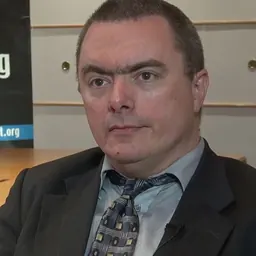

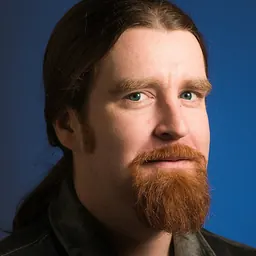
Related people
Same field, nearest in time
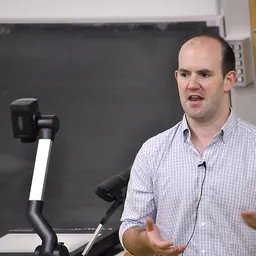
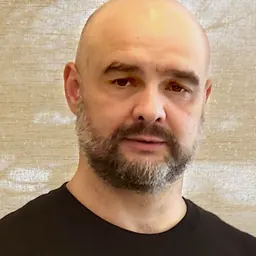



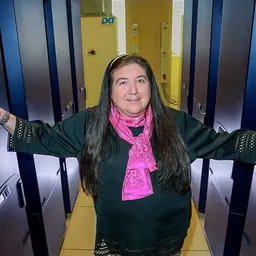
Contemporaries
People whose lives overlapped Dan Kaminsky's


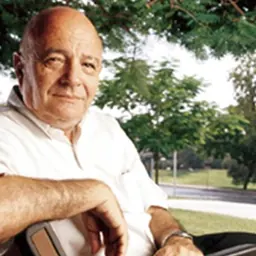


Frequently asked questions
Who was Dan Kaminsky?
American security researcher (1979–2021)
When was Dan Kaminsky born?
Dan Kaminsky was born on 7 February 1979 in San Francisco.
When did Dan Kaminsky die?
Dan Kaminsky died on 23 April 2021 in San Francisco.
What was Dan Kaminsky's occupation?
Dan Kaminsky was a computer scientist and computer security.
What was Dan Kaminsky known for?
Dan Kaminsky was known for DNS cache poisoning.
What nationality was Dan Kaminsky?
Dan Kaminsky was American.
Sources & further reading
Cite this page
APA: Biography.guide. (2026). Dan Kaminsky. https://biography.guide/dan-kaminsky/
MLA: "Dan Kaminsky." Biography.guide, https://biography.guide/dan-kaminsky/.
Chicago: "Dan Kaminsky." Biography.guide. https://biography.guide/dan-kaminsky/.
Data last updated: 2026-09-22 · Spot an error? Report a correction.
Page generated 2026-09-27 05:19 UTC