
About Dan Ingalls
Born 1944. Dan Ingalls is an American computer scientist, known for Bit blit, Context menu and Fabrik (software).
Daniel Henry Holmes Ingalls Jr. (born 1944) is a pioneer of object-oriented computer programming and the principal architect, designer and implementer of five generations of Smalltalk environments. He designed the bytecoded virtual machine that made Smalltalk practical in 1976. He also invented bit blit, the general-purpose graphical operation that underlies most bitmap computer graphics systems today, and pop-up menus. He designed the generalizations of BitBlt to arbitrary color depth, with built-in scaling, rotation, and anti-aliasing. He made major contributions to the Squeak version of Smalltalk, including the original concept of a Smalltalk written in itself and made portable and efficient by a Smalltalk-to-C translator.
Education Ingalls received his Bachelor of Arts (B.A.) in physics from Harvard University, and his Master of Science (M.S.) in electrical engineering from Stanford University. While working toward a Doctor of Philosophy (Ph.D.) at Stanford, he started a company to sell a software measurement invention that he perfected, and never returned to academia.
Work Ingalls' first well known research was at Xerox PARC, where he began a lifelong research association with Alan Kay, and did his award-winning work on Smalltalk. As Peter Siebel wrote about Dan in his book Coders at Work, Reflections on the Craft of Programming, "If Alan Kay is Smalltalk's father, Dan Ingalls is its mother—Smalltalk may have started as a gleam in Alan Kay's eye, but Ingalls is the one who did the hard work of bringing it into the world. Starting with the first implementation of Smalltalk, written in BASIC and based on one page of notes from Kay, Ingalls has been involved in implementing seven generations of Smalltalk from the first prototype to the present-day open source implementation, Squeak." Dan's design principles for Smalltalk included the important concepts of personal mastery, good design in a uniform framework, language for communication, interaction of language, the concept of "objects", storage management, messages, and other principles outlined in his Byte Magazine article in 1981, "Design Principles of Smalltalk".
In 2020, Ingalls wrote The Evolution of Smalltalk for the ACM HOPL Conference, ACM Program. Lang., Vol. 4, No. HOPL, Article 85. Publication date: June 2020, which details the design of Smalltalk through Ingalls's multiple iterations of the language, including his development of Squeak in 1996. Although some may not be familiar with the language of Smalltalk or the fact that it began object orientation in programming, it is still a useful and well-used language.
"The idea had come to him visually. When you are moving information on the display, whether it is scrolling or copying text or copying a graphical image from one place to another, you have a source and a destination within the computer's memory. In his mind, he envisioned the concept as a wheel that rotated from the starting point to the end point. It was an idea that seemed obvious after Ingalls had conceived of it, and it has been copied widely by all of the graphical computing systems that have followed. Today it remains at the heart of both the Macintosh and Windows computing worlds. In the early 1970s, however, it was a radically new idea. Called Bit Blit, it enabled graphical menu systems to "pop-up" instantly on an Alto screen in response to a mouse click. As much as any single software innovation, Bit Blit made the modern graphical computer interface possible." in Hot Springs, Virginia. The Ingalls family owned and operated the Homestead Resort for 100 years.
Ingalls returned to Silicon Valley in 1995, first working at Interval Research Corporation, and then returned to Apple. Starting at Xerox, and then at Apple, he developed Fabrik, a visual programming language and integrated development environment (IDE), consisting of a kit of computing and user interface components that can be "wired" together to build new components and useful application software. Fabrik was implemented in Smalltalk and designed together with Scott Wallace, Yu-Ying Chow, Frank Ludolph, Ken Doyle and others.
Then he moved to Hewlett-Packard Labs, where he developed a module architecture for Squeak. He also started a small firm, Weather Dimensions, Inc., which displays local weather data on home computers.
Ingalls then worked as a Distinguished Engineer at Sun Microsystems, where he worked in the Sun Microsystems Laboratories (Sun Labs) research wing. His latest project is a JavaScript environment named Lively Kernel, which allows live, interactive Web programming and objects from inside Web browsers.
While best known for his work on Smalltalk, Ingalls is also known for developing an optical character recognition system for Devanagari writing, which he did in collaboration with his father, Daniel H. H. Ingalls, Sr., a professor of Sanskrit.
Ingalls moved to SAP SE Palo Alto Research Center, as a fellow. He was a key member of the chief scientist team guiding the company's technology vision, direction, and execution. He moved his research group to YCombinator, to a newly formed YCombinator Research Group, YCR, where he continued his research, living near the beach in Rio del Mar, Aptos, California with his wife Cathleen Galas, where he also contributed to development of the Squeak implementation of Smalltalk, JavaScript research, and the Lively Kernel Project, which now resides at the Hasso Plattner Institute.
Ingalls now consults and lives near the beach in Manhattan Beach, California, with his wife, Cathleen Galas.
Awards In 1984, Ingalls received the Association for Computing Machinery (ACM) Grace Murray Hopper Award for Outstanding Young Scientist, for his Xerox PARC research, including bit blit.
In 1987, with Alan Kay, and Adele Goldberg, he received the ACM Software System Award, for his work on Smalltalk, the first fully object oriented programming software system.
In 2002, he was co-recipient, with Adele Goldberg, of the Dr. Dobb's Excellence in Programming award.
In 2022, Ingalls was made a Fellow of the Computer History Museum for creating, developing and building seven generations of the Smalltalk programming environment, and promoting object-oriented programming.
Also in 2022, Dan Ingalls received the Senior Dahl-Nygaard Prize at ECOOP for his impact on modern computing.
Don’t just read it —
keep it.
Full-length biographies made to live with: read them, listen on the way to work, watch them tonight.
- E-book
- Audio
- Video
Instant download · yours to keep · every purchase keeps this site free
Important facts
People in Dan Ingalls's life
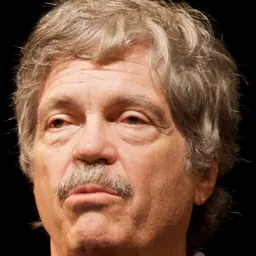
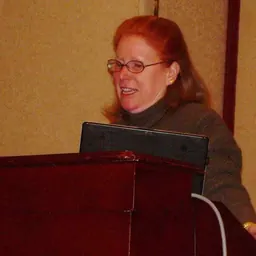
Named in this biography and alive at the same time




Related people
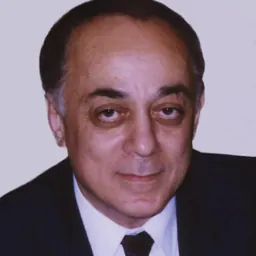
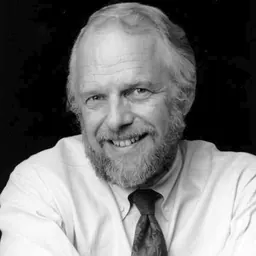
Same field, nearest in time



Contemporaries
People whose lives overlapped Dan Ingalls's




Frequently asked questions
Who is Dan Ingalls?
American computer scientist
When was Dan Ingalls born?
Dan Ingalls was born in 1944 in Washington, D.C..
What is Dan Ingalls's occupation?
Dan Ingalls is a computer scientist.
What is Dan Ingalls known for?
Dan Ingalls is known for Bit blit, Context menu, Fabrik (software), Lively Kernel, Object-oriented programming and Smalltalk.
What nationality is Dan Ingalls?
Dan Ingalls is American.
Sources & further reading
Cite this page
APA: Biography.guide. (2026). Dan Ingalls. https://biography.guide/dan-ingalls/
MLA: "Dan Ingalls." Biography.guide, https://biography.guide/dan-ingalls/.
Chicago: "Dan Ingalls." Biography.guide. https://biography.guide/dan-ingalls/.
Data last updated: 2026-09-25 · Spot an error? Report a correction.
Page generated 2026-09-27 05:12 UTC