
Dan Dugan
First sound designer; inventor of the automixer
About Dan Dugan
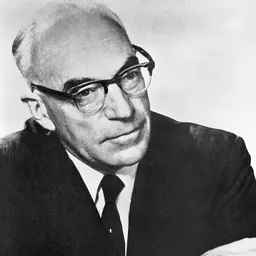
Born 1943. Dan Dugan is an American audio engineer, sound designer, inventor and nature recordist.
Dan Dugan (born March 20, 1943) is an American audio engineer, inventor, and nature sounds recordist. He was the first person in regional theatre to be called a sound designer, and he developed the first effective automatic microphone mixer: the automixer. Dugan's sound design work was acknowledged in 2003 with a Distinguished Career Award by the United States Institute for Theatre Technology, and in 2020 with an Emmy Award for technology relevant to remote working. In 2021 he was awarded Fellowship in the Audio Engineering Society.
In his youth, Dugan was fascinated by the technical aspects of theatre. He worked as a lighting designer then transitioned to sound design in 1967. Dugan became interested in achieving the automatic adjustment of sound controls after a frustrating experience staging the musical Hair. His first automixer design was not fully practical but his second design was successful; it used a reference derived from a total of all of its microphone signals. Dugan devised a third improvement which helped prevent audio feedback in the presence of sound reinforcement loudspeakers. Dugan next produced an automixer design that could be inserted into an existing mixing console. This proved popular for broadcast and live sound applications. Each of Dugan's subsequent automixer models has been of the insertable type.
Dugan first recorded sounds in the late 1960s to augment his sound designs. He continued making recordings, concentrating on capturing the sounds of nature. Dugan records outdoors in a variety of locations including national parks and nature preserves. He has assisted in research related to the harmful effects of human-generated sound in nature. Dugan is a co-founder and current secretary of People for Legal and Nonsectarian Schools (PLANS), a California non-profit organization incorporated in 1997.
Early career Daniel W. Dugan was born in Los Angeles, California, on March 20, 1943, after his father, U.S. Navy Commander P. F. Dugan, had been activated for service in the Pacific War. "Dan" Dugan was raised in San Diego where his parents took him to the Old Globe Theatre and summer musicals at the Ford Bowl—he always wanted to go backstage to see the lighting control equipment. As a young man he sang bass in the church choir, in the San Diego Bach Chorus, in choral workshops under Roger Wagner at San Diego State University, and in madrigal groups for "Dancing on the Green", an Elizabethan-era folk dancing event held in front of the Old Globe. Dugan obtained a four-year scholarship to the University of San Francisco and majored in physics and math.
Sound design
Dugan changed from lighting design to sound design in 1967. The state of sound design at the time was mostly occasional sound effects performed live or played back on record players or tape machines. Dugan's first efforts in sound involved designing sound solutions for the Shakespeare festival in San Diego and for the American Conservatory Theater (ACT) in San Francisco. He presented a paper about his sound design to the Audio Engineering Society (AES) at their 37th convention, and his paper was published in the Journal of the Audio Engineering Society in December 1969. Dugan described a system in which the signals from three stereo tape players were routed to ten loudspeaker zones in the theater. The Chicago production ran in 1969 and 1970 at the Blackstone Theatre, operated at that time by The Shubert Organization. Dugan was able to design sound but not allowed to operate the mixing console because he was not in the stagehands union: International Alliance of Theatrical Stage Employees (IATSE). In 2003 the USITT honored Dugan with the Harold Burris-Meyer Distinguished Career in Sound Design Award, given for "a lifetime spent establishing the field of sound design for the performing arts, as both artist and innovator in audio engineering and technology." Previous winners of the award were Abe Jacob, John Bracewell and Tony Meola.
Automixer While designing sound for the musical Hair, Dugan began to appreciate the human operator's inability to act quickly enough to control multiple microphones. Dugan thought that a microphone should not be turned on unless it was getting some worthwhile signal, more than just the room ambiance. His frustration with microphone mixing This system used a novel proportional gain algorithm whereby the total gain was divided between all active microphones. The microphones were "continuously and automatically adjusted" by a set of VCAs to bring each microphone up or down in the mix, based on how much signal it was sending relative to the signal received by a reference microphone placed somewhat distant from the other microphones. Dugan's patent application for a "Control Apparatus for Sound Reinforcement Systems" was accepted and published on June 4, 1974. the basis for all of Dugan's later systems.
Though the algorithm was good, the reference microphone was an unpredictable variable: it had practical placement problems. If it was near the audience, audience noise would skew the algorithm. If placed backstage, crew and equipment noises could be a factor. Thus, the Dugan Music System was not immediately developed into a product. Dugan studied the problem, researching alternative solutions. In 1975, Dugan filed a patent for the "Dugan Speech System", and in 1976 produced 60 copies of what he named the Dugan Model A. The automixer with serial number 1, a unit Dugan fabricated by hand, "was installed in the conference room of Bell Labs by Harvey Fletcher". Significantly, the external microphone reference of the Dugan Music System was replaced by a reference composed of the total signal received from all of the active microphones. Dugan described the process some three decades later:
In 2006, Dugan assisted a group of researchers studying soundscapes and human use at Muir Woods. The researchers presented their findings at the Northeastern Recreation Research Symposium, produced by the United States Forest Service, a work titled, "From Landscapes to Soundscapes: Understanding and Managing Natural Quiet in the National Parks". They concluded that human-generated noise "is a potentially important indicator of quality" of soundscapes in parks. Dugan participated in the court proceedings. After years of litigation, the 9th circuit court dismissed the case on its merits in 2012.
As co-founder and Secretary of PLANS, Dugan has given media interviews and was quoted in the book The Flickering Mind: The False Promise of Technology in the Classroom and How Learning Can Be Saved. He said Waldorf schools are "faith-based" and draw from an educational theory that is "frozen" in 1925.
Don’t just read it —
keep it.
Full-length biographies made to live with: read them, listen on the way to work, watch them tonight.
- E-book
- Audio
- Video
Instant download · yours to keep · every purchase keeps this site free
Important facts
People in Dan Dugan's life
Named in this biography and alive at the same time






Related people
Same field, nearest in time
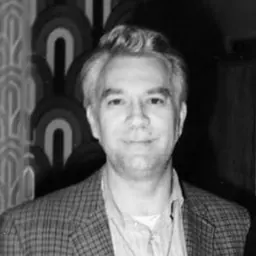
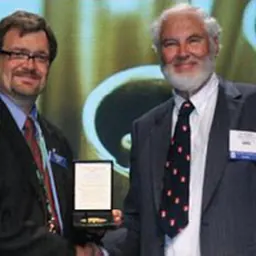
Contemporaries
People whose lives overlapped Dan Dugan's

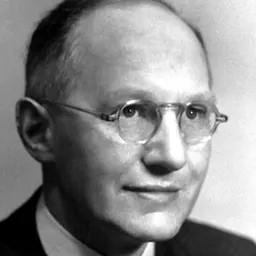

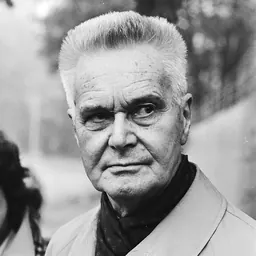

Frequently asked questions
Who is Dan Dugan?
first sound designer; inventor of the automixer
When was Dan Dugan born?
Dan Dugan was born on 20 March 1943 in Los Angeles.
What is Dan Dugan's occupation?
Dan Dugan is an audio engineer, sound designer, inventor and nature recordist.
What nationality is Dan Dugan?
Dan Dugan is American.
Sources & further reading
· DBpedia: Dan Dugan (audio engineer)
Cite this page
APA: Biography.guide. (2026). Dan Dugan. https://biography.guide/dan-dugan-audio-engineer/
MLA: "Dan Dugan." Biography.guide, https://biography.guide/dan-dugan-audio-engineer/.
Chicago: "Dan Dugan." Biography.guide. https://biography.guide/dan-dugan-audio-engineer/.
Data last updated: 2026-09-25 · Spot an error? Report a correction.
Page generated 2026-09-27 05:12 UTC