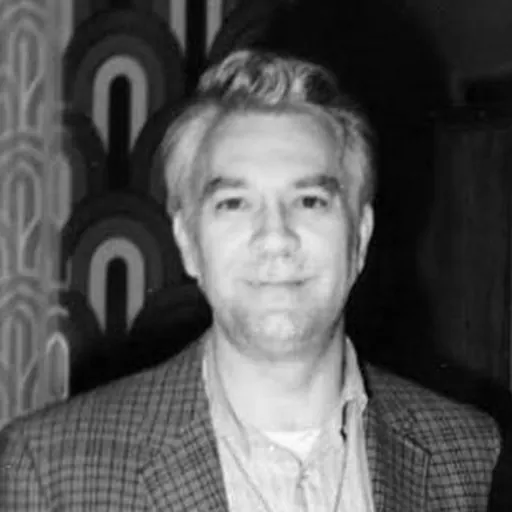
About Bill Porter
Lived 1931 – 2010 (aged 79). Bill Porter was an American audio engineer.
Billy Rhodes Porter (June 15, 1931 – July 7, 2010) was an American audio engineer and record producer who pioneered the Nashville sound and recorded stars such as Chet Atkins, Louis Armstrong, The Everly Brothers, Elvis Presley, David Bowie, Gladys Knight, Barbra Streisand, Diana Ross, Dolly Parton, Skeeter Davis, Ike & Tina Turner, Sammy Davis Jr., and Roy Orbison from the late 1950s through the 1980s. In one week of 1960, his recordings accounted for 15 of Billboard magazine's Top 100, a feat none have matched.
Porter mixed live concert sound for Elvis Presley, at Presley’s request, from 1970 until the singer's death in 1977. As a University of Miami music professor, Porter helped create the first college program in audio engineering, and went on to teach similar courses at the University of Colorado Denver, and Webster University in St. Louis. Porter was inducted into the TEC Hall of Fame in 1992.
Early life Porter was born in St. Louis, Missouri on June 15, 1931. He graduated from East Nashville High School in 1949, then served in the United States Army Reserves In July, the song went to number one on the U.S. country and pop charts, and Porter's reputation rose. (At the time, there was only one studio, with no letter designation. In 1964, when the larger RCA Studio A was built, the original studio was renamed as "Studio B".) The studio's acoustics were problematic, with resonant room modes creating an uneven frequency response. To lessen the problem, Porter took $60 from the studio's petty cash and bought fiberglass acoustic ceiling panels which he and Tommy Strong, his assistant engineer, cut into triangles and hung from the ceiling at varying heights; these were called "Porter Pyramids".
Adjacent to Studio B was a utility room containing a plate reverb device made by EMT, German makers of similar effects units installed in other recording studios around the world. The EMT 140 reverb was an electro-mechanical echo chamber used to add artificial reverberation effects to recordings. Porter arranged to have the dedicated echo room cooled down as much as possible with an air conditioner, and he adjusted the ten springs on the EMT plate to be tighter than usual, in order to feed the plate more audio signal and get a cleaner sound returning from the device. So much signal was being sent to the plate that Porter disconnected the associated VU meter so that he would not be bothered with its needle slamming against its peg. Porter related that the EMT's springs frequently broke under the increased tension, and he would have to replace them, but that the trouble was worth achieving a "brighter and fuller" echo effect. Porter had not studied Presley's earlier recordings—he started fresh, "doing what I thought it should be." Instead of the usual microphones used by RCA, Porter chose to use a Telefunken U-47 on Presley's voice, Porter engineered "Are You Lonesome Tonight", "It's Now or Never", and other early 1960s Elvis hits.
Much of RCA's business was what they called "custom" clients—independent labels not affiliated with RCA, but willing to pay for recording sessions at the proven hit-maker studio. One outstanding client was Monument Records under producer Fred Foster, bringing his client Roy Orbison. Porter was able to create for Orbison his trademark sound, with background vocals brought nearer the foreground, beginning with "Only the Lonely". Other Orbison hits recorded for Monument at RCA Nashville were "It's Over", "Running Scared" and "Oh, Pretty Woman". Boots Randolph's "Yakety Sax" and Al Hirt's "Java" are other Monument recordings that Porter engineered at RCA.
The atmosphere in the studio was important to Porter. He felt that the "music has to show the emotion of the artist",
Columbia and Monument
Porter left RCA in November 1964 to engineer for Columbia Records in Nashville, where he stayed for six months, bringing some of his custom clients with him. but it had problems with its equipment, radio frequency interference from nearby broadcast transmitters, and rumbling noises generated by Union Pacific freight trains passing the building. Porter made recordings at his studio for artists such as personal friend Paul Anka, who would arrive at 2:00 am after his show and record until dawn. Other projects involved recording live shows at Las Vegas hotels, including Buddy Rich's Mercy, Mercy live album at Caesars Palace in 1968.
In 1969, Porter and his maintenance technicians modified the 12-input, 4-output mixing console to give it 8 outputs, and made their own 8-track tape recorder from Ampex parts. into United Recording so that Porter could help him with the song's unusual fade out and back in three-quarters of the way through. A bigger concern was that Jarvis wanted a horn section but there were no empty tracks left on the tape. Porter solved the dilemma by mixing the horns live in the studio as the original session tape played back, the total blend being recorded onto a stereo master. The hotel's engineers did not get the other two to work, so Porter had some of his own Shure Vocal Master loudspeakers brought over from the recording studio. He laid the column loudspeakers on their sides at the front lip of the stage and propped them up to aim at Presley, who was very happy with the result. Presley insisted upon having Porter mix his live show in January even though he was a recording engineer with no previous experience in live sound. Porter quickly learned about acoustic feedback during the first song, but backstage after the show, film stars and musical artists kept complimenting Presley, telling him that Porter’s concert sound was "just like the album". Porter recorded several of these shows in the mid-1970s, released as albums, In August 1977, Porter was changing planes in Boston to fly to Portland, Maine, to mix a Presley concert when he received a phone call informing him that the singer had died. VMI was housed in Porter's United Recording building. The first VMI release was in December 1971—the album was To Be Free and 18 by Sandi Scott, which did not take off. Better results came soon; in the first year of business, VMI songwriter Ronnie Gaylord wrote "I Will Never Pass This Way Again", a modest success for Glen Campbell, the song covered by others including Brenda Lee, Vikki Carr and Wayne Newton, who closed his show with it at each performance. Las Vegas singer Benny Hester's first album Benny and a related single were announced by VMI in late 1972. Other artists recording with VMI included Sammy Davis Jr., Andy Williams, Sérgio Mendes and Brasil '77, Ike & Tina Turner, Gladys Knight & the Pips, Danny Thomas, Harry Belafonte, Bobby Darin and Louis Prima.
Porter was named director-at-large of the Country Music Association (CMA) in October 1972. He prepared a booklet for the organization in December, an instructional primer on sound techniques, describing microphones and their usage, loudspeaker types, audio mixers, and giving operating tips.
VMI's publishing business never scored a major hit, and Porter was frustrated by what he saw as bad business decisions forced on him by the partnership. In January 1973, he resigned. and Porter lost all of the recording equipment stored inside, a total he estimated at $250,000—about $ in today's dollars.
University of Miami In 1975, Porter took a call from Jerry Milam of Milam Audio and Golden Voice Recording in South Pekin, Illinois, informing him that there was an audio engineering teaching position forming at the University of Miami's Frost School of Music.
University of Colorado and Webster University Porter taught audio engineering and music history at the University of Colorado Denver in the late 1980s, living outside of Denver with his wife Charmaine, "Boots". Porter asked Chet Atkins to accompany him to the ceremony, but Atkins could not attend because of a prior engagement at Carnegie Hall. However, before the honor was conferred at the ceremony, a video was played of Atkins congratulating Porter, saying "you improved the echo sound tremendously and made things sound so big and so full."
In 2003, Porter won the William T. Kemper Award for Excellence in Teaching, and he was honored with a lifetime achievement award from the St. Louis chapter of the Audio Engineering Society.
Late in life, Porter said that among his favorites of his career recordings were Atkins's The Most Popular Guitar, an album recorded with lush string orchestration, and Jerry Byrd's Byrd of Paradise, recorded during Porter's stint with Monument Records. Regarding the Nashville Sound, Porter believed that it was in the people who were involved: Hank Garland, Ray Edenton, Buddy Harman, Harold Bradley, Bob Moore, Boots Randolph, Floyd Cramer, Velma Smith, Charlie McCoy, the Anita Kerr Singers, and the Jordanaires. Porter's health declined from Alzheimer's disease, and he died in a hospice near Ogden on July 7, 2010, at the age of 79. He was survived by his wife Carole, a brother and a sister, his children Nancy, a retired professor, and Gene, a prominent Las Vegas attorney and politician, and his grandchildren Sam, Marcie, Chandelle, and Weston Porter.
Top tens These songs engineered by Porter placed in the top ten in the U.S. Billboard Hot 100 chart: Artist Song Year-month Highest chart position Louis Armstrong "What a Wonderful World" 1968-02 1 (UK) Bobby Bare "500 Miles Away from Home" 1963-10 10 The Browns "The Three Bells" 1959-08 1 The Browns "The Old Lamp-Lighter" 1960-03 5 Floyd Cramer "Last Date" 1960-10 2 Floyd Cramer "On the Rebound" 1961-03 4 Floyd Cramer "San Antonio Rose" 1961-06 8 Skeeter Davis "End of the World" 1962-12 2 Skeeter Davis "I Can't Stay Mad at You" 1963-09 7 The Everly Brothers "(Till) I Kissed You" 1959-08 4 The Everly Brothers "Cathy's Clown" 1960-04 1 The Everly Brothers "When Will I Be Loved" 1960-06 8 The Everly Brothers "So Sad" 1960-09 7 The Everly Brothers "Walk Right Back" 1961-02 7 The Everly Brothers "Ebony Eyes" 1961-02 8 The Everly Brothers "Crying in the Rain" 1962-01 6 The Everly Brothers "That's Old Fashioned" 1962-05 9 Connie Francis "Together" 1961-07 6 Al Hirt "Java" 1964-01 4 Hank Locklin "Please Help Me, I'm Falling" 1960-05 8 Bob Luman "Let's Think About Living" 1960-09 7 Bob Moore "Mexico" 1961-08 7 Roy Orbison "Only The Lonely" 1960-06 2 Roy Orbison "Blue Angel" 1960-09 9 Roy Orbison "Running Scared" 1961-04 1 Roy Orbison "Crying" 1961-08 2 Roy Orbison "Dream Baby" 1962-02 4 Roy Orbison "In Dreams" 1963-02 7 Roy Orbison "It's Over" 1964-04 9 Roy Orbison "Oh, Pretty Woman" 1964-08 1 Elvis Presley "Stuck On You" 1960-04 1 Elvis Presley "It's Now or Never" 1960-07 1 Elvis Presley "Are You Lonesome Tonight?" 1960-11 1 Elvis Presley "Surrender" 1961-02 1 Elvis Presley "I Feel so Bad" 1961-04 5 Elvis Presley "(Marie's the Name) His Latest Flame" 1961-06 4 Elvis Presley "Little Sister" 1961-08 5 Elvis Presley "Good Luck Charm" 1962-03 1 Elvis Presley "She's Not You" 1962-08 5 Elvis Presley "Return To Sender" 1962-11 2 Elvis Presley "(You're the) Devil in Disguise" 1963-06 3 Elvis Presley "Crying in the Chapel" 1965-04 3 Elvis Presley "Suspicious Minds" 1969-09 1 Jim Reeves "He'll Have to Go" 1960-01 2 Tommy Roe "Sheila" 1962-07 1 Ronny & the Daytonas "G.T.O." 1964-08 4 Sue Thompson "Sad Movies (Make Me Cry)" 1961-09 5 Sue Thompson "Norman" 1961-12 3 Johnny Tillotson "Poetry in Motion" 1960-10 2 Johnny Tillotson "Without You" 1961-08 7 Johnny Tillotson "It Keeps Right On a-Hurtin'" 1962-05 3
Don’t just read it —
keep it.
Full-length biographies made to live with: read them, listen on the way to work, watch them tonight.
- E-book
- Audio
- Video
Instant download · yours to keep · every purchase keeps this site free
Important facts
People in Bill Porter's life
Named in this biography and alive at the same time





Related people
Same field, nearest in time

Contemporaries
People whose lives overlapped Bill Porter's

Frequently asked questions
Who was Bill Porter?
American audio engineer
When was Bill Porter born?
Bill Porter was born on 15 June 1931 in St. Louis.
When did Bill Porter die?
Bill Porter died on 7 July 2010 in Ogden.
What was Bill Porter's occupation?
Bill Porter was an audio engineer.
What nationality was Bill Porter?
Bill Porter was American.
Sources & further reading
· DBpedia: Bill Porter (sound engineer)
Cite this page
APA: Biography.guide. (2026). Bill Porter. https://biography.guide/bill-porter-audio-engineer/
MLA: "Bill Porter." Biography.guide, https://biography.guide/bill-porter-audio-engineer/.
Chicago: "Bill Porter." Biography.guide. https://biography.guide/bill-porter-audio-engineer/.
Data last updated: 2026-09-23 · Spot an error? Report a correction.
Portrait: Wikimedia Commons · author & licence
Page generated 2026-09-27 05:08 UTC