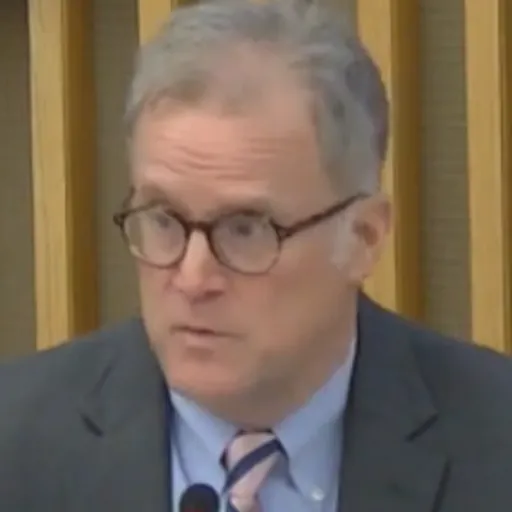
About Dan Cronin
Born 1959. Dan Cronin is an American politician.
Daniel J. Cronin (born November 7, 1959) is an American politician and attorney who served as county board chairman of DuPage County, Illinois from December 2010 until December 2022. A member of the Republican Party, he previously served in the Illinois General Assembly from 1991 through 2010.
Cronin was born in Elmhurst, Illinois. He received a bachelor's degree from Northwestern University and later graduated from the Loyola University Chicago School of Law. Cronin spent his early legal career as counsel for the Illinois House of Representatives from 1985 to 1987, then as a prosecutor in DuPage County from 1987 to 1989. Since 1991, he has worked in private practice. He comes from a family that has been politically prominent in DuPage. His father, a sports physician who ran his practice and owned a medical office building in Elmhurst, helped with Dan's campaigns. Dan's brother, an attorney, managed campaigns for Republican candidates at the state and county levels in 1994, then ran unsuccessfully for DuPage state's attorney during the 1996 elections. His sister, an accountant, previously served as city treasurer of Elmhurst and later as a member of the Illinois Liquor Control Commission; she was elected to the DuPage County Board in 2022.
Cronin was elected to the House of Representatives in 1990, after defeating Republican incumbent Gene L. Hoffman on an anti-tax and anti-abortion platform. He supported cutbacks to taxes and government spending, and earned a reputation as a conservative Republican. He then ran for the Senate during the 1992 elections. Recent redistricting pitted Cronin against Ted Leverenz, an incumbent Democratic senator, in what was considered one of the "liveliest and most bitter contests" of the election season. Cronin won the election. He became chairman of the Senate's education committee, where he sponsored or debated several bills concerning reforms of Chicago Public Schools. He also sponsored legislation that restricted Medicaid funding for abortions, but the bill was vetoed by Governor George Ryan.
After becoming chairman of the DuPage County Board in 2010, Cronin launched initiatives to consolidate units of local government in the county. His reforms included merging the county's election commission into the county clerk's office in 2019, with the approval of voters during a non-binding countywide referendum. Cronin was re-elected to a second term in 2014. His accomplishments included reducing the county's sales tax by 0.25 percentage points. While running for his third term in 2018, he faced a strong challenge from Democratic candidate Lynn LaPlante, and narrowly won re-election. Following the 2018 elections, DuPage was no longer a Republican stronghold, and Cronin lamented increased political infighting on the board. In 2020, Democrats won a majority of the seats on the board for the first time since the 1930s. He submitted budgets for fiscal years 2022 and 2023 – his last as chairman – which kept property tax rates unchanged and took advantage of surpluses from rising sales tax revenues. Cronin decided not to run for re-election at the end of his term in 2022; he was succeeded by Democratic state representative Deb Conroy.
Early life and legal career
Cronin was born on November 7, 1959, in Elmhurst, Illinois. His parents, Richard Cronin and Claire Cronin , had nine children: five sons and four daughters. The family lived across the street from York Community High School. Cronin graduated from Immaculate Conception Grade School and Fenwick High School. Cronin earned a bachelor of arts degree from Northwestern University and a Juris Doctor degree from the Loyola University Chicago School of Law. where Cronin helped oversee the movement of legislation presented on the House floor.
From 1987 through 1989, Cronin worked as a prosecutor in DuPage County, He worked alongside Joe Birkett, who would eventually become state's attorney in 1996 and Appellate Court judge in 2010.
Family Dan is married to Juliann Ashley Cronin, owner of A&H Lithoprint, a lithography company in Broadview. The couple became engaged in October 1991 and married in May 1992. They have three daughters and one son, and they are members of Immaculate Conception Parish in Elmhurst. He took a leave of absence to work on campaigning during the 1994 elections, He earned $3,400 per month while serving as campaign manager for Franzen, who had turned to Tom and Dan for help in asserting Franzen's independence from party leadership. Tom's and Dan's mother, Claire Cronin, and two sisters also volunteered for Franzen's campaign. At a forum between the two candidates, Dan asked a question attacking Birkett for accepting campaign contributions from criminal defense attorneys. During the campaign, Dan also protested language in sample letters circulated among Republican precinct workers that endorsed Birkett and criticized Tom. Additionally, Tom faced criticisms for receiving traffic tickets and failing to appear in court to answer them, causing his drivers license to be suspended. Tom lost to Birkett.
Dan's and Tom's sister, Cindy Cronin Cahill, was the first in the family to enter politics. A part-time accountant with her own company, Cahill ran for city treasurer of Elmhurst in 1989. The Cronin family helped with canvassing, including Juliann, who had not yet married Dan. Cahill was the youngest candidate in the race, and defeated her two male opponents by a wide margin. After four years, she stepped down as treasurer in 1993 to care for her children. She was elected to the county board during the 2022 elections.
Illinois House of Representatives Cronin considered running for the General Assembly in 1986 and 1988. Daniels, by then the House minority leader, advised him to wait both times. and was the longest-serving Republican in the House. Financing for the campaign came primarily from Dan's father, Richard Cronin. The campaign was managed by Tom Cronin, Dan's brother, Pam McDonough, chief of staff for Daniels, regarded Cronin as a "good campaigner". He positioned his campaign as a change from the incumbents, and he pledged to make government more responsive and accessible to the public. Cronin's anti-establishment positions, though they helped him win the primary, did not endear him to the party's leadership. He referred to Daniels, a Hoffman supporter, as "ineffective", and the relationship between Cronin and Daniels became strained. By the general election, Cronin would eventually ease the criticism and work with Daniels again. Tom and Dan Cronin worked afterwards to further improve their relationship with Daniels.
As of October 1992, Cronin was the youngest member of the General Assembly. He earned a reputation as a conservative Republican. However, he supported paid family leave, opposed by Republican leadership and business constituents.
The race between Cronin and Leverenz was considered one of the "liveliest and most bitter contests" of the election season. Democratic colleagues regarded Leverenz as a strong campaigner to help overcome his steep odds. He touted his lengthy career as a state legislator for more than 16 years, and his pro-suburban record. Cronin, already being mentioned by observers as a possible candidate for statewide office in the 1994 elections, cast the race as a choice between a suburban conservative and a "wheeler-dealer" with ties to Chicago. Manion, who managed Cronin's previous campaign for the House, likewise managed this campaign for the Senate. (Ryan ultimately did not run for US Senate in 1998.) Cronin directed grant funding toward this gazebo in North Riverside. The state's legislative districts were again redistricted in 2001. For the 2002 elections, Cronin ran for the newly-established 21st district. Tom Walsh, the Republican incumbent senator for the then-existing 22nd district, was forced to run in the same district against Cronin. In February, Cronin was criticized for committing $30,000 in pork barrel grant funding to a proposed gazebo in North Riverside, which was outside his present 39th district but inside the new 21st district he was running for. The gazebo had been backed by Illinois treasurer Judy Baar Topinka and North Riverside Mayor Richard Scheck. Cronin defended his actions by pointing to his record of supporting other projects outside his district. He won the election.
During the 2006 elections, Cronin endorsed Jeff Redick, a colleague at Cronin's law firm, during a successful run for a seat on the DuPage County Board. In April 2007, Cronin became the chairman of the DuPage County Republican Party, succeeding Senator Kirk Dillard. His priorities as party chair included filling all vacant precinct committeeman positions and conducting performance evaluations of incumbent committeemen. Cronin assumed this role at a time when Republican margins of victory in county races were getting slimmer. By then, Democrats had taken control over state government.
Senate career In 1994, Cronin supported a bill backed by Governor Jim Edgar that would have banned assault weapons, though the measure faced strong opposition from Philip. He also sponsored a bill attempting to reverse the Illinois Supreme Court's decision in the Baby Richard case and keep children with their adoptive parents. The following year, he sponsored a bill that authorized winners of the Illinois Lottery to receive their winnings as lump-sum payments.
Cronin served as chair of the Senate's education committee and was regarded as a leading voice for Senate Republicans on education issues. In 1995, he sponsored a bill that gave the mayor of Chicago more control over the management of Chicago Public Schools (CPS). The following year, he backed a measure that would have required pay raises for teachers to be based on merit rather than seniority. In 1997, Cronin worked with several legislators to overhaul funding for public schools in Illinois, and supported Edgar's proposal to switch the burden from property taxes to income taxes. In 1998, he supported a proposal to provide direct financial relief to Catholic schools run by the Archdiocese of Chicago, amidst a broader push towards tax credits for private school tuition. In 1999, Cronin sponsored a bill that would have removed the power of Local School Councils to fire principals without the approval of central administration, but postponed further action on the bill after it became controversial. In 2002, he opposed an agreement between CPS and the Chicago Teachers Union that restored some of the bargaining rights that had been restricted under the 1995 law. In 2004, he opposed a deal in which Governor Rod Blagojevich earmarked $20 million towards the Gwendolyn Brooks College Preparatory Academy, a project backed by Senate President Emil Jones, in exchange for giving the governor more power over the Illinois State Board of Education.
In 2000, Cronin sponsored legislation that would have restricted Medicaid funding for abortions. The bill was vetoed by Governor George Ryan, a Republican who had long opposed abortion rights, prompting condemnation by Cronin and other social conservatives. In 2002, he sponsored a bill requiring the Illinois Department of Transportation to consult local communities and environmental groups on projects affecting highways.
Cronin sponsored a constitutional amendment to allow voters to recall elected officials, but the proposal was blocked by Senate Democrats. In 2008, he voted in favor of a pension reform bill that required the Chicago Transit Authority (CTA) to increase its pension contributions. In 2010, he co-sponsored legislation with Representative Randy Ramey that would reform DuPage County's water commission, an independent entity, by bringing it under the county's direct control. The proposal came after it was revealed that the commission had misspent around $69 million in reserve funds, with the financial administrator spending down some of those reserve funds without informing the water commission. A forensic audit revealed that missteps by the commission, the financial administrator, and the general manager caused several accounting errors that nearly depleted the reserves. The city council of Naperville joined the DuPage Mayors and Managers Conference in opposing the legislation, citing fears that the county would be taking control over municipal amenities.
Cronin stepped down from the Senate on November 30, 2010, after being elected to the county board. He was replaced by Ron Sandack.
DuPage County board chairman alt=Photo of two multi-story buildings which are connected. A parking garage can be seen in the background. A pond is in front of the principal building. A veteran's memorial, containing a sculpture, flagpoles, and well-manicured landscaping, is in the foreground.
Campaign Cronin ran for chairman of the DuPage County Board during the 2010 elections. He announced his candidacy at a Westin hotel in Lombard; over 300 supporters attended the event. In the Republican primary, he faced Senator Carole Pankau, Burr Ridge Mayor Gary Grasso, and county board member Debra Olson. All four candidates touted their experience in government. Grasso differentiated himself from his opponents as the only candidate to have experience as an executive of a government. Pankau stated that she would be a full-time board chairman, unlike her opponents who have other jobs or business interests. Cronin won the primary, and faced Democratic candidate Carole Cheney, an attorney from Aurora. By then, countywide elections would depend more on support from independent voters. Cheney ran a positive campaign, though she labeled Cronin as a "career politician".
Cronin subsequently won the general election after receiving nearly 63 percent of the vote.
First term
Shortly after taking office, Cronin appointed Robert Berlin, a veteran prosecutor and chief of criminal prosecutions in the county, to succeed Birkett as DuPage state's attorney. The appointment was regarded as Cronin's "first major decision" as board chairman, due to the perceived high profile and powerful position of the state's attorney.
In April 2011, Cronin announced the formation of a committee aimed at aligning county employee benefits with those in the private sector, primarily to address rising pension costs. A key focus was on "pension spiking," where additional payouts for sick leave and vacation days are added to an employee's final salary for pension calculations. Cronin highlighted that the current system diverts funds from essential services like flood control and affordable housing. The committee also reviewed the controversial Elected County Officials (ECO) pension plan, which has allowed some part-time elected officials to receive substantial pensions, often exceeding $100,000 annually. This system was criticized for its lenient rules regarding salary calculations, allowing significant pay increases shortly before retirement to inflate pension benefits. Cronin described these pension arrangements as "outrageous" and unfair to taxpayers, especially those in the private sector facing economic uncertainty.
By August, DuPage County saw a significant increase in retirements, with over 100 county employees retired in 2011, compared to 25 the previous year. Cronin attributed this surge to recent changes in employment benefits, specifically the scaling back of time-off policies aimed at saving the county up to $28 million over two weeks. Effective that December, the changes eliminated large cash payouts for unused sick days and reduced vacation days for long-term employees. Board members emphasized that these reforms were necessary for long-term financial stability, as previous benefits were unsustainable. Finance officials estimated the policy changes could save the county between $8 million and $12 million over 20 years. Cronin believes that maintaining the old policy could have cost the county an additional $20 million in that timeframe. He also expressed support for ongoing pension reform discussions at the state level, acknowledging the financial pressures from pension benefits on government budgets.
In July 2011, Cronin stepped down as chairman of the DuPage County Republican Party, prompting the executive committee to unanimously select State Representative Randy Ramey as his successor. Cronin, who had led the county Republicans since taking over from State Senator Kirk Dillard nearly four years prior, cited his heavy workload as DuPage County Board chairman. A week prior, Governor Pat Quinn had tapped Cronin to head the Elgin-O’Hare West Bypass committee.
In June 2012, Elmhurst officials received a legal opinion stating they could prohibit local leaders from serving on more than one elected board if residents supported the measure in a referendum. This discussion followed Mayor Pete DiCianni’s announcement that he would resign as mayor if elected to the DuPage County Board in November, citing the distraction as a burden on the city. The issue of dual office-holding had been contentious, with DuPage County State’s Attorney Robert Berlin advising against it. While a state proposal allowing mayors to also serve on county boards did not advance, DuPage County Board Chairman Dan Cronin introduced a ballot question on the matter for the November 2012 elections. Cronin expressed concerns that dual office-holding prevented officials from adequately serving taxpayers.
According to an investigation published by the Better Government Association (BGA) in 2013, Cronin's administration signed contracts with four firms connected to state legislative leaders, including House Speaker Michael Madigan, Senate President John Cullerton, Senate President pro tempore Don Harmon, and House Minority Leader Tom Cross. The BGA speculated that these contracts were intended to bolster a potential run for higher office in the future, along with an aggressive legislative agenda that supported Cronin's efforts to consolidate governmental agencies in DuPage.
In April 2014, Cronin claimed that labor and pension costs of the CTA were a "drag" on the entire Regional Transportation Authority. He also lamented that CTA was getting a greater share of discretionary funds compared to the region's other transit agencies, including Metra, echoing concerns that he had previously raised in 2012. Cronin worked with State Senator Tom Cullerton and other legislators to propose bills in the General Assembly that would have granted DuPage more authority over agencies whose officers are appointed by the county board. In 2011, after Cronin faced difficulties inspecting the finances of various agencies under his purview, Cullerton sponsored a bill requiring such agencies to provide documents and certain information to the county board.
In August 2013, the General Assembly passed a bill that gave the county board the authority to dissolve or consolidate 13 units of government: four sanitary districts, three fire districts, two mosquito abatement districts, the airport authority, county fair authority, housing authority, and a district responsible for street lights. The Timberlake Estates Sanitary District, an inactive district, was dissolved in 2013 with the support of a majority of residents in the district. By 2014, the county government achieved roughly $80 million in savings from reducing or eliminating government agencies. Meanwhile, around 60 board members of agencies under Cronin's purview did not support these consolidation efforts, and either resigned or were not reappointed to their roles. Eventually, the county eliminated its Fair & Exposition Authority, the Century Hill Street Lighting District, the Fairview Fire Protection District, the Highland Hills Sanitary District, and the North Westmont Fire Protection District.
By 2018, reforms of the county's election commission had achieved roughly $3 million in savings. Cronin proposed merging the election commission into the county clerk's office, expected to save as much as an additional $300,000 annually. The board would have included two Democrats and two Republicans appointed by Cronin as county board chairman, with the county clerk serving as the board's fifth member and chairman. Some opponents were against giving Cronin the authority to appoint commissioners to the oversight board, The proposal passed the Senate, but stalled in the House rules committee. In May 2018, the General Assembly passed legislation that would allow the county board to finalize the merger without creating a separate board. In January 2019, the county board formally dissolved the election commission, despite a request from County Clerk Jean Kaczmarek to delay the merger until May.
Cronin has also suggested consolidating the county recorder's office, which is not a constitutional office in Illinois, with another county office or department. As of 2020, Cronin's efforts to consolidate agencies in DuPage, including the election commission, were expected to save $145 million over a 20-year period. Ultimately, Cronin won with 64 percent of the vote. During the local elections in April 2017, Cronin endorsed Richard Irvin for mayor of Aurora. In September, Cronin appointed Burr Ridge resident Greg Hart to the county board to replace John Curran, who had been appointed to the Senate. Cronin presented a balanced budget for fiscal year 2018, despite the challenges faced from a $2.7 million reduction in revenue. This revenue loss was caused by the state keeping 10% of the income tax revenue intended for municipalities and counties as well as reducing DuPage's share of the RTA sales tax and personal property replacement revenues. Cronin's budget allocated funds toward public safety, the DuPage Care Center, a new communications center for DuPage County Public Safety Communications, among other projects. In November of that year, Cronin joined local mayors and county officials in opposing the Small Cell Wireless Bill (SB1451), proposed state legislation that would regulate small cell wireless installations statewide, but not on a local level. The local officials argued that while 5G technology was needed, statewide regulation would give private companies control over installations on taxpayer-owned facilities, also imposing a low fee for local government to recover costs incurred by the use of those facilities. Local officials urged the state legislature to negotiate the bill to ensure fairness to local communities. The bill was signed into law in April 2018, exempting Chicago from the legislation.
In September 2018, Cronin joined a letter written by Curran, regarding an ongoing public health investigation of a sterilization plant in Willowbrook operated by Sterigenics International. Amidst an attempt by the Illinois Environmental Protection Agency (under the direction of Governor Bruce Rauner) to withhold relevant pollution reports from the office of the Illinois Attorney General, Curran and Cronin urged cooperation between Rauner and Attorney General Lisa Madigan to review the emissions permit previously issued to Sterigenics. Later that month, Cronin met with William Wehrum, assistant administrator of the federal Environmental Protection Agency for air and radiation, to urge increased monitoring of pollutants at the facility.
Third term and rise of Democrats alt=Dan Cronin seated on the dais of the board room. The flags of the United States, the State of Illinois, and County of DuPage are in the background. Cronin ran for reelection in November 2018, and he was challenged by Democratic candidate Lynn LaPlante, principal violist for the Chicago Jazz Philharmonic. Cronin's campaign focused on his record of not raising property taxes on residents. However, Peickert, as chairman of the DuPage County Democratic Party, countered that the board had merely passed a maintenance budget with no initiatives. Cronin won reelection with 51% of the vote, but faced a strong challenge from LaPlante, who earned 49% of the vote. Peickert considered the thin margin to be a good showing for LaPlante, a first-time candidate.
As of the 2018 election, DuPage was no longer a Republican stronghold, with Democrats winning all of the US congressional races in the county. Democrats outperformed Republicans in other elections, winning several state legislative races, the county clerk's race, and one county judgeship. The results were driven by unfavorable opinions of President Donald Trump and Governor Rauner, both Republicans, and the diversifying demographics of DuPage County.
In June 2019, Cronin submitted a proposal to divide the responsibilities of the outgoing county administrator among three executives, which was approved by a 14–3 vote despite accusations that Cronin's plans had not been transparent. In September, Cronin presented his proposed budget for the following fiscal year, but was later criticized by Democrats for not holding workshop meetings or sharing public feedback with the board. The board approved the budget in November with an 11–6 vote. In October 2019, the board approved a 3% tax on cannabis sales in DuPage. However, the county did not receive tax revenue for 18 months of sales, estimated to be $4 million, after discovering in fall 2021 that the Illinois Department of Revenue had not received the required paperwork from the county clerk's office, run by Kaczmarek. Cronin and Kaczmarek blamed each other for apparent errors in their respective processes. alt=The county board's vice chair sits on the dais of the board room. In December 2020, Ashley Selmon (second from right) was unanimously elected to serve as Vice Chairwoman, the first Democratic woman. The vice chair presides over meetings in the chairman's absence. In July 2020, Democrats on the board criticized Cronin for appointing Republican Sam Tornatore as the chair of the board's health and human services committee, passing over Democrat and committee vice-chair Julie Renehan. During the 2020 elections, Democrats won additional races for the county board, enough to give them a majority for the first time since the 1930s. Democrats in DuPage also prevailed in every federal election and several races at the state and county level. For fiscal year 2022, Cronin drafted a budget that took advantage of rising sales tax revenues while keeping the property tax rate unchanged. With sales tax revenues exceeding expectations by $24 million, the budget included funding to replace aging vehicles, support infrastructure projects, and pay down debt issued for draining projects. In August 2022, Cronin drew controversy for appointing his former Democratic opponent LaPlante, who by then had been elected as a county board member, to the county's board of health, declining to reappoint an incumbent Democrat, Paula Deacon Garcia. Garcia's allies on the county board contended that Cronin's successor should make the appointment, despite the same allies arguing that vacancies needed to be filled. Ultimately, the board approved LaPlante's appointment. Several Democrats also unsuccessfully opposed Cronin's appointment of Noreen Ligino-Kubinski, former alderman of West Chicago, where the airport is located, to the board of the DuPage Airport Authority. In September, Cronin appointed Amy Phillips, a sustainability consultant from Naperville, to fill a vacancy on the county board left by the resignation of Democratic member Amy Chavez. Her appointment received unanimous approval by the County Board. By the end of fiscal year 2022, Cronin left behind a $40 million surplus and a balanced budget for fiscal year 2023. The surplus was driven by sales tax revenues exceeding the county's initial expectations, especially taxes on internet sales, a relatively new source of revenue. The surplus was allocated towards new projects including nursing home renovations, transportation infrastructure, a stormwater project and installation of roof-mounted solar panels, to name a few. Cronin reduced property taxes for the average DuPage County homeowner while also providing pay raises for employees. In Cronin's time as chairman, he managed to secure a balanced budget each year. Though he stated that he was not leaving because of the Democratic majority on the board, he continued to express frustration with the partisan disputes. Supporters have encouraged him to run for statewide or federal office in the future. Cronin was mentioned as a potential challenger to incumbent J. B. Pritzker in the 2022 race for governor, but he dismissed such speculation. He supported Irvin, a candidate in the Republican primary, as a member of Irvin's law enforcement advisory council.
Cronin endorsed Hart, who by then had moved to Hinsdale, to succeed him as board chairman during the 2022 elections. Hart won the Republican primary but was defeated by Deb Conroy, a state representative and the Democratic nominee. Cronin shared his plans to serve on nonprofit boards and remain politically active, using his campaign fund to support like-minded candidates. He also announced plans to continue working at his law firm, take a European vacation, and mentor young policymakers.
Don’t just read it —
keep it.
Full-length biographies made to live with: read them, listen on the way to work, watch them tonight.
- E-book
- Audio
- Video
Instant download · yours to keep · every purchase keeps this site free
Important facts
People in Dan Cronin's life
Named in this biography and alive at the same time





Related people
Same field, nearest in time






Contemporaries
People whose lives overlapped Dan Cronin's
Frequently asked questions
Who is Dan Cronin?
American politician
When was Dan Cronin born?
Dan Cronin was born on 7 November 1959 in Elmhurst.
What is Dan Cronin's occupation?
Dan Cronin is a politician.
What nationality is Dan Cronin?
Dan Cronin is American.
Sources & further reading
Cite this page
APA: Biography.guide. (2026). Dan Cronin. https://biography.guide/dan-cronin-politician/
MLA: "Dan Cronin." Biography.guide, https://biography.guide/dan-cronin-politician/.
Chicago: "Dan Cronin." Biography.guide. https://biography.guide/dan-cronin-politician/.
Data last updated: 2026-09-21 · Spot an error? Report a correction.
Portrait: Wikimedia Commons · author & licence
Page generated 2026-09-27 04:59 UTC