
About Damjana Bratuž
Lived 1927 – 2025 (aged 97). Damjana Bratuž was a Slovenian and Yugoslav pianist, music educator and professor.
Damjana Bratuž (31 July 1927 – 21 May 2025) was a Slovenian pianist, music scholar, music educator, and professor at University of Western Ontario from 1967 to 2025. She was noted for her research on music semiotics and the piano works of Béla Bartók, and for her role in developing piano pedagogy in Canada. Her mother was the café owner Marija Fornazarič, and her father was the café owner Rudolf Bratuž, also known as Rudi Bratuž, a cousin of the composer and choir director Lojze Bratuž. She had a younger sister, the actress Bogdana Bratuž. In 1937, Lojze Bratuž died as a result of fascist torture, which deeply affected nine-year-old Damjana. Decades later, she kept his photograph in her classroom.
Bratuž’s family suffered severely under fascist persecution. At one point the fascist authorities shut down her parents’ café for three months. During the Second World War her father was imprisoned twice. After the war he was imprisoned by the communist authorities in Yugoslavia. At the same time she studied at the in Trieste, where her piano professor was Dario de Rosa of the Trio di Trieste, graduating in piano in 1947. Between 1949 and 1953 she also studied in Trieste with private teachers of piano and composition. At first meeting, Cortot requested that she play a Mozart sonata, which he regarded as the ultimate test of musicianship, and he complimented her performance for its intelligence and sensitivity.
Between 1946 and 1950 she taught piano at the Glasbena matica in Gorizia. In 1959 she earned a master’s degree in piano at the St. Louis Institute of Music in Missouri, where her piano professor was Leo Sirota. That same year she also studied at Michigan State University in Interlochen, Michigan, in the undergraduate program Radio and Television—Writing and Production. From 1965 to 1966 she was an assistant professor at Teachers College in Emporia, Kansas. Other pianists in the Phillips Collection series have included Glenn Gould, Jean-Yves Thibaudet, Emanuel Ax, Kirill Gerstein and Yeol Eum Son.
On 10 December 1968, Bratuž performed a duo recital with the Western resident artist and former fellow graduate student at Indiana University cellist Tsuyoshi Tsutsumi in the Sherwood Building at the University of Western Ontario. Included in the recital were cello and keyboard sonatas by J. S. Bach, Antonio Vivaldi, and Haydn.
Later that season, Bratuž, Tsutsumi and other colleagues in the Faculty of Music performed the Mozart Piano Quartet No. 1 in G minor, also in the Sherwood Building. Tsutsumi said of Bratuž that "her great enthusiasm, extensive knowledge and fine artistry have brought out such a high quality of teaching which one can rarely find anywhere in the world."
Bratuž performed a Canadian national broadcast recital on CBC Radio containing piano music of Liszt and Bartók on 14 April 1969.
Bratuž and Tsutsumi performed the composer's transcription for cello and piano of Bartók's First Rhapsody on 25 October 1970 at Talbot Theatre, University of Western Ontario.
On 13 November 1983, Bratuž and Western faculty colleague pianist Ronald Turini performed the Brahms Ten Hungarian Dances arranged for two pianos at the Western Recital Hall.
On 12 March 1993 she gave a concert with Symphony Nova Scotia at the Acadia University concert hall in Wolfville, Nova Scotia. She performed the Capriccio for Left Hand and Chamber Ensemble by Leoš Janáček. She also performed the Sonata for Two Pianos and Percussion by Bartók on the same program, a work which she also performed in London, Ontario in the 1993 season.
Bratuž trained several generations of Canadian pianists, including Arthur Rowe, Bruce Vogt, Yaroslav Senyshyn, Jane Solose, Sandra Mogensen, Bonnie Shewan Burroughs and many others.
Philip Downs, music historian and musicologist at Western, commented that "Dr. Bratuž is the rarest of performers, since her interest has always lain not simply in transmitting a technique of pianism to her students, but also in enlightening them about the ideals of philosophy and aesthetics, and the nature of musical utterance. The result of the interaction of her personal faith in music and the personality of her students has been, in my observation, that those students with the greatest intellectual capacity have attached themselves to her and have learned from her what few others are capable of teaching. Dr. Bratuž is herself filled with a spirit of enquiry, and has communicated that spirit to the elect among her students."
She lectured and served as an adjudicator at competitions across Canada and the USA (1969–2005), and organized workshops for the Ontario Registered Music Teachers’ Association (ORMTA). She also worked in radio. In 1956–1957 she created and hosted the weekly series Music for Our Little Ones (Glasba za naše malčke) on Radio Trst A.
Bratuž's published work analysing the influence of Hungarian folk music on the piano music of Bartók became a standard reference in the musicological literature.
She lectured at international conferences in Europe, North America and Japan and led seminars that connected musical interpretation with literature and the visual arts. She brought her parents to Canada with her and cared for them until their deaths. She maintained close ties with the Gorizia region and with the Slovenian community in Italy and Slovenia. She never married. In 2011 she and her sister, Bogdana Bratuž, were named honorary citizens of the town of Urbisaglia, where their father Rudolf had been imprisoned during the Second World War.
She died in London, Ontario, on 21 May 2025 after a short illness. »On Bartók’s Improvisations and the Pippa Principle«, v: Studies in Music, vol. II, UWO, 1977. Italian Government Award for Research at the University of Bologna (Italy, 1989–1990). Title of Professor Emerita, University of Western Ontario (Don Wright Faculty of Music) (Canada, 1993). Honorary Citizen of Urbisaglia (Italy, 2011).
Don’t just read it —
keep it.
Full-length biographies made to live with: read them, listen on the way to work, watch them tonight.
- E-book
- Audio
- Video
Instant download · yours to keep · every purchase keeps this site free
Important facts
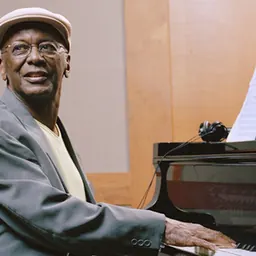
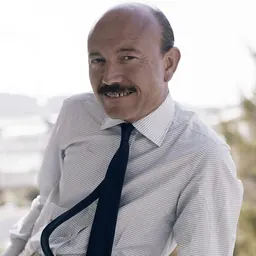
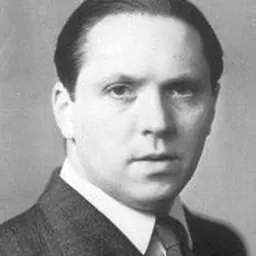
People in Damjana Bratuž's life
Named in this biography and alive at the same time



Related people
Same field, nearest in time


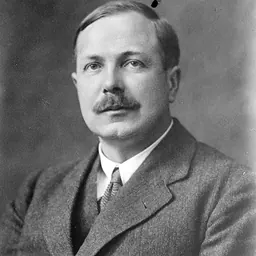
Contemporaries
People whose lives overlapped Damjana Bratuž's


Frequently asked questions
Who was Damjana Bratuž?
Slovenian pianist and educator
When was Damjana Bratuž born?
Damjana Bratuž was born on 31 July 1927 in Bilje.
When did Damjana Bratuž die?
Damjana Bratuž died on 21 May 2025 in London.
What was Damjana Bratuž's occupation?
Damjana Bratuž was a pianist, music educator and professor.
What nationality was Damjana Bratuž?
Damjana Bratuž was Slovenian and Yugoslav.
Sources & further reading
Cite this page
APA: Biography.guide. (2026). Damjana Bratuž. https://biography.guide/damjana-bratuz/
MLA: "Damjana Bratuž." Biography.guide, https://biography.guide/damjana-bratuz/.
Chicago: "Damjana Bratuž." Biography.guide. https://biography.guide/damjana-bratuz/.
Data last updated: 2026-09-24 · Spot an error? Report a correction.
Page generated 2026-09-27 05:03 UTC