
About Dame Gruev
Lived 1871 – 1906 (aged 35). Dame Gruev was a Turkish and Bulgarian teacher.
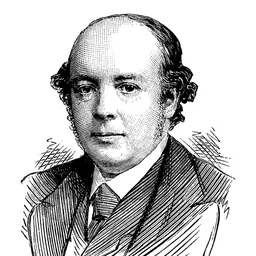
Damyan Yovanov Gruev (; ; January 19, 1871 – December 23, 1906) was а Macedonian Bulgarian teacher, revolutionary and leader of the Internal Macedonian Revolutionary Organization in the Ottoman regions of Macedonia and Thrace. He was one of the six founders of the Organization. Gruev is seen as a national hero in Bulgaria and North Macedonia, but his ethnicity is disputed between both countries.
Biography
Early years
Dame Gruev was born on January 19, 1871, in Smilevo, Ottoman Empire (present-day North Macedonia), near Bitola. He originated from a Mijak family and was raised in a patriarchal Mijak tone. Gruev had three other siblings, while his father was a builder. His mother died early on, so his older sister took over her responsibilities. Gruev began his primary education in 1878/1879 in his native village in a Bulgarian Exarchate school, completing it in 1881/1882. He enrolled into a gymnasium in Resen in 1882/1883, but was transferred to Bitola, completing his education at the Exarchate gymnasium in 1885/1886. Gruev started studying at the Bulgarian Men's High School of Thessaloniki in 1886/1887, where he met Petar Poparsov and formed a student's circle with him. He was part of a group excluded from the school following a student revolt. In 1890, he signed a letter addressed to the Serbian National Assembly, where he came out in opposition to Serbian propaganda and self-declared as a Bulgarian along with other students. With the other students, Gruev went to Sofia to continue his education. He enrolled into the Sofia University, as a student in the Faculty of History. In March 1891, he was arrested in connection with the murder of Bulgarian finance minister Hristo Belchev due to a mistaken identity, After discussing what they as Bulgarians should do in order to improve the condition of their people, they decided that it was necessary to find some other people with similar views. On October 23, 1893, Gruev co-founded IMRO in Thessaloniki. In his memoirs, Gruev referred to Serbian propaganda as one of the main factors for the creation of the Organization. In official documents as well as in personal correspondence, Gruev wrote in standard Bulgarian, sometimes with minor dialectal influences.
Gruev resigned from his job in the printing shop and went to Štip, where he was offered a job as a teacher. He left Štip and went on to Negotino and Kavadarci, where he managed to establish local committees in July 1894. Gruev returned to Štip for the beginning of the school year, Tushe Deliivanov and Dame Gruev went to see the bishop, since Deliivanov was appointed by the Exarchate, and it was necessary to decide who would be head teacher. It was decided mutually that Deliivanov should take the position. The two shared the view that liberation had to be accomplished internally by a Macedonian organization without any foreign intervention. It is unknown how many active members belonged to the Organization during this period, however despite the efforts of Gruev and Delchev, the number of members grew slowly. In 1896, he was appointed as a school inspector in the Thessaloniki area by the Exarchate, using his position to actively recruit members for IMRO. In 1897, Gruev was also one of the founders of the Society against Serbs.
In 1898, the Ottoman authorities interned him in the region of Bitola. Gruev became the leader of the Bitola regional committee. In August 1900, a priest named Stavre had been murdered by the Organization for refusing to contribute to its funds and for betraying one of its members to the authorities. Gruev was arrested in early August in connection with the murder.
After the Uprising
After the uprising was suppressed, Gruev remained in Macedonia to rebuild the Organization. Pere Toshev and Gyorche Petrov accused Gruev of making most decisions arbitrarily, without consulting other members and described his exercise of power as "dictatorial".
He participated in the Rila Congress in 1905, becoming part of the new Central Committee. On December 22, 1906, he and his detachment arrived in the village Rusinovo to attend a congress of IMRO. A host of a house warned about the arrival of Turks from Pehčevo, but the village voivode ignored the warning, so Gruev and his detachment ended up staying there. On the next day, the Turks arrived and noticed the komitadjis in the house, engaging in a shootout. Gruev was wounded. He and another komitadji managed to escape, making their way to Petlec Peak. As he was wounded, the Turks easily tracked them through Gruev's blood trail.
Legacy
He is considered a national hero in Bulgaria and North Macedonia. His ethnicity is disputed between both countries. In North Macedonia, he is regarded as an ethnic Macedonian. His name has been part of the Macedonian national anthem "Today over Macedonia" since the Informbiro period after the removal of the names of Nikola Karev and Dimitar Vlahov. A monument was erected in his honor in the Macedonia Square in Skopje in 2011, as part of the "Skopje 2014" project.
A high school in Sofia as well as Gruev Cove in Greenwich Island, South Shetland Islands, Antarctica, are named after him.
Gallery
Don’t just read it —
keep it.
Full-length biographies made to live with: read them, listen on the way to work, watch them tonight.
- E-book
- Audio
- Video
Instant download · yours to keep · every purchase keeps this site free
Important facts
People in Dame Gruev's life
Named in this biography and alive at the same time


Related people
Same field, nearest in time



Contemporaries
People whose lives overlapped Dame Gruev's



Frequently asked questions
Who was Dame Gruev?
Bulgarian revolutionary from Macedonia
When was Dame Gruev born?
Dame Gruev was born on 19 January 1871 in Smilevo.
When did Dame Gruev die?
Dame Gruev died on 23 December 1906 in Rusinovo.
What was Dame Gruev's occupation?
Dame Gruev was a teacher.
What nationality was Dame Gruev?
Dame Gruev was Turkish and Bulgarian.
Sources & further reading
Cite this page
APA: Biography.guide. (2026). Dame Gruev. https://biography.guide/dame-gruev/
MLA: "Dame Gruev." Biography.guide, https://biography.guide/dame-gruev/.
Chicago: "Dame Gruev." Biography.guide. https://biography.guide/dame-gruev/.
Data last updated: 2026-09-26 · Spot an error? Report a correction.
Page generated 2026-09-27 05:15 UTC