
About Dai Anlan
Lived 1904 – 1942 (aged 37). Dai Anlan was a Chinese military personnel.
Dai Anlan (; 25 November 1904 – 26 May 1942) was a major general of the Republic of China. As commander of the 200th Division of the National Revolutionary Army, he distinguished himself in the Battle of Kunlun Pass and the Battle of Toungoo during the Second Sino-Japanese War and the Burma Campaign. He was wounded in battle while returning to China from Burma, and died in May 1942. He was posthumously promoted to lieutenant general by Chiang Kai-shek and awarded the Legion of Merit medal by US President Franklin D. Roosevelt.
Early life and career Dai was born in 1904 into a family of farmers in Wuwei County, Anhui, Qing China. His birth name was Dai Yangong , and was later given the name Dai Bingyang in school. An excellent student, he was accepted by the Anhui Public School run by Tao Xingzhi.
In 1924, Dai went to Guangzhou (Canton) after learning about the establishment of the Whampoa Military Academy. He was accepted by the academy later that year, and changed his name to "Anlan", which means "calming the waves". The British requested assistance from China, and the Kuomintang government sent 100,000 troops to fight in the Burma Campaign.
Retreat and death The 200th division retreated north across the Sittaung River and linked up with the 22nd Division. They blocked Japanese advance up the Sittaung However, as the Chinese and British forces both suffered heavy losses, the Kuomintang government ordered the Expeditionary Force to withdraw from Burma. and posthumously promoted his rank from major general to lieutenant general.
In 1944, when the Japanese launched the Operation Ichi-Go and attacked Guangxi, Dai's coffin was temporarily moved to Guiyang for protection. After the end of World War II, a permanent tomb was built for him on the scenic in Wuhu, overlooking his hometown. When his coffin was reburied in 1947, the funeral procession was long. In 1945, US President Harry S. Truman and Secretary of War Henry L. Stimson signed a certificate for the award. The medal and certificate were destroyed during the Cultural Revolution.
In 2013, Dai's children, together with other descendants of the soldiers of the 200th Division, built a Buddhist pagoda in Mogaung to commemorate Dai Anlan and other soldiers who died in the Burma Campaign. When the Kuomintang lost the Chinese Civil War in 1949, Wang and her children were offered the chance to retreat to Taiwan with the government. However, she chose to stay in mainland China to be near her husband's tomb.
Dai and his wife had three sons and a daughter: Dai Fudong, Dai Fanli , Dai Jingdong , and Dai Chengdong . Fudong became a distinguished architect who was elected an academician of the Chinese Academy of Engineering; Fanli, the only daughter, enlisted in the People's Volunteer Army during the Korean War; Jingdong was a professor of the Nanjing Institute of Technology, and Chengdong was a senior hydraulic engineer in Jiangsu province.
Don’t just read it —
keep it.
Full-length biographies made to live with: read them, listen on the way to work, watch them tonight.
- E-book
- Audio
- Video
Instant download · yours to keep · every purchase keeps this site free
Important facts
People in Dai Anlan's life
Named in this biography and alive at the same time
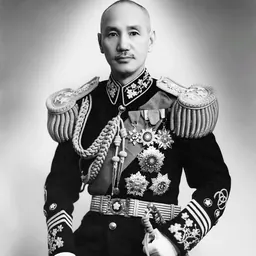
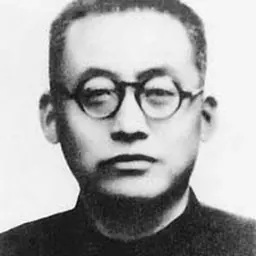

Related people
Same field, nearest in time




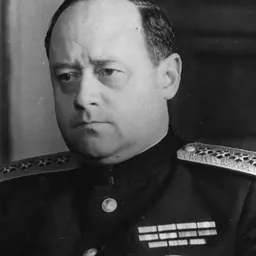
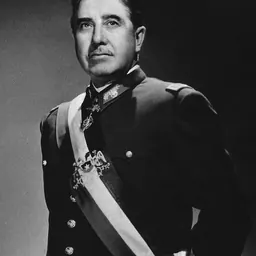
Contemporaries
People whose lives overlapped Dai Anlan's




Frequently asked questions
Who was Dai Anlan?
Chinese general (1904-1942)
When was Dai Anlan born?
Dai Anlan was born on 25 November 1904 in Wuwei City.
When did Dai Anlan die?
Dai Anlan died on 26 May 1942 in Mogaung.
What was Dai Anlan's occupation?
Dai Anlan was a military personnel.
What nationality was Dai Anlan?
Dai Anlan was Chinese.
Sources & further reading
Cite this page
APA: Biography.guide. (2026). Dai Anlan. https://biography.guide/dai-anlan/
MLA: "Dai Anlan." Biography.guide, https://biography.guide/dai-anlan/.
Chicago: "Dai Anlan." Biography.guide. https://biography.guide/dai-anlan/.
Data last updated: 2026-09-20 · Spot an error? Report a correction.
Page generated 2026-09-27 05:30 UTC