
About Cyrus Herzl Gordon
Lived 1908 – 2001 (aged 92). Cyrus Herzl Gordon was an American anthropologist, linguist, archaeologist, university teacher, orientalist and semitologist.
Cyrus Herzl Gordon (June 29, 1908 – March 30, 2001) was an American scholar of Near Eastern cultures and ancient languages.
Biography Gordon was born in Philadelphia, Pennsylvania, the son of Lithuanian emigrant and physician Benjamin Gordon. He was raised in an upper class Jewish family with a particular emphasis on devotion to Jewish learning, rational thinking, as well as an openness to secular learning. As a scholar he followed an education track typical of elite European philological scholars: Gordon began studying Hebrew at age five and became interested in both Greek and Latin as a young child.
Gordon took his B.A., M.A., and Ph.D. at the University of Pennsylvania, and also took courses at both nearby Gratz College and Dropsie College. These three institutions had specialized programs in the Bible, classics, and ancient Near East, all of which contributed to Gordon's historical-philological bent. At these universities, Gordon studied Old Persian and Sanskrit as well. and the works of the Hungarian scholar, Joseph Aistleitner, were for a long time the only worthy works available. He asserted that Syrian literature reflects frequent contact between ancient Syrians and speakers of Hebrew in the eastern Mediterranean. Aside from Gordon's technical work as a philologist and Semiticist, particularly his work in Ugaritic (above), Gordon was one of the greatest synthesizers of biblical studies with the study of the ancient Near East, one of the final products of which was his 1997 tome, co-authored with Gary Rendsburg, The Bible and the Ancient Near East. This work constituted a follow-on to his earlier (1965) book, The Ancient Near East, which was itself a revision of The World of the Old Testament: An introduction to Old Testament Times (1953).
Gordon's autobiography, A Scholar's Odyssey, won a National Jewish Book Award in 2000. His work has been carried forward in part by his student and Rutgers University professor Gary A. Rendsburg.
In 1973, a Festschrift was published in his honor, called Orient and Occident. : Essays presented to Cyrus H. Gordon on the occasion of his sixty-fifth birthday.
Nontraditional viewpoints Not afraid of scholarly controversy, Gordon challenged traditional theories about Greek and Hebrew cultures. In the 1960s, he declared his examination of Cretan texts in the Minoan language corroborated his long-held theory that Greek and Hebrew cultures stemmed from a common Semitic heritage. He asserted that this culture spanned the eastern Mediterranean from Greece to Palestine during the Minoan era. Gordon's student, Michael Astour, published the most comprehensive treatment of this controversial thesis in his monumental Helleno-Semitica: An Ethnic and Cultural Study in West Semitic Impact on Mycenaean Greece (1965).
Gordon also held that Jews, Phoenicians, and others crossed the Atlantic in antiquity, ultimately arriving in both North and South America. This opinion was based on his own work, now rejected by archaeologists, on the Bat Creek inscription found in Tennessee and on the transcription of the debunked Paraíba inscription from Brazil, as well as his assessment of the Los Lunas Decalogue Stone.
Gordon was a friend of John Philip Cohane and wrote a preface to Cohane's book The Key; he was supportive of many of Cohane's theories. Additionally, Gordon collaborated with German-Mexican historian Alexander von Wuthenau, and wrote the foreword to his book Unexpected Faces in Ancient America.
Gordon's diffusionist claims have been criticized by traditional archaeologists.
Published work Ugaritic Grammar, 1940, Rome: Pontificium Institutum Biblicum. The Living Past, 1941, John Day, New York: Van Rees Press. Ugaritic Literature, 1949, Pontificium Institutum Biblicum, Rome. Ugaritic Manual, 1955, Rome: Pontificium Institutum Biblicum. "Homer and Bible", 1955, Hebrew Union College Annual 26, pp. 43–108. The Common Background of Greek and Hebrew Civilizations, 1962/1965, New York: Norton Library. (previously published as Before the Bible, New York: Harper & Row). Ugarit and Minoan Crete, 1966, New York: W. W. Norton & Company. "The Accidental Invention of the Phonemic Alphabet", 1970, Journal of Near Eastern Studies Vol. 29 #3, pp. 193–197 Before Columbus, 1971, New York: Crown. "Vergil and the Bible World," 1971, The Gratz College Anniversary Volume, Philadelphia: Gratz College. "Poetic Legends and Myths from Ugarit," 1977, Berytus #25, pp. 5–133. Forgotten Scripts, 1982, New York: Basic Books (revised and enlarged version, previously published 1968, now containing Gordon's work on Minoan and Eteocretan). "The Bible and the Ancient Near East", 1997, New York: W. W. Norton & Company.
A comprehensive bibliography of Prof. Cyrus H. Gordon can be found in The Bible World: Essays in Honor of Cyrus H. Gordon, edited by G. Rendsburg, R. Adler, Milton Arfa, and N. H. Winter, 1980, KTAV Publishing House Inc. and The Institute of Hebrew Culture and Education of New York University, New York.
Don’t just read it —
keep it.
Full-length biographies made to live with: read them, listen on the way to work, watch them tonight.
- E-book
- Audio
- Video
Instant download · yours to keep · every purchase keeps this site free
Important facts
People in Cyrus Herzl Gordon's life
Named in this biography and alive at the same time




Related people
Same field, nearest in time

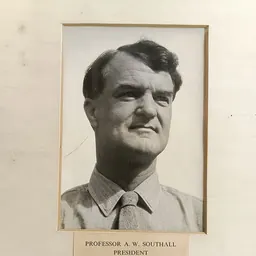
Contemporaries
People whose lives overlapped Cyrus Herzl Gordon's

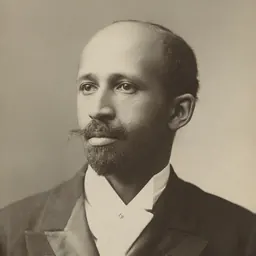
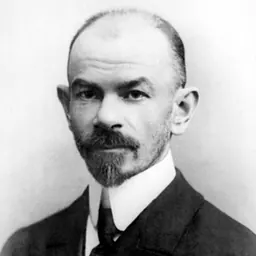
Frequently asked questions
Who was Cyrus Herzl Gordon?
American Near Eastern scholar (1908–2001)
When was Cyrus Herzl Gordon born?
Cyrus Herzl Gordon was born on 29 June 1908 in Philadelphia.
When did Cyrus Herzl Gordon die?
Cyrus Herzl Gordon died on 30 March 2001 in Brookline.
What was Cyrus Herzl Gordon's occupation?
Cyrus Herzl Gordon was an anthropologist, linguist, archaeologist, university teacher, orientalist and semitologist.
What nationality was Cyrus Herzl Gordon?
Cyrus Herzl Gordon was American.
Sources & further reading
· Wikipedia: Cyrus Herzl Gordon
Cite this page
APA: Biography.guide. (2026). Cyrus Herzl Gordon. https://biography.guide/cyrus-herzl-gordon/
MLA: "Cyrus Herzl Gordon." Biography.guide, https://biography.guide/cyrus-herzl-gordon/.
Chicago: "Cyrus Herzl Gordon." Biography.guide. https://biography.guide/cyrus-herzl-gordon/.
Data last updated: 2026-09-20 · Spot an error? Report a correction.
Page generated 2026-09-27 05:31 UTC