
About Cy Block
Lived 1919 – 2004 (aged 85). Cy Block was an American baseball player.
Seymour "Cy" Block (May 4, 1919 – September 22, 2004) was an American professional baseball second baseman and third baseman for the Chicago Cubs of Major League Baseball during the 1942, 1945, and 1946 seasons. He played in the minor leagues from 1938 to 1950, with the exception of his military service from 1943 to 1944. After his playing career, Block became an insurance salesman.
Early life Block was born on May 4, 1919, in Brooklyn, a borough of New York City. His parents, Abraham and Jenny (née Levitsky), were immigrants from Russia. He was raised in Flatbush, near Ebbets Field, the home of the Brooklyn Dodgers of Major League Baseball (MLB).
Baseball career 1937–1942 In 1937, Block attended an open tryout for the Dodgers at Ebbets Field; though he survived the first cut and was invited to another tryout in Elmira, New York, the Dodgers opted not to sign him. In 1938, Block attended Joe Stripp's baseball academy in Orlando, Florida, where he received personal instruction from Joe Tinker.
Tinker recommended Block to the Memphis Chicks of the Class A1 Southern Association. Block was batting .331 for Paragould, the fourth-best average in the Northeast Arkansas League, when Memphis acquired Block from Paragould. In 1939, Memphis optioned Block to the Greenville Buckshots of the Class C Cotton States League. later in the month, Elmira assigned Block to the Macon Peaches of the Class B South Atlantic League. He batted .311 in 1940. Playing for Macon in 1941, Block won the league's batting championship with a .357 batting average.
In January 1942, the Chicago Cubs purchased Block from Macon for $15,000. The Cubs optioned Block to the Tulsa Oilers of the Class A1 Texas League before the start of the 1942 season. Block made his major league debut with the Cubs on September 7. He batted .364 (12-for-33) in nine games. Block enlisted in the United States Coast Guard during World War II and served at Ellis Island and on the USS Monticello.
1945–1951 In September 1945, Block was honorably discharged from the Coast Guard. Returning to the Cubs, Block appeared in two games during the 1945 season. He batted .143 (1-for-7). Block appeared in one game of the 1945 World Series, which the Cubs lost to the Detroit Tigers. He entered the game as a pinch runner and did not record an official at-bat. In 1946, the Cubs optioned Block to the Los Angeles Angels of the Pacific Coast League. In June, Los Angeles optioned Block to the Nashville Volunteers of the Class AA Southern Association, where he succeeded Pete Elko as their third baseman. Block batted .354 in 81 games for Nashville. and appeared in six games for the Cubs before the end of the season. Block batted .231 (3-for-13).
In April 1947, the Cubs released Block, who was out of options, to Nashville. He appealed to James T. Gallagher, the general manager of the Cubs, to sell him to another MLB team instead. Larry Gilbert, Nashville's owner, allowed Block to try to arrange a deal with an MLB team, but Block found that the Cubs refused to trade him. Block appealed to the new commissioner, Ford Frick, who told Block that there was nothing that he could do. and Block was named to the league's post-season all-star team. After the 1947 season, Nashville traded Block to the Buffalo Bisons of the Class AAA International League for a minor league pitcher and an undisclosed amount of money. Block played for Buffalo from 1948 to 1950 before he was released in April 1951. Celler entered the hearings believing that MLB needed laws to support the reserve clause. Star players, such as Lou Boudreau and Pee Wee Reese, indicated their support of the reserve clause. Minor league veteran Ross Horning testified about his experiences in baseball, which he said were more common for rank-and-file players.
Celler's final report suggested that the U.S. Congress should take no action, allowing for the matter to be settled in the federal judiciary of the United States. The Supreme Court of the United States upheld MLB's anti-trust exemption and the reserve clause in Toolson v. New York Yankees, Inc. in 1953.
Business career Block began to sell life insurance after the 1950 season, and made $120,000 of sales. He sold $480,000 in 1951, reached $1 million in sales in 1952, and had sold $6 million in 1963. Block became a twelve-time member of the Million Dollar Round Table, which requires $1 million in sales for membership. He worked for Mutual Benefit Life Insurance Company before becoming chairman of his own firm, CB Planning Services Corp.
In December 1955, Block led a six-member syndicate which attempted to purchase the Detroit Tigers from Walter Briggs Jr. Though they made a good-faith $250,000 deposit to signify their interest, their offer to purchase the club was received by Briggs after the deadline.
Personal life In 1943, he married Harriet Block. Together they had three daughters. He also authored a book, So You Want to be a Major Leaguer, in 1980.
In 1997, Block and four other players from before 1947, Dolph Camilli, Frankie Crosetti, Al Gionfriddo, and Pete Coscarart, brought a class action lawsuit against MLB alleging that the league was profiting off of their likeness without compensating them. They were denied class certification.
Block developed Alzheimer's disease in 1995. He died in his home on Long Island on September 29, 2004.
Don’t just read it —
keep it.
Full-length biographies made to live with: read them, listen on the way to work, watch them tonight.
- E-book
- Audio
- Video
Instant download · yours to keep · every purchase keeps this site free
Important facts
People in Cy Block's life
Named in this biography and alive at the same time

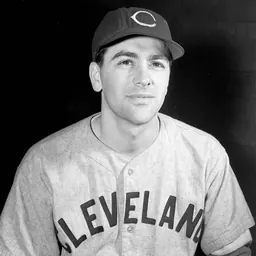


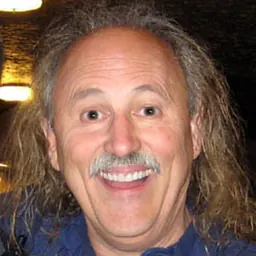


Related people
Same field, nearest in time

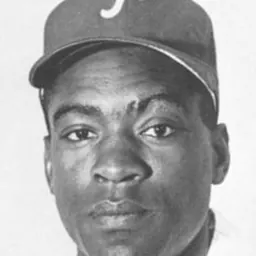
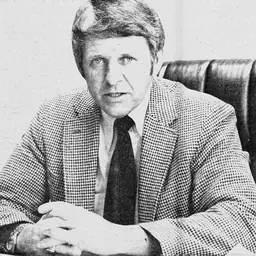
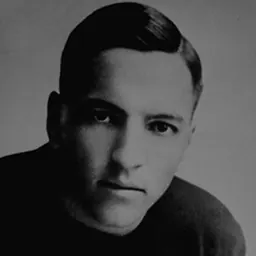
Contemporaries
People whose lives overlapped Cy Block's
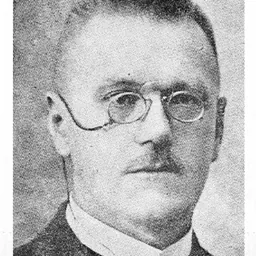
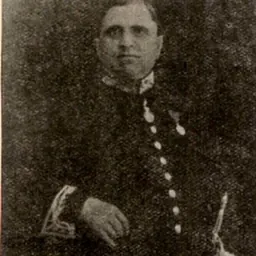




Frequently asked questions
Who was Cy Block?
American baseball player
When was Cy Block born?
Cy Block was born on 4 May 1919 in Brooklyn.
When did Cy Block die?
Cy Block died on 22 September 2004 in Manhasset.
What was Cy Block's occupation?
Cy Block was a baseball player.
What nationality was Cy Block?
Cy Block was American.
Sources & further reading
Cite this page
APA: Biography.guide. (2026). Cy Block. https://biography.guide/cy-block/
MLA: "Cy Block." Biography.guide, https://biography.guide/cy-block/.
Chicago: "Cy Block." Biography.guide. https://biography.guide/cy-block/.
Data last updated: 2026-09-20 · Spot an error? Report a correction.
Page generated 2026-09-27 05:09 UTC