
About Curtis Bok
Lived 1897 – 1962 (aged 64). Curtis Bok was an American lawyer, judge and jurist.
William Curtis Bok (September 7, 1897 – May 22, 1962) was a Pennsylvania Supreme Court justice, philanthropist and writer. Heir to an enormous publishing fortune, he was also a devout Quaker and an avid sailor.
Early life W. Curtis Bok was born in Wyncote, Pennsylvania, a suburb of Philadelphia. His father was Edward Bok, a Dutch immigrant to the United States and editor-in-chief of The Ladies Home Journal. His mother was Mary Louise Curtis, the only child and heir of Cyrus H. K. Curtis, founder of the Curtis Publishing Company. Bok's father won the 1920 Pulitzer Prize for biography; his mother founded the Curtis Institute of Music.
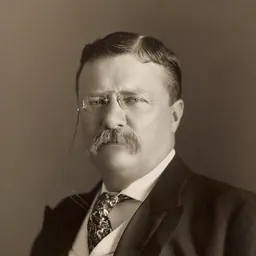
Bok was a sickly child, with a weak heart. Edward Bok wrote a touching essay about taking his son to the White House to meet the son's hero, President Theodore Roosevelt.
In 1915, Bok graduated from The Hill School in Pottstown, Pennsylvania. He attended Williams College in Williamstown, Massachusetts, but left to serve in the U.S. Navy during World War I. He returned to finish his degree at Williams, and graduated from the University of Virginia School of Law in 1921.
Career Bok worked on several public service projects before forming a law partnership with Robert Dechert and Owen B. Rhodes in 1930. He served as an assistant district attorney in Philadelphia, 1929–1932, and ran unsuccessfully for Philadelphia district attorney in 1935. Appointed an Orphans Court judge the following year, he became president judge of the Court of Common Pleas for Philadelphia County in 1937.
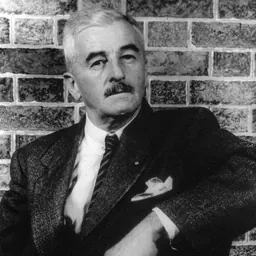
His most famous opinion was on obscenity in literature — Commonwealth of Pennsylvania v. Gordon et al., Court of Quarter Sessions, Philadelphia, June 1948. In March 1948, the Philadelphia vice squad raided 54 booksellers, confiscating works by authors such as Erskine Caldwell, James T. Farrell, William Faulkner, and Calder Willingham. In an elegantly written opinion, Bok found that the books were "obvious efforts to show life as it is", and that Pennsylvania could not censor them:
In 1958, Bok was elected a justice of the Pennsylvania Supreme Court, serving until his death in 1962. He was treasurer of the Curtis Institute of Music, and founded the Philadelphia Forum, a cultural boosterism group that sponsored lectures, concerts and art exhibits. He was a member of the Committee of Seventy, a Philadelphia watchdog organization that promoted good government.
Writings Bok wrote many legal opinions and made contributions to law journals. His first three novels were courtroom dramas. He was a strong opponent of capital punishment and, in Star Wormwood (1959), used the most heinous crime imaginable to argue that it was still unjustified.
On May 25, 1924, Bok married Margaret (Peggy) Adams Plummer (1904-1994). They had three children: Margaret Welmoet Bok Roland Holst (1925-1998), Benjamin Plummer Bok (1926-2001), and Derek Curtis Bok (1930- ). The marriage ended in divorce in 1933.
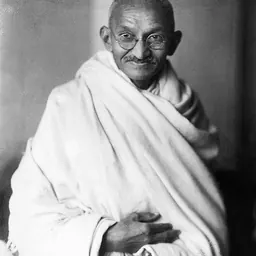
On November 25, 1934, Bok married Nellie Lee Holt (1901–1984), the director of religious education at Stephens College for Women in Columbia, Missouri, and a peace activist who had studied with Mahatma Gandhi. They had two daughters, Rachel Bok Kise Goldman (1937- ) and Enid Curtis Bok Schoettle Okun (1939-2018).
W. Curtis Bok was interred at West Laurel Hill Cemetery in Bala Cynwyd, Pennsylvania.
Curtis Bok House Wharton Esherick, Curtis Bok House Fireplace and Doorway (1935-38), Philadelphia Museum of Art.
Soon after their wedding, Curtis and Nellie Lee Bok purchased a country house at 120 Upper Gulph Road in Gulph Mills, Pennsylvania. They added a rear wing, which housed an "L"-shaped library and a music room, with bedrooms above. All the new rooms featured hand-crafted furniture and interiors by Wharton Esherick (1935–1938). The house was demolished in 1989, to build a townhouse development.
Furniture and interiors from the Curtis Bok House are in the collections of the Philadelphia Museum of Art, the Wolfsonian-FIU Museum in Miami Beach, Florida, and elsewhere.
Legacy Swarthmore College awarded Bok an honorary Doctor of Letters in 1960. Jerome J. Shestack, a friend and legal colleague, wrote of him: "His deep and abiding sympathy for the human condition was the hallmark both of his courtroom and of his life."
His son, Derek Curtis Bok, served as dean of Harvard Law School (1968-1971), and president of Harvard University (1971-1991 and 2006–2007).
Don’t just read it —
keep it.
Full-length biographies made to live with: read them, listen on the way to work, watch them tonight.
- E-book
- Audio
- Video
Instant download · yours to keep · every purchase keeps this site free
Important facts
People in Curtis Bok's life
Named in this biography and alive at the same time



Related people
Same field, nearest in time

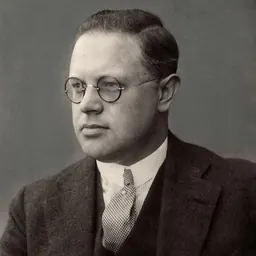



Contemporaries
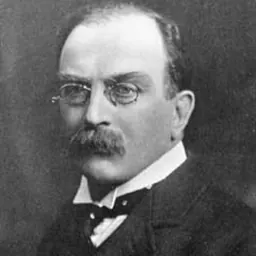
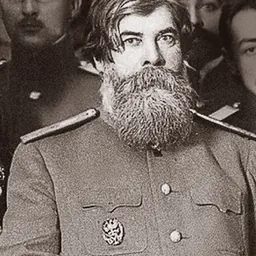
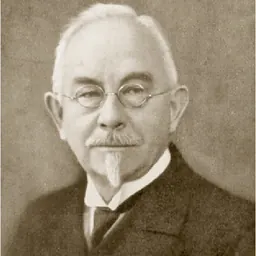
People whose lives overlapped Curtis Bok's


Frequently asked questions
Who was Curtis Bok?
American judge (1897-1962)
When was Curtis Bok born?
Curtis Bok was born on 7 September 1897 in Philadelphia.
When did Curtis Bok die?
Curtis Bok died on 22 May 1962 in Lower Merion Township.
What was Curtis Bok's occupation?
Curtis Bok was a lawyer, judge and jurist.
What nationality was Curtis Bok?
Curtis Bok was American.
Sources & further reading
Cite this page
APA: Biography.guide. (2026). Curtis Bok. https://biography.guide/curtis-bok/
MLA: "Curtis Bok." Biography.guide, https://biography.guide/curtis-bok/.
Chicago: "Curtis Bok." Biography.guide. https://biography.guide/curtis-bok/.
Data last updated: 2026-09-20 · Spot an error? Report a correction.
Page generated 2026-09-27 05:29 UTC