
About Curnonsky
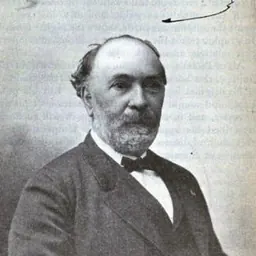
Lived 1872 – 1956 (aged 83). Curnonsky was a French ghostwriter, food critic, comedian, novelist, prose writer and humorist.
Maurice Edmond Sailland (October 12, 1872, in Angers, France – July 22, 1956, in Paris), better known by his pen-name Curnonsky (nicknamed 'Cur'), and dubbed the Prince of Gastronomy, was one of the most celebrated writers on gastronomy in France in the 20th century. He wrote or ghost-wrote many books in diverse genres and many newspaper columns. He is often considered the inventor of gastronomic motor-tourism as popularized by Michelin, though he himself could not drive. He was a student of Henri-Paul Pellaprat.
Biography Maurice Edmond Sailland was born in Angers (Maine-et-Loire) on October 12, 1872 to Edmond-Georges Sailland and his wife Blanche-Alphonsine Mazeran. His mother died within a month of his birth, and his father abandoned him. He was raised by his grandmother in Angers and attended the Collège Saint-Maurille in town. At the age of 18, he moved to Paris to attend the Ecole Normale Supérieure to prepare for a career in journalism.
Curnonsky's friend Paul Reboux wrote in 1933: "For 40 years, Curnonsky did almost all of the jobs in the literary profession. He was a novelist, a columnist, a humorist, a publicists, a music hall critic ... and a 'discreet collaborator,' that is to say, a 'ghost writer.' ... But it would be to speak of Curnonsky in a quite incomplete manner to not insist on his merits as a gastronome." His role in promoting French gastronomy is perhaps what he is best known for today.
Curnonsky took every occasion to promote his theory of the four cuisines of France:
Curnonsky's professional activities were truly wide-ranging. He even created a number of advertising slogans for important companies.
He was named a knight of the Légion d'Honneur in 1928 and was made an officer in 1938. In 1947, he started the magazine Cuisine et Vins de France along with Madeleine Decure. In 1950, he was a co-founder of the Confrérie de la Chaîne des Rôtisseurs His other associations included honorary member of the Club des Purs Cent, member of the Association des Gastronomes régionalistes, and member of the Académie de l'Humour.
To honor his eightieth birthday, eighty restaurants marked his favorite table with a copper plaque reading:
This led to the legend that eighty restaurants reserved a table for him every night in case he should show up, though by that point, he rarely went out at all.
Curnonsky died on July 22, 1956, at the age of 83. He fell out of the window of his third floor Paris apartment. He was on a severe diet at the time and was anemic, thus it was speculated that he had fainted while standing on his balcony. A year later a commemorative plaque on nr. 14 of the place Henri-Bergson, Paris 8e was installed and a booklet published on this occasion.
Name The name "Curnonsky" comes from the Latin cur + non "why not?" plus the Russian suffix -sky, as all things Russian were in vogue in 1895, when he coined it. He once said that this nickname was "my tunic of Nessus, as I am neither Russian, nor Polish, nor Jewish, nor Ukrainian, but just an average Frenchman and wine-guy [sacavin]". He would later come to regret his pen name, but by then his literary career was launched. Sailland wrote, co-wrote, and ghost wrote over 150 books, some under other pseudonyms, including Perdiccas, Sailland-Curnonsky, and Maurice Curnonsky.
In 1927, the newspaper Paris-Soir organized an election, or referendum, among its readers to choose the "prince of the gastronomes." Curnonsky (who signed his articles as "Cur" at this time) beat out the likes of Maurice des Ombiaux, Léon Daudet, and Ali Bab. For the next several years, into early 1930, he edited a weekly full-page feature in Paris-Soir entitled "Annales of Gastronomy"; on the masthead he was identified as "Cur I, Prince des Gastronomes."
Philosophy A celebrated aphorism of Curnonsky's was:
La cuisine, c'est quand les choses ont le goût de ce qu'elles sont. Good cooking is when things taste of what they are.
He advocated simple food over complicated, rustic over refined, and often repeated the phrase
Et surtout, faites simple! And above all, keep it simple!
In a 1937 interview, Curnonsky drew a contrast between his philosophy of French cuisine and that of the great chefs of the day. He noted that he was elected "democratic prince [of gastronomy] ... by the cooks and cordon bleus who, every day, make healthy, simple, good food," and the great chefs, "the grand aristocrats of cuisine, the Prosper Montagnés, the Escoffiers, the Philéas Gilberts... who, in Paris or in the provinces, maintain the traditions of elaborate and skilled French cuisine." Curnonsky praised women who he believed cooked by instinct, without formal training. It was a cuisine that was "straightforward, clear in taste and never aimed at effect... A tranquil and well-prepared cuisine, a cuisine of cordon bleu."
Partial bibliography By Curnonsky with Marcel Rouff, La France Gastronomique: Guides des merveilles culinaires et des bonnes auberges françaises Paris, 1921–29, in 28 volumes. with Austin de Croze, Le Trésor gastronomique de la France, 1933. with Marcel-E. Grancher, Lyon Capitale Mondiale de la Gastronomie, Les Editions Lugdunum, Lyon, 1935 Cuisine et Vins de France. Paris, 1953. A collection of recipes collected by Curnonsky from restaurants. New edition, with preface and updates by Robert Courtine, Paris: Larousse, 1974 . Souvenirs Littéraires et Gastronomiques, Paris: Albin Michel, 1958. Curnonsky: Prince des Gastronomes, Simon Arbellot, Paris: Les Productions de Paris, 1965. Biography. Curnonsky et ses amis, Association des amis de Curnonsky, Paris: Librairie Edgar Soete, 1979. A collection of reminiscences. Curnonsky – à la carte... Munich: Edition Curnonska, 2007 Curnonsky – en route... Munich: Edition Curnonska, 2007 Curnonsky – souvenirs gastronomiques... Munich: Edition Curnonska, 2007
In 2003, German art historian Inge Huber discovered five boxes with letters of Curnonsky, and authored a biography "Curnonsky. Oder das Geheimnis des Maurice-Edmond Sailland" 2010, Rolf Heyne Editor.
Don’t just read it —
keep it.
Full-length biographies made to live with: read them, listen on the way to work, watch them tonight.
- E-book
- Audio
- Video
Instant download · yours to keep · every purchase keeps this site free
Important facts
People in Curnonsky's life
Named in this biography and alive at the same time


Related people
Same field, nearest in time




Contemporaries
People whose lives overlapped Curnonsky's


Frequently asked questions
Who was Curnonsky?
French food writer (1872–1956)
When was Curnonsky born?
Curnonsky was born on 12 October 1872 in Angers.
When did Curnonsky die?
Curnonsky died on 22 July 1956 in Paris.
What was Curnonsky's occupation?
Curnonsky was a ghostwriter, food critic, comedian, novelist, prose writer and humorist.
What nationality was Curnonsky?
Curnonsky was French.
Sources & further reading
Cite this page
APA: Biography.guide. (2026). Curnonsky. https://biography.guide/curnonsky/
MLA: "Curnonsky." Biography.guide, https://biography.guide/curnonsky/.
Chicago: "Curnonsky." Biography.guide. https://biography.guide/curnonsky/.
Data last updated: 2026-09-26 · Spot an error? Report a correction.
Page generated 2026-09-27 05:13 UTC