
About Cristoforo di Geremia
Lived 1410 – 1476 (aged 65–66). Cristoforo di Geremia was a sculptor, medalist and painter.
Cristoforo di Geremia (1410–1476) of Mantua was a Renaissance sculptor, goldsmith, and medallist. He worked in Rome beginning sometime around 1456 and was active until 1476. He is most famous for his bronze medallion work under Pope Paul II. Cristoforo did a number of medals and jewellery for royal and noble commissions.
Life Cristoforo di Geremia's date of birth is unknown. He was most likely the son of Geremia di Nicolino dei Geremei, a Mantuan goldsmith whose name was prevalent in documents from Mantua between the years of 1438 and 1480. Cristoforo di Geremia died at the age of 46, while at what was considered the peak of his professional career.
Cristoforo di Geremia studied at the Mantuan school and was most influenced by Mantegna, who was a mentor to Cristoforo. Many of Mantegna's techniques are seen in Cristoforo's work. Although very little is known about his early professional career, it is known that Cristoforo was very interested in the art of antiquity. Many of his works contain various nuances gathered from ancient Roman coins. While in service to the Pope, Cristoforo primarily produced variations of two different medals. The first was oval-shaped and made to commemorate his pontification and political shrewdness. The second medal was circular and was produced to recognize his various campaigns at the Palazzo San Marco. One side has Pope Paul II's profile. The inscription on it reads "PAVLO VENETO PAPE II - ITALICE PACIS FVNDATORI - ROMA", which translates to "Pope Paul II Venetian - Founder of the Peace of Italy - Rome". The back shows Pope Paul II's coat of arms, from his status as the Venetian cardinal Pietro Barbo, and includes a rampant lion, the papal keys, and a tiara. The medal was produced in conjunction with the pope's announcement of peace in the Basilica of San Marco on April 25, 1468. Versions of the medal were most likely distributed to notable attendees of the event, as well as sent to secular rulers of the peninsula. As with many of Cristoforo's works, this papal medal has components inspired by antiquity. There is evidence that the profile side of the medal resembles the denarius of Emperor Hadrian. The inscription assimilates Pope Paul II to Augustus stemming from the inherently imperial nature of the peace proclamation in 1468.
Signed works There are two surviving medals signed by Cristoforo di Geremia. The first shows Constantine the Great on the front and a pseudo-classical group on the back. Although the intended meaning of the back is unknown, some attribute the representation to the Constantinian Peace of the Church. Others argue that the two figures and the inscription are the deliberate imitation of a Roman coin, the inspiration deriving from a sestertius of Plotina when Cristoforo was making his medal of Constantine. The two figures, the Emperor and the Church are clasping hands.
The second signed medal from Cristoforo di Geremia shows Alfonso V of Aragon, King of Naples. It features Alfonso V's bust and was probably inspired by Pisanello's work on Alfonso V. The back of the medal shows Alfonso enthroned and crowned by Bellona and Mars.
Cristoforo di Geremia was superseded by his nephew, the medallist Lysippus the Younger, who, along with other artists, borrowed figures and compositions from Cristoforo.
Works
Don’t just read it —
keep it.
Full-length biographies made to live with: read them, listen on the way to work, watch them tonight.
- E-book
- Audio
- Video
Instant download · yours to keep · every purchase keeps this site free
Important facts
People in Cristoforo di Geremia's life
Named in this biography and alive at the same time
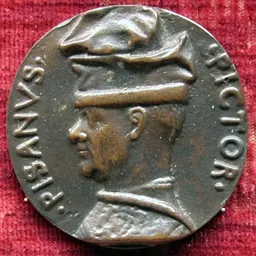
Related people
Same field, nearest in time
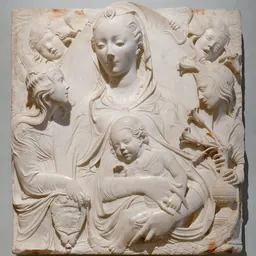


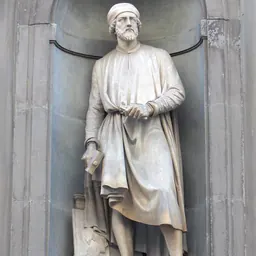
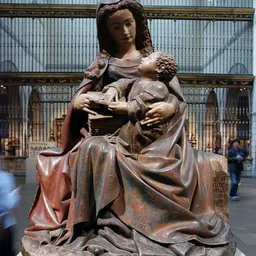
Contemporaries
People whose lives overlapped Cristoforo di Geremia's



Frequently asked questions
Who was Cristoforo di Geremia?
Italian painter (1410-1476)
When was Cristoforo di Geremia born?
Cristoforo di Geremia was born in 1410 in Mantua.
When did Cristoforo di Geremia die?
Cristoforo di Geremia died in 1476 in Rome.
What was Cristoforo di Geremia's occupation?
Cristoforo di Geremia was a sculptor, medalist and painter.
Sources & further reading
· Wikipedia: Cristoforo di Geremia
· DBpedia: Cristoforo di Geremia
Cite this page
APA: Biography.guide. (2026). Cristoforo di Geremia. https://biography.guide/cristoforo-di-geremia/
MLA: "Cristoforo di Geremia." Biography.guide, https://biography.guide/cristoforo-di-geremia/.
Chicago: "Cristoforo di Geremia." Biography.guide. https://biography.guide/cristoforo-di-geremia/.
Data last updated: 2026-09-20 · Spot an error? Report a correction.
Page generated 2026-09-27 05:10 UTC