
About Agostino di Duccio
Lived 1418 – 1481 (aged 62–63). Agostino di Duccio was an Italian sculptor and architect.
Agostino di Duccio (Florence, 1418 – Perugia, ) was an early Renaissance Italian sculptor.
Born in Florence, he worked in Prato with Donatello and Michelozzo, who influenced him greatly. In 1441, he was accused of stealing precious materials from a Florentine monastery and was temporarily banished from his native city as a result. The following year he continued the work on the altar of S. Geminiano for the Cathedral of Modena, a work noticeable for the influence of Michelozzo.
In 1446, he studied late Gothic sculpture in Venice and met Matteo de' Pasti, a fellow sculptor who called on him to execute the sculptural decoration of the Tempio Malatestiano in Rimini, where he stayed from 1449 to 1457.
In 1464, the overseers (operaio) of Florence Cathedral commissioned Agostino to carve a marble statue of David, the underdog figure of the Old Testament, who had become a symbol for the city state, about 3.5 m tall, to stand high up on its eastern end. This was intended to be formed in the Roman fashion from several blocks, but in 1465 Agostino travelled to Carrara to source his marble and acquired a huge block from the Fantiscritti quarries. Described as nine braccia (over 5 metres) long, of moderate quality (bianco ordinario) and "rather shallow", its original maximum dimensions are otherwise unknown, but from the resulting statue the block must have been almost 2 meter wide and 1.1 meter deep, so must have been over 20 tons in weight. After a troubled sea and river passage to Florence, Agostino began to work on the block, roughing it out, but in December 1466, Agostino lost the commission, possibly relinquished on the death of Donatello. The block, now known as il gigante ("the giant"), was further roughed out and "spoiled" in 1476–77 by Antonio Rossellino, and then sat for 24 years being cotto ("cooked" by the weather) in the yard of the cathedral works, until Michelangelo won a new commission to carve a David, completed in 1504.
In 1473 Agostino designed the outer facade of the Porta di San Pietro in the city walls of Perugia, and at the National Gallery of Umbria at Perugia. He died in about 1481 in Perugia.
Don’t just read it —
keep it.
Full-length biographies made to live with: read them, listen on the way to work, watch them tonight.
- E-book
- Audio
- Video
Instant download · yours to keep · every purchase keeps this site free
Important facts
People in Agostino di Duccio's life
Named in this biography and alive at the same time
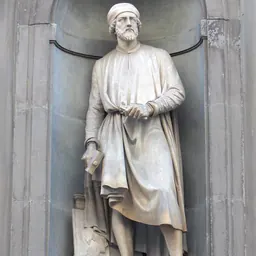

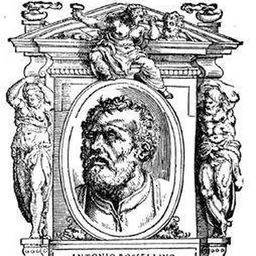
Related people
Same field, nearest in time


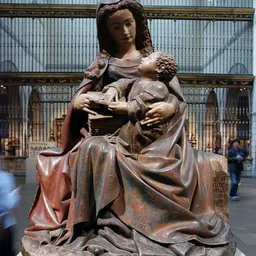
Contemporaries
People whose lives overlapped Agostino di Duccio's
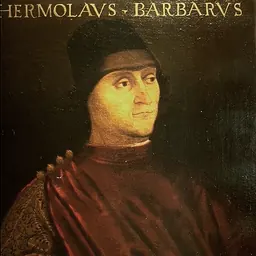


Frequently asked questions
Who was Agostino di Duccio?
Italian artist (1418–1481)
When was Agostino di Duccio born?
Agostino di Duccio was born in 1418 in Florence.
When did Agostino di Duccio die?
Agostino di Duccio died in 1481 in Perugia.
What was Agostino di Duccio's occupation?
Agostino di Duccio was a sculptor and architect.
What nationality was Agostino di Duccio?
Agostino di Duccio was Italian.
Sources & further reading
· Wikipedia: Agostino di Duccio
Cite this page
APA: Biography.guide. (2026). Agostino di Duccio. https://biography.guide/agostino-di-duccio/
MLA: "Agostino di Duccio." Biography.guide, https://biography.guide/agostino-di-duccio/.
Chicago: "Agostino di Duccio." Biography.guide. https://biography.guide/agostino-di-duccio/.
Data last updated: 2026-09-26 · Spot an error? Report a correction.
Page generated 2026-09-27 05:15 UTC