
About Cristóbal Oudrid
Lived 1825 – 1877 (aged 52). Cristóbal Oudrid was a Spanish composer, conductor, pianist and musician.
Cristóbal (Carlos Domingo Romualdo y Ricardo) Oudrid y Segura (, 7 February 1825 – 13 March 1877) was a Spanish pianist, conductor, and composer. He is noted for his many contributions to the formation and development of the zarzuela genre in Spain during the second half of the 19th century. He was a gifted musician—but with little technical knowledge, which he bragged about to receive more credit from others with relation to his creations. This habit earned him the scathing criticism of people like Antonio Peña y Goñi who, nevertheless, praised the bright, sensual and cheerful ease with which Oudrid used to bring to life the true meaning of the Spanish song.
During a successful career of more than 25 years, Oudrid produced over a hundred works, many in association with other composers. His first musical presentation was the Andalusian zarzuela La Venta del Puerto o Juanillo El Contrabandista, premiered at Teatro del Príncipe in 1846. His second venture was La Pradera del Canal, a collaborative work with composers Luis de Cepeda Baranda and Sebastián Iradier, premiered at Teatro de la Cruz in 1847. As a founding father of Spanish musical nationalism, he was instrumental in bringing the zarzuela to a national status, in the company of other prominent artists such as Francisco Asenjo Barbieri, Joaquín Gaztambide, Rafael Hernando, José Inzenga, and baritone Francisco Salas, with whom he formed the Sociedad Artística Musical in 1851.
Oudrid was particularly prolific also as a bandmaster during the 1850s and early 1860s, having conducted the orchestra at Teatro Real, where renowned tenors such as Roberto Stagno (1840–1897) and Enrico Tamberlik (1820–1889) premiered, as well as the orchestra of Teatro de la Zarzuela. His last performance was the rehearsal of the opera Mignon by the French composer Ambroise Thomas.
Early life Cristóbal Oudrid was born in Badajoz on 7 February 1825. His grandfather was a Flemish military bandmaster and director of the National Militia's band stationed near the Portuguese border.
His father taught him the rudimentary elements of music theory and the basic notions of Solfège, once he was already becoming familiar with some wind instruments such as the clarinet, horn, and oboe, which he learned to play on his own. But without a firm understanding of piano method or further training in composition, his technique became flawed, a problem that persisted throughout his career. then director of Teatro del Príncipe. Still very young, he was musical director of the Liceo de Badajoz.
After his father's death on 27 June 1843, Oudrid moved to Madrid the following year with Vicenta Munoz Vallejo, daughter of Jose Muñoz Santano and Pascuala Vallejo; they married in May 1855. as a recommendation of his music teacher Baltasar Saldoni, who asked his friends at the weekly magazine Semanario Pintoresco Español to help Oudrid make a living as a piano player at concerts and coffee shops. Another lucky break was a reference letter from Brigadier Juan Guillén Buzarán, director of the orchestra of Teatro Real, by whom he joined the Royal Orchestra as one of its clarinetists. soon placing him among Madrid's most favorite composers. the success of which marked the beginning of a movement for re-establishment of the modern zarzuela, helping him lead the renewal of the genre. with whom the profits would be divided in equal parts. For this purpose, they rent the Teatro del Circo under the assistance of Francisco de las Rivas, an important banker, and pledged to write three works per season, one in two acts and others in three or more. In November 1867, he was working as choirmaster for the Compañia de Ópera Italiana established at Teatro Real, where he became music director from 1870.
Oudrid's three-act magnum opus, with text by Luis de Eguílaz, El molinero de Subiza, was presented at Teatro de la Zarzuela in 1870, which resulted in his switching over to the podium and the drama genre. His last work was Blancos y azules (1876), in association with Fernández Caballero. The 52-year-old Oudrid died unexpectedly of bacterial pneumonia at Teatro Real, in Madrid, on 13 March 1877, Another of his merited symphonic works is his Rondeña. In 1850, he wrote the one-act Revue A Última Hora with verses by José de Olona, and together with Luis y Vicente Arche (1815–1879), the two-act Revue 1866 y 1867 with verses by José María Gutiérrez de Alba, which premiered at Teatro del Circo, in Madrid, on the night of 24 December 1866.
Some of his successful zarzuela-arias are La Pajarita, for soprano and piano, La Macarena, for cello and acoustic guitar composed for the French mezzo-soprano Constance Nantier-Didiée, La Salerosa, written for Antonietta Pozzoni, and Soledad for Rosina Penco. later adapted by Mariano Méndez Vigo and officially regulated in 1941.
Zarzuelas Year Title Acts Co-writers Librettists Notes Refs1847 La Venta del Puerto o Juanillo el Contrabandista 1 Mariano Soriano Fuertes Mariano Fernández 1847 La Pradera del Canal 1 Sebastián Iradier, Luis de Cepeda Baranda Agustin Azcona 1847 El Turrón de Nochebuena 1 — Juan de Alba 1849 La Paga de Navidad 1 — Francisco de Paula Montemar 1850 Pero Grullo 2 — José María de Larrea, Antonio Lozano 1850 Escenas de Chamberí 1 Rafael Hernando Palomar, Francisco Asenjo Barbieri, Joaquín Gaztambide y Garbayo José de Olona 1851 Buenos Días, Señor Don Simón 1 Francisco Asenjo Barbieri, Joaquín Gaztambide y Garbayo, Rafael Hernando Palomar, José Inzenga Luis de Olona 1851 Un Embuste y una Boda 2 — Luis Mariano de Larra 1851 El Castillo Encantado 3 José Inzenga Emilio Bravo y Romero 1851 Por Seguir a una Mujer 2 Francisco Asenjo Barbieri, José Inzenga, Joaquín Gaztambide y Garbayo, Rafael Hernando Palomar Luis de Olona 1852 Buenas Noches, Señor Don Simón 1 — Luis de Olona 1852 De Este Mundo al Otro 2 — Luis de Olona 1852 Don Ruperto Culebrín 1 — José de Olona, Luis de Olona 1852 Jugar con Vino 1 — — 1853 El Violón del Diablo 1 — Rafael García Santisteban 1853 El Alcalde de Tronchón 1 — Calixto Boldún y Conde 1854 Un Dia de Reinado 1 Francisco Asenjo Barbieri, José Inzenga, Joaquín Gaztambide y Garbayo García Gutiérrez, Luis de Olona 1854 La Tertulia o Los Manolos de Madrid en 1808 1 — Antonio Ruiz 1854 Moreto 3 — Agustín Azcona 1854 Pablito o Segunda Parte de Don Simon 1 — Luis de Olona 1854 La Cola del Diablo 2 Martín Sánchez Allú, Francisco Asenjo Barbieri Luis de Olona 1855 Estebanillo Peralta 3 Joaquín Gaztambide y Garbayo Ventura de la Vega 1855 Amor y Misterio 3 — Luis de Olona 1855 Los Polvos de la Madre Celestina 3 — Juan Eugenio Hartzenbusch 1855 Alumbra a Este Caballero 1 — José de Olona 1856 El Postillón de La Rioja 2 — Luis de Olona 1856 La Flor de la Serranía 1 — José María Gutierrez de Alba 1856 Un Viaje al Vapor 3 — José de Olona 1857 ¡Concha! 1 — José de Olona, Pedro Niceto Sobrado y Goyri 1857 Dalila 3 Luis de Cepeda Baranda, Martín Sánchez Allú José Maria Díaz 1858 Don Sisenando 1 — Juan de la Puerta Vizcaíno 1858 Beltrán, el Aventurero 3 — Francisco Camprodón 1858 El Joven Virginio 1 — Mariano Pina y Bohigas 1859 El Zuavo 1 — Pedro Niceto de Sobrado y Goyri 1859 Enlace y Desenlace 2 — Mariano Pina y Bohigas 1860 Una Zambra de Gitanos 1 — Francisco Camprodón, Ventura de la Vega 1860 Doña Mariquita 1 — Carlos Frontaura y Vázquez 1860 A Rey Muerto 1 — Luis Rivera 1861 El Caballo Blanco 2 Manuel Fernández Caballero Carlos Frontaura y Vázquez 1861 Un Viaje Alrededor de mi Suegro 3 Mariano Vazquez y Gómez Luis Rivera 1862 La Isla de San Balandrán 1 — José Picón García 1862 Juegos de Azar 2 Manuel Fernández Caballero Mariano Pina y Domínguez 1863 Matilde y Malek-Adhel 3 Joaquín Gaztambide y Garbayo Carlos Frontaura y Vázquez 1863 Walter, o La Huérfana de Bruselas 1 Javier Gaztambide y Zía Fernando Ossorio 1863 Por Amor al Prójimo 1 — Juan Belza Rivera 1863 Influencias políticas 1 — Mariano Pina y Domínguez 1864 Un Marido de Lance 1 — Ricardo Caltañazor 1866 La Corte del Rey Reúma 1 José Rogel Soriano Eusebio Blasco 1868 Don Isidro en San Isidro 1 — Mariano Fernández 1868 Café Teatro y Restaurante Cantante 1 — Emilio Álvarez 1869 Acuerdo Municipal 1 Enrique Alejo y Broca Antonio Ramiro y Garcia 1870 La Gata de Mari Ramos 2 — Mariano Pina y Bohigas 1871 Justos por Pecadores 3 Pedro Miguel Marqués y García Luis Mariano de Larra 1872 Miró y Compañía o Una Fiesta en Alcorcón 1 — Francisco Garcia Vivanco 1874 El Testamento Azul 3 Francisco Asenjo Barbieri, Rafael Aceves y Lozano Rafael María Liern y Cerach 1874 Ildara 4 — Ricardo Puente y Brañas 1874 ¡El Demonio de los Bufos! 1 — Rafael María Liern y Cerach 1874 El Señor de Cascarrabias 2 — Rafael María Liern y Cerach 1876 Los Pajes del Rey 2 — Luis Mariano de Larra
Don’t just read it —
keep it.
Full-length biographies made to live with: read them, listen on the way to work, watch them tonight.
- E-book
- Audio
- Video
Instant download · yours to keep · every purchase keeps this site free
Important facts
People in Cristóbal Oudrid's life
Named in this biography and alive at the same time


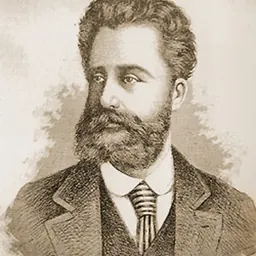

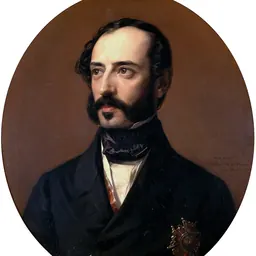
Related people
Same field, nearest in time

Contemporaries
People whose lives overlapped Cristóbal Oudrid's




Frequently asked questions
Who was Cristóbal Oudrid?
Spanish pianist, conductor and composer (1825-1877)
When was Cristóbal Oudrid born?
Cristóbal Oudrid was born on 7 February 1825 in Badajoz.
When did Cristóbal Oudrid die?
Cristóbal Oudrid died on 13 March 1877 in Madrid.
What was Cristóbal Oudrid's occupation?
Cristóbal Oudrid was a composer, conductor, pianist and musician.
What nationality was Cristóbal Oudrid?
Cristóbal Oudrid was Spanish.
Sources & further reading
Cite this page
APA: Biography.guide. (2026). Cristóbal Oudrid. https://biography.guide/cristobal-oudrid/
MLA: "Cristóbal Oudrid." Biography.guide, https://biography.guide/cristobal-oudrid/.
Chicago: "Cristóbal Oudrid." Biography.guide. https://biography.guide/cristobal-oudrid/.
Data last updated: 2026-09-24 · Spot an error? Report a correction.
Page generated 2026-09-27 05:04 UTC