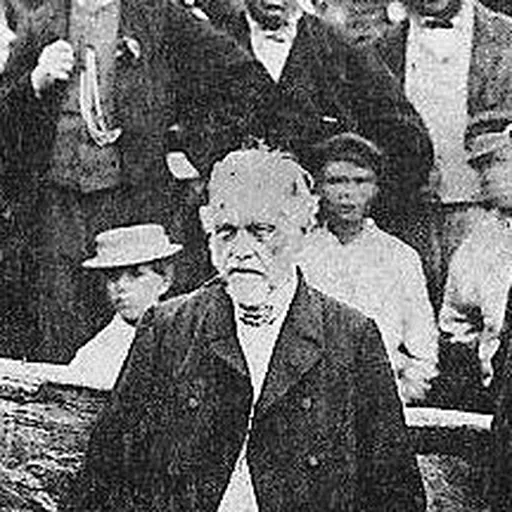
About Crawshay Bailey
Lived 1789 – 1872 (aged 82–83). Crawshay Bailey was a British politician, industrialist and ironmaster.
Crawshay Bailey (1789 – 9 January 1872) was an English industrialist who became one of the great iron-masters of Wales.
Early life Bailey was born in 1789 in Great Wenham, Suffolk, the son of John Bailey, of Wakefield and his wife Susannah. His parents had moved from Normanton, near Wakefield in around 1780 by which time they had already had at least three children (Ann, Elizabeth and William). Crawshay was the youngest of six children to be born in Great Wenham (the others being Susan, Joseph, John, and Thomas). His mother, Susannah was the sister of Richard Crawshay, the ironmaster based at Cyfarthfa Castle near Merthyr Tydfil where Crawshay Bailey came at the age of twelve to work for his rich uncle in 1801, joining his elder brother Joseph. In 1809 he was a witness to his rich uncle's will, in which he was bequeathed the sum of £1,000 .
Early business career: the iron master Crawshay Bailey's early career was overshadowed by that of his elder brother, Joseph, later Sir Joseph Bailey, 1st Baronet, who, on his uncle's death in 1810 inherited 25% of the Cyfarthfa Works where he had been the manager. Joseph Bailey sold his share in Cyfarthfa, and together with Matthew Wayne later of Gadlys, Aberdare, he bought Nantyglo Ironworks from the Blaenavon Iron Company.
In a similar manner he waited until the most auspicious time before applying for an act of Parliament to open and run a railway company. In 1845 he was instrumental in setting up the Aberdare Railway, along with Sir John Josiah Guest to capitalise on further assets in the form of sinking new collieries and building new blast furnaces.
He also promoted railways between Coleford, in the Forest of Dean, via Monmouth and Usk to Pontypool.
Soon after the Aberdare Railway was built, the Aberaman Ironworks and a number of collieries associated with it were opened. Bailey remained the owner of the Aberaman Estate but despite the profitability of his colliery activities, the depression in the iron trade meant that the enterprise did not prove as successful as Bailey had hoped so he decided to sell the Aberaman estate and return to Monmouthshire.
John Griffith, rector of Merthyr, said of Crawshay Bailey:
Popular culture Crawshay Bailey was the original subject of the song now usually corrupted to Cosher Bailey
(and so on—many, many verses in different versions)
Crawshay Bailey is also mentioned by name in the song "Ironmasters" on The Men They Couldn't Hang album Night of a Thousand Candles.
Don’t just read it —
keep it.
Full-length biographies made to live with: read them, listen on the way to work, watch them tonight.
- E-book
- Audio
- Video
Instant download · yours to keep · every purchase keeps this site free
Important facts
People in Crawshay Bailey's life
Named in this biography and alive at the same time


Related people
Same field, nearest in time
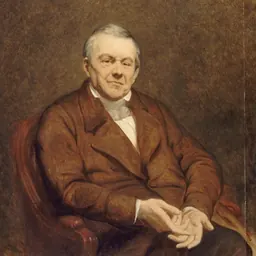

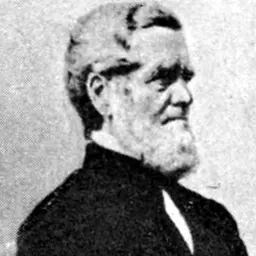
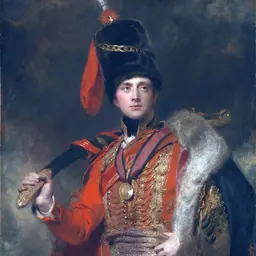

Contemporaries
People whose lives overlapped Crawshay Bailey's


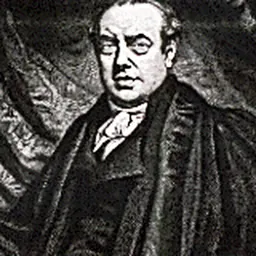


Frequently asked questions
Who was Crawshay Bailey?
British politician;(-1872)
When was Crawshay Bailey born?
Crawshay Bailey was born in 1789 in Wenham Magna.
When did Crawshay Bailey die?
Crawshay Bailey died on 9 January 1872 in Abergavenny.
What was Crawshay Bailey's occupation?
Crawshay Bailey was a politician, industrialist and ironmaster.
What nationality was Crawshay Bailey?
Crawshay Bailey was British.
Sources & further reading
Cite this page
APA: Biography.guide. (2026). Crawshay Bailey. https://biography.guide/crawshay-bailey/
MLA: "Crawshay Bailey." Biography.guide, https://biography.guide/crawshay-bailey/.
Chicago: "Crawshay Bailey." Biography.guide. https://biography.guide/crawshay-bailey/.
Data last updated: 2026-09-23 · Spot an error? Report a correction.
Portrait: Wikimedia Commons · author & licence
Page generated 2026-09-27 05:07 UTC