
About Crane Brinton
Lived 1898 – 1968 (aged 69–70). Crane Brinton was an American historian and university teacher, known for Revolution.
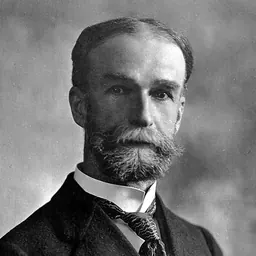
Clarence Crane Brinton (February 2, 1898 – September 7, 1968) was an American historian of France, as well as a historian of ideas. His most famous work, The Anatomy of Revolution likened the dynamics of revolutionary movements to the progress of fever.
Born in Winsted, Connecticut, his family soon moved to Springfield, Massachusetts, where he grew up and attended the public schools there before entering Harvard University in 1915. His excellent academic performance enabled him to win a Rhodes Scholarship to attend Oxford University, receiving a Doctor of Philosophy (PhD) degree in 1923 for a thesis on The political thought of the English romanticists, 1789–1832. Brinton then began teaching at Harvard University that same year, becoming full professor in 1942 and remaining at Harvard until his death. He was McLean Professor of Ancient and Modern History from 1946 to 1968.
For many years he taught a popular course at Harvard known informally to his students as "Brunch with Brinton". Brinton was known for his witty, convivial, and urbane writing and commentary, and was fluent in French. During World War II he was for a time Chief of Research and Analysis in London in the Office of Strategic Services. He was also Fire Marshal for St. Paul's Cathedral in London, which withstood the Blitz with minor damages. After the war, he was commended by the United States Army for "Conspicuous Contribution to the Liberation of France" and was chairman of the Harvard Society of Fellows in the late 1940s. Membership during that period included McGeorge Bundy and Ray Cline, who would go on to become quite influential in national security and intelligence.
In the early 1960s Brinton was the dissertation supervisor at Harvard of the young historian Will Johnston. He also served as an advisor for historian Elizabeth Eisenstein, author of The Printing Press as an Agent of Change.
Brinton was elected to the American Academy of Arts and Sciences in 1939 and the American Philosophical Society in 1953. In 1963 Brinton was elected president of the American Historical Association. He was also president of the Society for French Historical Studies.
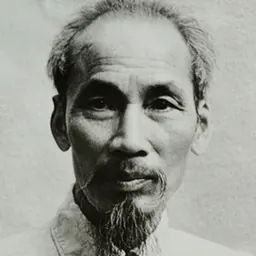
On February 19, 1968, Brinton testified at the Fulbright Hearings on the Vietnam War as to the nature of the Vietnamese opposition, saying that Americans are sympathetic to a revolution but not a Communist one, and that if Ho Chi Minh had not been a Communist, "The whole story would have been different."
Brinton wrote a review of Carroll Quigley's book Tragedy and Hope.
Among those his scholarship inspired were Samuel P. Huntington, who cited Brinton many times in his book Political Order in Changing Societies, and Robert Struble Jr., in his Treatise on Twelve Lights.
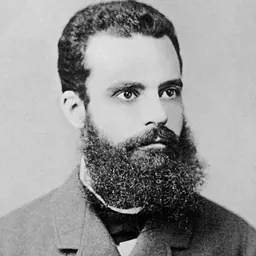
Works Articles "Lord Acton's Philosophy of History." The Harvard Theological Review, Vol. 12, No. 1, January 1919, pp. 84–112. . "The History of Paper Money to the War." The Journal of Modern History, Vol. 6, No. 3, September 1934, pp. 308–318. . "Napoleon and Hitler." Foreign Affairs, Vol. 20, No. 2, January 1942, pp. 213–225. . "Comment on Gay." American Historical Review, Vol. 66, No. 3, April 1, 1961, pp. 677–681. "Many Mansions." American Historical Review, Vol. 69, No. 2, January 1964, pp. 309–326. . An address presented at the annual meeting of the American Historical Association at the Sheraton Hotel, Philadelphia, Pennsylvania, on December 29, 1963. A detailed account of the political radicals of the French Revolution. Reissued by Transaction Publishers (2012) with a new introduction: "Crane Brinton, The New History, and Retrospective Sociology," by Howard G. Schneiderman. English Political Thought in the Nineteenth Century. London: E. Benn, 1933. A study of the French Revolution. Reprinted by Westport, CT: Greenwood Press, 1983, 1934. The Lives of Talleyrand. New York: Norton, 1936. A biography of Talleyrand with a uniquely favorable perspective. French Revolutionary Legislation on Illegitimacy, 1789–1804. Cambridge, MA: Harvard University Press, 1936. The Anatomy of Revolution. New York: W.W. Norton, 1938. Nietzsche. Cambridge: Harvard University Press, 1941. English Political Thought in the Nineteenth Century. Cambridge: Harvard University Press, 1949. An account of Western thought from ancient Greece to the present. The Temper of Western Europe. Cambridge: Harvard University Press, 1953. An attempt to explain the often difficult relations between two longtime allies.
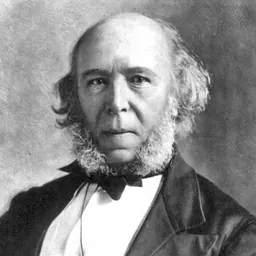
Book reviews "The Future in Retrospect: Spencer's Horrid Vision." Review of The Man Versus the State by Herbert Spencer. Foreign Affairs, Vol. 15, No. 4, July 1937, p. 768. . "The Residue of Pareto." Review of Trattato di Sociologia Generale (The Mind and Society) by Vilfredo Pareto, Arthur Livingston, & Andrew Bongiorno. Foreign Affairs, Vol. 32, No. 4, July 1954. . Review of The Napoleonic Revolution by Robert B. Holtman. American Historical Review, Vol. 74, No. 2, December 1968, pp. 627–628. .
Don’t just read it —
keep it.
Full-length biographies made to live with: read them, listen on the way to work, watch them tonight.
- E-book
- Audio
- Video
Instant download · yours to keep · every purchase keeps this site free
Important facts
People in Crane Brinton's life
Named in this biography and alive at the same time





Related people
Same field, nearest in time
Contemporaries
People whose lives overlapped Crane Brinton's


Frequently asked questions
Who was Crane Brinton?
American historian
When was Crane Brinton born?
Crane Brinton was born in 1898 in Winsted.
When did Crane Brinton die?
Crane Brinton died on 7 September 1968 in Massachusetts.
What was Crane Brinton's occupation?
Crane Brinton was a historian and university teacher.
What was Crane Brinton known for?
Crane Brinton was known for Revolution.
What nationality was Crane Brinton?
Crane Brinton was American.
Sources & further reading
Cite this page
APA: Biography.guide. (2026). Crane Brinton. https://biography.guide/crane-brinton/
MLA: "Crane Brinton." Biography.guide, https://biography.guide/crane-brinton/.
Chicago: "Crane Brinton." Biography.guide. https://biography.guide/crane-brinton/.
Data last updated: 2026-09-22 · Spot an error? Report a correction.
Page generated 2026-09-27 05:05 UTC