
About Craig Packer
Born 1950. Craig Packer is an American ecologist, researcher and biologist, known for Animal and Lions.
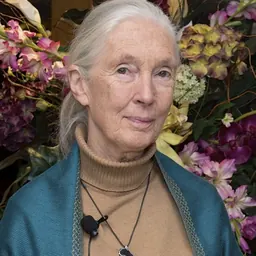
Biography Packer was born in Fort Worth, Texas in 1950. Growing up, Packer was originally interested in becoming a doctor or an engineer.However, these fields did not support his desire to work outside and to travel to exotic places. Furthermore, Packer was fascinated by evolution and animal ethology. He ultimately abandoned his place at the University of Texas Medical School to work as a field assistant for Jane Goodall in Gombe National Park, Tanzania to study olive baboons.
He graduated Stanford in 1972 with a bachelor's degree in Human Biology. and beginning in 1978, he became affiliated with the Serengeti Wildlife Research Institute, where he conducted long-term ecological studies for more than three decades.
He later held a postdoctoral research fellowship at the University of Chicago from 1980 to 1982, followed by a visiting assistant professorship at the University of Illinois at Urbana–Champaign. In 1983, he joined the University of Minnesota as an assistant professor in the Department of Ecology, Evolution and Behavior, where he was promoted to associate professor in 1989 and to full professor in 1994.
Packer has held numerous additional academic and research affiliations, including visiting scientist positions at University of Oxford and the Santa Fe Institute.
He also served as an adjunct professor in the University of Minnesota's Department of Medicine and Infectious Diseases and International Medicine Division from 2004 to 2022, and as an adjunct faculty member in its International Center for Global Change beginning in 2008.
From 2006 to 2012, he was co-executive director of Savannas Forever Tanzania, an organization focused on sustainable development and conservation. In 2013, he was named a National Geographic Explorer. Between 2014 and 2020, he held positions as Honorary Professor at the University of KwaZulu-Natal and Research Associate at Oxford's Wildlife Conservation Research Unit.
Research Packer has received sustained research support from a wide range of organizations, including the National Science Foundation, the National Geographic Society,
His early work at the Gombe Stream Research Center under Jane Goodall examined coalition formation and male dispersal in baboons, contributing to early empirical tests of adaptive explanations for social behavior. He continued this line of inquiry during his doctoral training at the University of Sussex, where he was mentored by the evolutionary theorist John Maynard Smith.
From 1978 to 2015, Packer led the Serengeti Lion Project in Serengeti National Park, one of the longest-running studies of a large carnivore population.
His work has advanced understanding of lion social systems, including cooperation, territoriality, and reproductive strategies, while also addressing broader ecological and conservation issues.
Notably, his research demonstrated how environmental conditions, particularly drought and rainfall variability, influence disease dynamics in wildlife populations, including the interaction between canine distemper virus and co-infections such as Babesia. He has also examined patterns of human–wildlife conflict, identifying ecological and behavioral factors associated with lion attacks on humans.
In addition to his extensive body of peer-reviewed publications, Packer has contributed to interdisciplinary and applied conservation research, including large-scale initiatives such as Snapshot Serengeti, a citizen science project using camera traps to monitor wildlife. His work has informed conservation policy and management strategies across East Africa.
Packer is also the author of several books that synthesize his scientific research for both academic and general audiences, including Into Africa, which received the John Burroughs Medal; Lions in the Balance, which examines conservation challenges facing African lions; and The Lion: Behavior, Ecology and Conservation of an Iconic Species, a comprehensive scholarly volume on lion biology and conservation. and a Fellow of the American Association for the Advancement of Science in 2019. and the Dawkins Conservation Award from Balliol College, Oxford (2018). He is a regular contributor to National Geographic and the IUCN. He has two grandchildren, Sienna and Felix.
Selected publications
Articles
Books
Don’t just read it —
keep it.
Full-length biographies made to live with: read them, listen on the way to work, watch them tonight.
- E-book
- Audio
- Video
Instant download · yours to keep · every purchase keeps this site free
Important facts
People in Craig Packer's life
Named in this biography and alive at the same time


Related people
Same field, nearest in time





Contemporaries
People whose lives overlapped Craig Packer's


Frequently asked questions
Who is Craig Packer?
American ecologist
When was Craig Packer born?
Craig Packer was born in 1950 in Fort Worth.
What is Craig Packer's occupation?
Craig Packer is an ecologist, researcher and biologist.
What is Craig Packer known for?
Craig Packer is known for Animal and Lions.
What nationality is Craig Packer?
Craig Packer is American.
Sources & further reading
Cite this page
APA: Biography.guide. (2026). Craig Packer. https://biography.guide/craig-packer/
MLA: "Craig Packer." Biography.guide, https://biography.guide/craig-packer/.
Chicago: "Craig Packer." Biography.guide. https://biography.guide/craig-packer/.
Data last updated: 2026-09-20 · Spot an error? Report a correction.
Page generated 2026-09-27 05:01 UTC