
Cottius
King of the Ligures
About Cottius
Lived 60 BC – AD 10 (aged 68–69). Cottius was a Roman.
Marcus Julius Cottius was King of the Celtic and Ligurian inhabitants of the mountainous Roman province then known as Alpes Taurinae and now as the Cottian Alps early in the 1st century BC. Son and successor to King Donnus, he negotiated a dependent status with Emperor Augustus that preserved considerable autonomy for his country, making him a Roman governor, and adopted Roman citizenship.
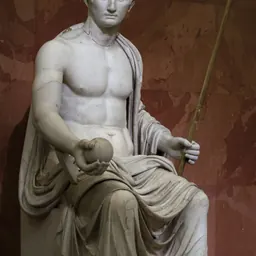
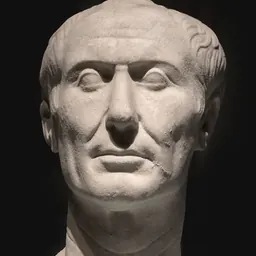
Early relationship with Rome The friendship between Cottius's realm and Rome goes back at least to the reign of his father King Donnus; there is numismatic evidence which suggests that Donnus established friendly relations with Julius Caesar. As Caesar needed to cross the Cottii Regnum in 58 BC on his way to Gaul, he made an agreement with King Donnus to have his troops transported on his road as well as having a new paved road being built. This road was the path most likely taken by General Hannibal when he crossed the Alps in 218 BC. During the civil wars which followed Caesar's death, many Gallic tribes rebelled. At the end of these wars Emperor Augustus took charge in Rome and suppressed the Gallic revolts. The destruction of the Salassi tribes and the subjugation of the Ligurian tribes in 14 BC must have convinced Cottius "to press the advantage and use his control of the Alpine passes as leverage for an alliance with Rome that would allow him to maintain his position". The arrangement benefited both parties, as Augustus wanted to maintain good relations with the people who lived along the Montgenevre pass over the Alps, which was on the road to Gaul.
Alliance with Rome
The Roman alliance was established in 13 or 12 BC, and is attested in an inscription on the Arch of Susa, which was erected to commemorate this agreement between 9 and 8 AD. The Emperor Caesar Augustus attended its unveiling. By it Cottius became a client king of Rome, with his authority reduced in exchange of the retention of his autonomy. While deferring authority to Augustus, he continued to hold his hereditary position in his land. Millar called such an arrangement a dual sovereignty. Cottius became a Roman citizen, Latinizing his name as Marcus Julius Cottius, and was appointed præfectus civitatium. Areas assigned to this type of prefect (Roman governor) were areas newly brought under Roman administration in the Augustan period. These officials oversaw areas with a number of tribes and had a fixed term of office. However, this post in Cottia was permanent and hereditary, and made him and his 14 tribes joined the Alpine regiments of the Roman army. Under his guidance his people adopted Roman aspects in their customs, laws and language. However, they retained their religious cults intact. The identification of their gods with Roman ones occurred later.
Death and legacy
Cottius was revered as a fair king who had foresight. He was laid to rest in a mausoleum still visited in the fourth century AD. After his passing the territory of the Alpes Taurinae that he had ruled began to be identified with the name Alpes Cottiae. It seems to have been seen as having a special status to the Romans compared to that of other non-Roman peoples. Strabo described the areas where the tribes of southern Gaul lived, which he named by their ethnic names; however, he used the term country of Cottius for the Cottian Alps. Vitruvius and Suetonius used the terms kingdom of the Cottians and Cottian kingdom respectively. Ammianus Marcelinus used the term Cottianae civitiate. Cottius II was subsequently given additional land by Emperor Claudius and according to Cassius Dio, he "was then called King for the first time". This was a restoration of the title of King formerly held and surrendered by Cottius I. Cottius II also received additional land from Emperor Nero.
Don’t just read it —
keep it.
Full-length biographies made to live with: read them, listen on the way to work, watch them tonight.
- E-book
- Audio
- Video
Instant download · yours to keep · every purchase keeps this site free
Important facts
Family & relationships
People in Cottius's life
Named in this biography and alive at the same time



Contemporaries
People whose lives overlapped Cottius's


Frequently asked questions
Who was Cottius?
king of the Ligures
When was Cottius born?
Cottius was born in 60 BC.
When did Cottius die?
Cottius died in AD 10.
What nationality was Cottius?
Cottius was Roman.
Sources & further reading
Cite this page
APA: Biography.guide. (2026). Cottius. https://biography.guide/cottius/
MLA: "Cottius." Biography.guide, https://biography.guide/cottius/.
Chicago: "Cottius." Biography.guide. https://biography.guide/cottius/.
Data last updated: 2026-09-20 · Spot an error? Report a correction.
Page generated 2026-09-27 05:31 UTC