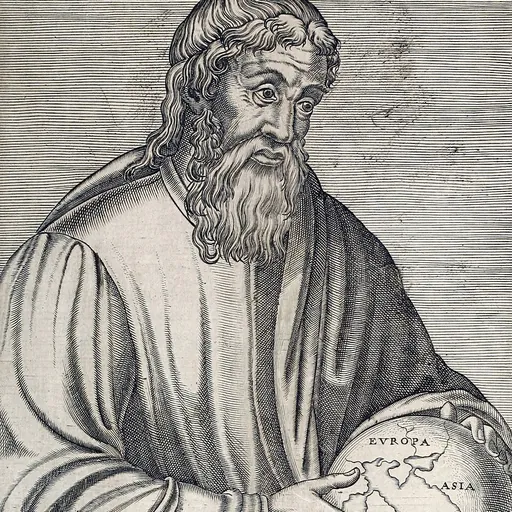
Strabo
Greek geographer, philosopher and historian (64/63 BC–c.24 AD)
About Strabo
Lived 64 BC – AD 23 (aged 85–86). Strabo was a geographer, historian, philosopher and writer.
Strabo ( ; ; 64 or 63 BC) was a Greek geographer who lived in Asia Minor during the transitional period of the Roman Republic into the Roman Empire. He is best known for his work Geographica, which presented a descriptive history of people and places from different regions of the world known during his lifetime. His family had been involved in politics since at least the reign of Mithridates V. Strabo was related to Dorylaeus on his mother's side. Several other family members, including his paternal grandfather, had served Mithridates VI during the Mithridatic Wars. As the war drew to a close, Strabo's grandfather had turned several Pontic fortresses over to the Romans. Strabo wrote that "great promises were made in exchange for these services", and, as Persian culture endured in Amaseia even after Mithridates and Tigranes were defeated, scholars have speculated about how the family's support for Rome might have affected their position in the local community and whether they might have been granted Roman citizenship as a reward.
At around the age of 21 Strabo moved to Rome, in 44 BC, and stayed there, studying and writing, until at least 31 BC. He studied philosophy with the Peripatetic Xenarchus, a highly respected tutor in Augustus's court. Despite Xenarchus's Aristotelian leanings, Strabo later showed evidence of developing his own Stoic inclinations, largely influenced by his future teacher Athenodorus, who was also the tutor of Augustus. In Rome, he also learned grammar under the wealthy and renowned scholar Tyrannion of Amisus. Thus completing his traditional Greek aristocratic education in rhetoric, grammar, and philosophy. Tyrannion was known to have befriended Cicero and taught his nephew, Quintus. Although Tyrannion was also a Peripatetic, he was more relevantly a respected authority on geography, a fact of some significance considering Strabo's future contributions to the field.
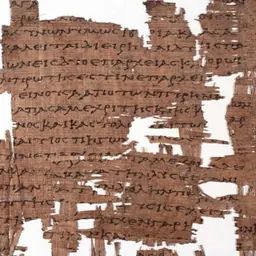
The final noteworthy mentor to Strabo was Athenodorus Cananites, a philosopher who had spent his life since 44 BC in Rome forging relationships with the Roman elite. Athenodorus passed onto Strabo his philosophy, his knowledge and his contacts. Unlike the Aristotelian Xenarchus and Tyrannion who preceded him in teaching Strabo, Athenodorus was a Stoic and almost certainly the source of Strabo's diversion from the philosophy of his former mentors. Moreover, from his own first-hand experience, Athenodorus provided Strabo with information about regions of the empire which Strabo would not otherwise have known about. The first of Strabo's major works, Historical Sketches (Historica hypomnemata), written while he was in Rome , is nearly completely lost. Meant to cover the history of the known world from the conquest of Greece by the Romans, it was quoted by Strabo himself and other classical authors mention that it existed, although the only surviving document is a fragment of papyrus now in the possession of the University of Milan (renumbered [Papyrus] 46).
Career
Strabo's life was characterized by extensive travels. He journeyed to Egypt and Kush, as far west as the coastal region of Tuscany, and as far south as Ethiopia, in addition to his travels in Asia Minor and the time he spent in Rome. Travel throughout the Mediterranean and Near East, especially for scholarly purposes, was popular during this era and was facilitated by the relative peace enjoyed throughout the reign of Augustus (27 BC – AD 14). In 29 BC, on his way to Corinth (where Augustus was at the time), he visited the island of Gyaros in the Aegean Sea. Around 25 BC, he sailed up the Nile until he reached Philae, after which point there is little record of his travels until AD 17.
It is not known precisely when Strabo's Geography was written, though comments within the work itself place the finished version within the reign of Emperor Tiberius. Some place its first drafts around 7 BC, others around AD 17 or AD 18. He probably worked on the Geography for many years and revised it steadily, but not always consistently. It is an encyclopaedic chronicle and consists of political, economic, social, cultural, and geographic descriptions covering almost all of Europe and the Mediterranean: Britain and Ireland, the Iberian Peninsula, Gaul, Germania, the Alps, Italy, Greece, Northern Black Sea region, Anatolia, Middle East, Central Asia and North Africa. The Geography is the only extant work providing information about both Greek and Roman peoples and countries during the reign of Augustus.
On the presumption that "recently" means within a year, Strabo stopped writing that year or the next (AD 24), at which time he is thought to have died.
Work Geographica
Strabo is best known for his work Geographica ("Geography"), which presented a descriptive history of people and places from different regions of the world known during his lifetime. Isaac Casaubon, classical scholar and editor of Greek texts, provided the first critical edition in 1587.
Although Strabo cited the classical Greek astronomers Eratosthenes and Hipparchus, acknowledging their astronomical and mathematical efforts covering geography, he claimed that a descriptive approach was more practical, such that his works were designed for statesmen who were more anthropologically than numerically concerned with the character of countries and regions.
As such, Geographica provides a valuable source of information on the ancient world of his day, especially when this information is corroborated by other sources. He travelled extensively, as he says: "Westward I have journeyed to the parts of Etruria opposite Sardinia; towards the south from the Euxine [Black Sea] to the borders of Ethiopia; and perhaps not one of those who have written geographies has visited more places than I have between those limits."
It is not known when he wrote Geographica, but he spent much time in the famous library in Alexandria taking notes from "the works of his predecessors". A first edition was published in 7 BC and a final edition no later than 23 AD, in what may have been the last year of Strabo's life. It took some time for Geographica to be recognized by scholars and to become a standard.
Alexandria itself features extensively in the last book of Geographica, which describes it as a thriving port city with a highly developed local economy. Strabo notes the city's many beautiful public parks, and its network of streets wide enough for chariots and horsemen. "Two of these are exceeding broad, over a plethron in breadth, and cut one another at right angles ... All the buildings are connected one with another, and these also with what are beyond it." Underside of a female indian flying lizard showing the "wing" or patagium that is usually supported by six elongated ribs. Lawrence Kim observes that Strabo is "... pro-Roman throughout the Geography. But while he acknowledges and even praises Roman ascendancy in the political and military sphere, he also makes a significant effort to establish Greek primacy over Rome in other contexts."
In Europe, Strabo was the first to connect the Danube (which he called Danouios) and the Istros – with the change of names occurring at "the cataracts," the modern Iron Gates on the Romanian/Serbian border.
In India, a country he never visited, Strabo described small flying reptiles that were long with snake-like bodies and bat-like wings (this description matches the Indian flying lizard Draco dussumieri), winged scorpions, and other mythical creatures along with those that were actually factual.
Geology Charles Lyell, in his Principles of Geology, wrote of Strabo:
Fossil formation Strabo commented on fossil formation mentioning Nummulite (quoted from Celâl Şengör): …There are no trees here, but only the vineyards where they produce the Katakekaumene wines which are by no means inferior from any of the wines famous for their quality. The soil is covered with ashes, and black in colour as if the mountainous and rocky country was made up of fires. Some assume that these ashes were the result of thunderbolts and subterranean explosions, and do not doubt that the legendary story of Typhon takes place in this region. Ksanthos adds that the king of this region was a man called Arimus. However, it is not reasonable to accept that the whole country was burned down at a time as a result of such an event rather than as a result of a fire bursting from underground whose source has now died out. Three pits are called "Physas" and separated by forty stadia from each other. Above these pits, there are hills formed by the hot masses burst out from the ground as estimated by a logical reasoning. Such type of soil is very convenient for viniculture, just like the Katanasoil which is covered with ashes and where the best wines are still produced abundantly. Some writers concluded by looking at these places that there is a good reason for calling Dionysus by the name ("Phrygenes").
Editions
Volumes 1–4 text and translation (Vol 1, Vol 2), Volumes 5–8 commentary (Vol 6, Vol 7, Vol 8), Volume 9 text of the Epitome and of the Chrestomathy (Vol 9), Volume 10 index. Jones, H. L., transl. (1917). The Geography of Strabo. London: Heinemann. In eight volumes: Vol 1; Vol 2; Vol 3; Vol 4; Vol 5; Vol 6; Vol 7; Vol 8. Strabo's Geography in three volumes as translated by H.C. Hamilton and W. Falconer, ed. by H.G. Bohn, 1854–1857
Don’t just read it —
keep it.
Full-length biographies made to live with: read them, listen on the way to work, watch them tonight.
- E-book
- Audio
- Video
Instant download · yours to keep · every purchase keeps this site free
Important facts
People in Strabo's life
Named in this biography and alive at the same time
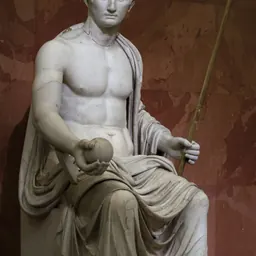
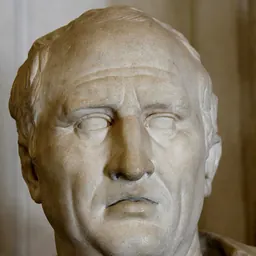

Related people
Same field, nearest in time


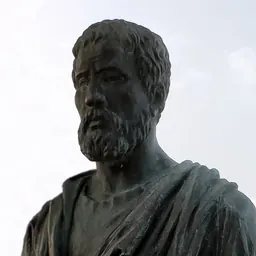
Contemporaries
People whose lives overlapped Strabo's


Frequently asked questions
Who was Strabo?
Greek geographer, philosopher and historian (64/63 BC–c.24 AD)
When was Strabo born?
Strabo was born in 64 BC in Amasia.
When did Strabo die?
Strabo died in AD 23 in Amasia.
What was Strabo's occupation?
Strabo was a geographer, historian, philosopher and writer.
Sources & further reading
Cite this page
APA: Biography.guide. (2026). Strabo. https://biography.guide/strabo/
MLA: "Strabo." Biography.guide, https://biography.guide/strabo/.
Chicago: "Strabo." Biography.guide. https://biography.guide/strabo/.
Data last updated: 2026-09-22 · Spot an error? Report a correction.
Portrait: Wikimedia Commons · author & licence
Page generated 2026-09-27 04:57 UTC