
About Cornelius P. Rhoads
Lived 1898 – 1959 (aged 61). Cornelius P. Rhoads was an American military physician and pathologist.
Cornelius Packard "Dusty" Rhoads (June 9, 1898 – August 13, 1959) was an American pathologist, oncologist, and hospital administrator who was involved in a racist scandal and subsequent whitewashing in the 1930s. Beginning in 1940, he served as director of Memorial Hospital for Cancer Research in New York, from 1945 was the first director of Sloan-Kettering Institute, and the first director of the combined Memorial Sloan–Kettering Cancer Center. For his contributions to cancer research, Rhoads was featured on the cover of the June 27, 1949, issue of Time magazine under the title "Cancer Fighter".
During his early years with the Rockefeller Institute in the 1930s, Rhoads specialized in anemia and leukemia, working for six months in Puerto Rico in 1932 as part of the Rockefeller Foundation International Health Board contingent. During World War II, he worked for the United States Army helping to develop chemical weapons and set up research centers. Research on mustard gas led to developments for its use in chemotherapy at Sloan Kettering.
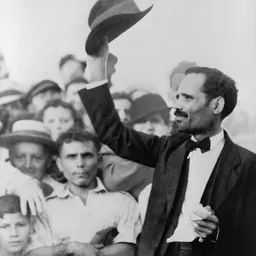
In early 1932, a letter Rhoads had written in November 1931, which disparaged Puerto Ricans and makes claims (which he referred to later as jokes) he had intentionally injected cancer cells into his patients, was given by a lab assistant to Puerto Rican nationalist leader Pedro Albizu Campos. He publicized the letter in the Puerto Rican and American media, which led to a scandal, an official investigation, It was led by Jay Katz, emeritus professor at Yale Law School and a specialist in medical ethics. He concluded there was no evidence of unethical human experimentation, but the letter was so offensive that the prize should be renamed. AACR concurred and stripped the honor from Rhoads because of his racism. He received his early education in Springfield, later attending Bowdoin College in Maine, where he graduated in 1920. He entered Harvard Medical School, where he became class president, and in 1924, he received his M.D., cum laude.
In 1929, Rhoads joined the staff of the Rockefeller Institute for Medical Research, now Rockefeller University, where he worked for Simon Flexner. He was also staff pathologist at Rockefeller Hospital.
Puerto Rico While working for the Rockefeller Institute, in 1931 Rhoads was invited by hematologist William B. Castle to join his Rockefeller Anemia Commission, to conduct clinical research at Presbyterian Hospital in San Juan, Puerto Rico. Castle's research interest was pernicious iron deficiency anemia, specifically as caused by the parasitic hookworm, which was endemic on the island at rates of 80%, and tropical sprue. The cause of tropical sprue has still not been identified, but since the 1940s, it can be treated with folic acid and a 3 to 6-month course of antibiotics.
Rhoads was to assist Castle, and they established a base in San Juan at the Presbyterian Hospital. Rhoads corresponded often with Simon Flexner at the Rockefeller Institute in New York regarding his research and career interests. In Puerto Rico, the Rockefeller group had more than 200 patients; historian and ethicist Susan E. Lederer notes that, while referred to as patients, they were primarily clinical subjects whose conditions were studied to advance medical research. Because of the effects of anemia and the suspicion that tropical sprue was related to diet, Rhoads experimentally controlled patients' diets.
He wrote the following:
His unmailed letter was found by one of his staff and circulated among workers at the Anemia Commission. When Rhoads learned of this, he quickly made a public apology at a meeting of all staff and doctors.
The Rhoads' letter created one of the first crises for James R. Beverley, newly appointed as the acting Governor of Puerto Rico. He said the letter was a "confession of murder" and "a libel against the people of Puerto Rico", and ordered an investigation, one of his first acts. Francis Peyton Rous of the Rockefeller Institute was editor of the Journal of Experimental Medicine through the 1930s and 1940s. Although it accepted few articles on clinical research, he was careful about their wording in an effort to avoid criticism by the anti-vivisectionists. Rhoads had returned to New York before the scandal broke in Puerto Rico. After the Attorney General's report and that of the Rockefeller Institute in 1932, the controversy quickly faded in the United States.
Reaction to the Rhoads scandal and controversy was mixed in the United States, in part due to the Rockefeller campaign. Starr says (in his 2003 article on the scandal) that Rhoads' colleagues did not believe the researcher's attempt to cast his letter as a "fantastic and playful composition...intended as a parody." In 1934, Rhoads and another researcher published results of the success in using liver extract therapy to treat tropical sprue (and relieve anemia). Their work was recognized as contributing benefit in treatment of the disease by others in the field.
Memorial Hospital and World War II In 1940, Rhoads was selected as director of Memorial Hospital, which was devoted to cancer care and research, and had recently moved into a new building. Rhoads was selected for his interest in clinical investigation in addition to laboratory research, as the hospital did research as well as treatment.
During World War II, Rhoads was commissioned as a colonel and assigned as chief of medicine in the Chemical Weapons Division of the U.S. Army. For this work, he won the Legion of Merit for "combating poison gas and other advances in chemical warfare" in 1945. Rhoads also became interested in total body irradiation, which led to early work on chemotherapy.
Post-war In 1945, the Sloan-Kettering Institute was founded as a cancer research center, in the hopes that an industrial approach to research would yield a cure. He was "praised by Memorial for his 'essential role in the evolution of the hospital into a modern medical center.'"
In 1953, Rhoads stepped back slightly, becoming scientific director of the newly merged Memorial Sloan–Kettering Cancer Center. He also was an adviser to the United States Atomic Energy Commission regarding nuclear medicine. Some AEC funding supported Sloan-Kettering research into the use of iodine to transport radiation to cancer tumors.
Rhoads continued to serve as scientific director of the Memorial Sloan–Kettering Cancer Center until his death. The AACR indicated that the new name would be retroactive and past awardees would receive updated plaques.
Representation in other media During the 1980s, the Puerto Rican political satire comedy group, Los Rayos Gamma, performed parodies of Rhoads with Jacobo Morales portraying a Cornelio Rodas as an insane, Frankenstein-like scientist bent on the elimination of Puerto Ricans. Roberto Busó-García wrote and directed the dramatic film, The Condemned (2013), which he said was loosely based on the Rhoads' controversy in Puerto Rico.
Don’t just read it —
keep it.
Full-length biographies made to live with: read them, listen on the way to work, watch them tonight.
- E-book
- Audio
- Video
Instant download · yours to keep · every purchase keeps this site free
Important facts
People in Cornelius P. Rhoads's life
Named in this biography and alive at the same time


Related people
Same field, nearest in time


Contemporaries
People whose lives overlapped Cornelius P. Rhoads's



Frequently asked questions
Who was Cornelius P. Rhoads?
American pathologist and oncologist (1898–1959)
When was Cornelius P. Rhoads born?
Cornelius P. Rhoads was born on 9 June 1898 in Springfield.
When did Cornelius P. Rhoads die?
Cornelius P. Rhoads died on 13 August 1959 in Stonington.
What was Cornelius P. Rhoads's occupation?
Cornelius P. Rhoads was a military physician and pathologist.
What nationality was Cornelius P. Rhoads?
Cornelius P. Rhoads was American.
Sources & further reading
· Wikipedia: Cornelius P. Rhoads
· DBpedia: Cornelius P. Rhoads
Cite this page
APA: Biography.guide. (2026). Cornelius P. Rhoads. https://biography.guide/cornelius-p-rhoads/
MLA: "Cornelius P. Rhoads." Biography.guide, https://biography.guide/cornelius-p-rhoads/.
Chicago: "Cornelius P. Rhoads." Biography.guide. https://biography.guide/cornelius-p-rhoads/.
Data last updated: 2026-09-20 · Spot an error? Report a correction.
Page generated 2026-09-27 05:20 UTC