
Cornelius Hawkridge
Whistleblower on U.S. military supply chain corruption
About Cornelius Hawkridge
Lived 1927 – 2022 (aged 95). Cornelius Hawkridge was an American whistleblower and consultant.
Cornelius Hawkridge (June 28, 1927 – November 6, 2022 ) was a consultant, born in Romania to an English father and an ethnic Hungarian mother. The central figure in the 1971 non-fiction book The Greedy War (a.k.a. A Very Personal War) by James Hamilton-Paterson,
By his own account, Hawkridge made over $50,000 on black market currency exchange in Vietnam, but soon spent all of it single-handedly investigating the corruption around him. Hawkridge had one brother. His father died in the line of duty when Hawkridge was eleven years old. and thus were content with Hungary's alliance with the Axis powers in World War II; He had the relative good fortune to be thrown in a poorly run prison camp; weeks earlier, the advancing Red Army had been killing all of its captives. Within a few weeks he escaped and, with the aid of some peasants who gave him civilian clothing, walked and hitch-hiked home through the still-wintry weather. He determined that amidst apparent chaos was a hidden efficiency: the Russians held on to there matériel with near perfection. Weapons were never left on the battlefield, spare uniforms, even jerrycans, were always secured.
Many, probably most, Hungarians soon fell in line with the new regime. Instead, at university he openly defied the regime with their words, and behind the scenes he and a few others engaged in guerrilla activities including killing armed men in order to better arm themselves. it is a certainty that they were following him after that and noting his contacts.
In January 1949 he was booted from the university, and in February his mother's business was nationalized. They decided to stand and fight, and had the surprising good fortune that the soldiers sent to arrest them had instructions to take them alive. This time he was held 29 months in solitary confinement and subjected to a system of interrogation that made little use of force except in cases of non-compliance. When he was finally placed on trial, he and his comrades in arms were all astounded to see one another alive; each had thought himself the sole survivor. Given a chance to speak to the court on behalf of himself and his co-defendants, Hawkridge was again completely defiant. All were sentenced to life in prison. In some of the hard labor situations he committed acts of sabotage; after an escape attempt he spent half a year in chains. However, he was finally released a few months later. When the Hungarian Revolution of 1956 began October 23, he was at work and late to hear what had happened. He fought on the side of the insurgents, and within days he found himself in charge of the short-lived revolution's security police, arranging the arrests of the same sort of people who had so recently imprisoned him. Ten did, and for the second time he found himself heading a group headed to that border in stolen Russian uniforms.
After four days in a chaotic and overcrowded camp for the former military personnel among the refugees, The offer did not immediately tempt him. While his time in prison had reduced Hawkridge's Hungarian nationalism and intensified his anti-Communism, Hawkridge ended up taking the American offer. (He also, to his later chagrin, gave the Americans the names of those who had shared his run to the border; many of them were to die after being recruited for secret missions back into Hungary. He was bounced around a few agencies as well as the so-called Hungarian Freedom Fighters' Association, headed by former Hungarian general Béla Király. Although they had fought on the same side of the 1956 Revolution, Hawkridge despised Király, who had been a loyal Communist up until that time. Eventually he made his way to Seattle, where he obtained a well-paid job working for a firm that was under contract to the United States Air Force at McChord Air Force Base. After a year of training, he was heading a team in charge of controlling corrosion on aircraft, a job which he kept until 1963.
During this time, a few visits to Travis Air Force Base in California and the adjoining Strategic Air Command station convinced Hawkridge that U.S. military facilities had way too little security. He repeatedly drove into the base without showing his papers, and on one occasion found himself immediately next to a nuclear weapon being loaded into an aircraft, with no security challenge whatever. He became increasingly interested in working in security, preferably outside the U.S. Granted U.S. citizenship February 11, 1963, he immediately obtained a passport and headed for Europe, He bounced around for a while: to Europe, to the Caribbean, consulting to small airlines that were trying to avoid being shut by the U.S. Civil Aeronautics Board. By early 1965 he had returned to the U.S. often without clear official status. He soon concluded that there were no Communists to speak of in the country, and that saving the Dominican Republic from communism had been simply a pretext for U.S. military involvement there, as had been saving American lives.
And even that mission was poorly pursued. In the port of Haina, he watched as U.S. aid goods and materials were almost entirely pilfered by the countries privileged elites. Little found its way to the poor and the peasants, and the effect was to instill an anti-Americanism rather than to quell it. In one case, some rebels were holed up in a residential quarter of the capital, Santo Domingo. Hawkridge suggested to the officer in charge that they cut power and water to the district, and that "In this heat... they'll come out" within days. He then watched as, instead, bombers blasted the neighborhood, leveling houses and killing civilians.
In the summer of 1966, still in the Dominican Republic, he was offered, an accepted, an opportunity to work in Vietnam running a refugee camp and, in particular, to "sort out the genuine refugees from the Viet Cong infiltrators."
Vietnam Hawkridge arrived in Vietnam in late October 1966, consulting for a U.S. foundation that intended to aid war refugees. He quickly observed that the camps were receiving almost none of the aid they were supposed to receive from USAID and that U.S. military goods—not only clothing and blankets, but weapons and ammunition—were readily available on the local black market. Agreements between the U.S. and South Vietnamese governments explicitly excluded the U.S. from being directly involved in such police matters, (Quy Nhon had a large Korean presence ), Vietnamese civilians, Army of the Republic of Vietnam (ARVN) Regulars, South Vietnamese police, Indians, and even American officers, as well as Viet Cong.
Of course, these categories were not mutually exclusive. Philco-Ford's hired "Vietnamese labor adviser," with high clearances from both the Americans and Vietnamese, and who did Hawkridge several favors, one of which probably saved his life, turned out to be "a full Viet Cong colonel and the man in charge of planning the supplies for the 1968 Tet offensive."
Within a week of his arrival, Hawkridge found himself doubting the purpose of the war and the sincerity of anti-Communist intent, and had begun to wonder what he was doing there at all. His initial thought that Quy Nhon was a particular "black spot"; he was soon disabused of that. In December 1966 he quit the refugee camp job and in January he headed for Saigon, where he soon determined that the ports were comparably porous, and the transportation system beyond them even worse. He worked two months for Equipment Incorporated, a subsidiary of SeaLand, then a few more months in a similar capacity for Philco-Ford; in both cases he was supposed to help with security, especially for convoys delivering goods out from the Saigon and Newport ports.
On several occasions, Hawkridge took it upon himself to confront vehicle hijackers with deadly force, but on the whole he became increasingly aware that his single-handed efforts could have no effect on the larger situation. He also learned to be as skeptical of battle reports as he was of the larger claims about the war. While working for Philco, he had occasion to come upon the scene of what had been described as a major battle near Saigon, an attack on a supposed Viet Cong base that was reported to have killed 288 Viet Cong. He had gone hoping to scavenge weapons, but the heavily pounded site showed no sign of weapons or of Viet Cong casualties.
By Hawkridge's own account, in Quy Nhon, through a South Korean officer named Son, he himself became involved for a time in profiting off of black-market currency exchange. The next year, he did the same on a larger scale in Saigon, dealing mostly with money-changers from India. At the same time he was profiting, he was also investigating: for example, by paying with U.S. dollar travelers' checks, he was able to follow where the checks were deposited, and discovered where the Indian money-dealers were banking in Hong Kong; the checks were mainly cashed through a company called the Baker Company, banking at the Dao Heng Bank. From Hong Kong, much of the Baker Company money made its way back to the U.S., including at Manufacturers Hanover Trust in New York. When the U.S. Senate later started to investigate, the Baker Company largely disappeared, except for a pair of used and rare book stores.
Hawkridge strongly believed that the black-market currency exchange and the theft of U.S. military goods were intimately connected. According to Frank McCulloch of Life magazine, in this era about 10-12% of U.S. military goods were pilfered, and a significant portion of the pilfered goods found their way to the opposing Communist forces. Those involved in the black market included Americans, Vietnamese (including, on the one hand, South Vietnamese police, and on the other, Vietcong), and others. Hawkridge continued to try to report this activity to U.S. military authorities and continued to be brushed off, often with a statement that (in his paraphrase), "policing was a Vietnamese matter."
Returning to Quy Nhon in 1969 after testifying to the U.S. Senate subcommittee, Hawkridge found the black market for currency and goods much the same as it had been. He also found himself a bit too well known: when he attempted to take some pictures, two Koreans roughed him up and took his camera; a Vietnamese policeman then accompanied him to the airport and placed him on a plane out of town.
Don’t just read it —
keep it.
Full-length biographies made to live with: read them, listen on the way to work, watch them tonight.
- E-book
- Audio
- Video
Instant download · yours to keep · every purchase keeps this site free
Important facts
People in Cornelius Hawkridge's life
Named in this biography and alive at the same time
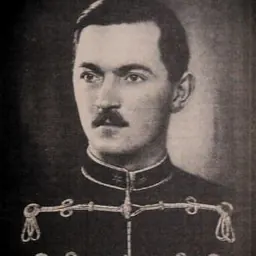


Related people
Same field, nearest in time





Contemporaries
People whose lives overlapped Cornelius Hawkridge's
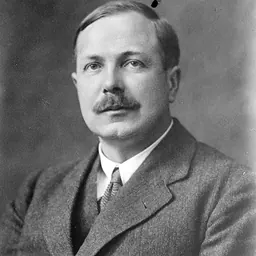
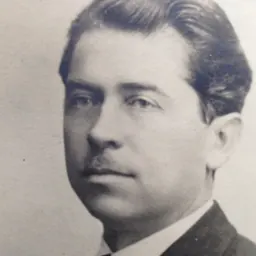
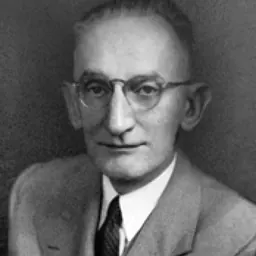


Frequently asked questions
Who was Cornelius Hawkridge?
whistleblower on U.S. military supply chain corruption
When was Cornelius Hawkridge born?
Cornelius Hawkridge was born on 28 June 1927 in Romania.
When did Cornelius Hawkridge die?
Cornelius Hawkridge died on 6 November 2022 in United States.
What was Cornelius Hawkridge's occupation?
Cornelius Hawkridge was a whistleblower and consultant.
What nationality was Cornelius Hawkridge?
Cornelius Hawkridge was American.
Sources & further reading
· Wikipedia: Cornelius Hawkridge
· DBpedia: Cornelius Hawkridge
Cite this page
APA: Biography.guide. (2026). Cornelius Hawkridge. https://biography.guide/cornelius-hawkridge/
MLA: "Cornelius Hawkridge." Biography.guide, https://biography.guide/cornelius-hawkridge/.
Chicago: "Cornelius Hawkridge." Biography.guide. https://biography.guide/cornelius-hawkridge/.
Data last updated: 2026-09-20 · Spot an error? Report a correction.
Page generated 2026-09-27 05:27 UTC