
About Cornelius
Lived 180 – 253 (aged 72–73). Cornelius was a Roman catholic priest and author.
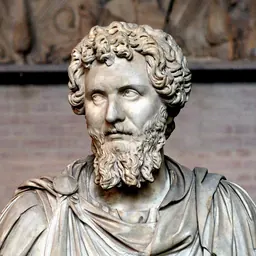
Pope Cornelius (; died June 253) was the bishop of Rome from the 6th, or the 13th of March, 251 A.D., until his martyrdom in June, 253 A.D.
He was pope during and following a period of persecution of the church, while a schism occurred over how repentant church members who had practiced pagan sacrifices to protect themselves could be readmitted to the church. He agreed with Cyprian of Carthage that those who had lapsed could be restored to communion after varying forms of Reinitiation and Penance. This position was in contrast to the Novatianists, who held that those who failed to maintain their confession of faith under persecution would not be received again into communion with the church. This resulted in a short-lived schism in the Church of Rome that spread as each side sought to gather support. Cornelius held a synod that confirmed his election and excommunicated Novatian, but the controversy regarding lapsed members continued for years.
The persecutions resumed in 251 under Emperor Trebonianus Gallus. Cornelius was sent into exile and may have died from the rigours of his banishment; possibly he was beheaded.
Christian persecution
Emperor Decius, who ruled from 249 to 251, persecuted Christians in the Roman Empire rather sporadically and locally, but starting in January of the year 250, he ordered all citizens to perform a religious sacrifice in the presence of commissioners, or else face death. Many Christians refused and were martyred, (including Pope Fabian on 20 January 250), while others partook in the sacrifices in order to save their own lives.
Two schools of thought arose after the persecution. One side, led by Novatian, a priest in the diocese of Rome, said those who had stopped practising Christianity during the persecution could not be accepted back into the church, even if they repented. He held that idolatry was an unpardonable sin, and that the Church had no authority to forgive apostates, but that their forgiveness must be left to God; it could not be pronounced in this world. The opposing side, including Cornelius and Cyprian of Carthage, said the lapsi could be restored to communion through repentance, demonstrated by a period of penance.
During the persecution it proved impossible to elect a successor, and the papal seat remained vacant for a year. During this period the church was governed by several priests, including Novatian. When Decius left Rome to fight the invading Goths, the Roman clergy chose a new bishop. Both sides sent out letters to other bishops seeking recognition and support. Cornelius had the support of Cyprian, Dionysius, and most African and Eastern bishops while Novatian had the support of a minority of clergy and laymen in Rome. His letters also inform that Cornelius had a staff of over 150 clergy members and the church fed over 1,500 people daily. From these numbers, it has been estimated that there were at least 50,000 Christians in Rome during the papacy of Pope Cornelius. This suggests that Cornelius came from a financially average family and thus was given an ordinary education as a child. One letter mentions an office of "exorcist" in the church for the first time.
Veneration
Some of his relics were taken to Germany during the Middle Ages; his head was claimed by Kornelimünster Abbey near Aachen. In the Rhineland, he was also a patron saint of lovers. A legend associated with Cornelius tells of a young artist who was commissioned to decorate the Corneliuskapelle in the Selikum quarter of Neuss. The daughter of a local townsman fell in love with the artist, but her father forbade the marriage, remarking that he would only consent if the pope did as well. Miraculously, the statue of Cornelius leaned forward from the altar and blessed the pair, and the two lovers were thus married.
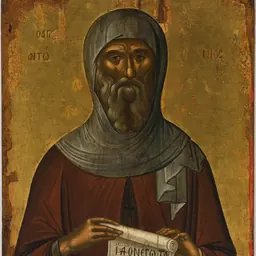
Cornelius, along with Quirinus of Neuss, Hubertus and Anthony the Great, was venerated as one of the Four Holy Marshals in the Rhineland during the late Middle Ages.
A legend told at Carnac states that its stones were once pagan soldiers who had been turned into stone by Cornelius, who was fleeing from them.
The Catholic Church commemorated Cornelius by venerating him, with his Saint's Day on 16 September, which he shares with his friend Cyprian. His Saint's Day was originally on 14 September, the date on which both Cyprian and Cornelius were martyred, according to Jerome.
Don’t just read it —
keep it.
Full-length biographies made to live with: read them, listen on the way to work, watch them tonight.
- E-book
- Audio
- Video
Instant download · yours to keep · every purchase keeps this site free
Important facts
People in Cornelius's life
Named in this biography and alive at the same time



Related people
Same field, nearest in time


Contemporaries
People whose lives overlapped Cornelius's



Frequently asked questions
Who was Cornelius?
pope Saint (251 to 253)
When was Cornelius born?
Cornelius was born in 180 in Rome.
When did Cornelius die?
Cornelius died in 253 in Civitavecchia.
What was Cornelius's occupation?
Cornelius was a catholic priest and author.
What nationality was Cornelius?
Cornelius was Roman.
Sources & further reading
Cite this page
APA: Biography.guide. (2026). Cornelius. https://biography.guide/cornelius-catholic-priest/
MLA: "Cornelius." Biography.guide, https://biography.guide/cornelius-catholic-priest/.
Chicago: "Cornelius." Biography.guide. https://biography.guide/cornelius-catholic-priest/.
Data last updated: 2026-09-21 · Spot an error? Report a correction.
Portrait: Wikimedia Commons · author & licence
Page generated 2026-09-27 04:59 UTC