
About Cornelius C. Smith
Lived 1869 – 1936 (aged 66). Cornelius C. Smith was an American military personnel.
Colonel Cornelius Cole Smith (April 7, 1869 – January 10, 1936) was an American officer in the U.S. Army who served with the 6th U.S. Cavalry during the Sioux Wars. On January 1, 1891, he and four other cavalry troopers successfully defended a U.S. Army supply train from a force of 300 Sioux warriors at the White River in South Dakota, for which he received the Medal of Honor. He was the last man to receive the award in battle against the Sioux, and in a major Indian war.
In his later career, Smith served as an officer during the Spanish–American War and the subsequent Philippine Insurrection under Generals Leonard Wood and John J. Pershing. In 1910, he was appointed by Pershing as commander of the Philippine Constabulary and served at Fort Huachuca as commanding officer of Troop G, 5th U.S. Cavalry from 1912 to 1914. It was in this capacity that he accepted the surrender of Colonel Emilio Kosterlitzky, commander of Mexican federal forces at Sonora, on March 13, 1913. In 1918, he was appointed commander of Huachuca and the 10th U.S. Cavalry. Prior to his retirement, he also oversaw the construction of Camp Owen Beirne, adjacent to Fort Bliss, which served as the model for similar camps built following the end of World War I.
Smith's son, Cornelius Cole Smith, Jr., who also served as a colonel in the Philippines during World War II, was a successful author, historian and illustrator who wrote several books on the Southwestern United States including his biography entitled "Don't Settle for Second: Life and Times of Cornelius C. Smith" (1977).
Biography
Early life Cornelius Cole Smith was born on April 7, 1869, in the frontier town of Tucson in the Arizona Territory. his father, Gilbert Cole Smith, was a member of a distinguished military family dating back to the Revolutionary War. He was also related to brothers William and Granville H. Oury. His family lived at several outposts in the Arizona and New Mexico Territories, wherever his father happened to be stationed. In December 1882, they finally settled at Vancouver Barracks in the Washington Territory. Smith was then sent back east to Louisiana, Missouri, and in 1884 to Baltimore, Maryland. In 1888, Smith moved to Helena, Montana and joined the Montana National Guard on May 22, 1889.
On April 9, 1890, at age 21, Smith enlisted in the United States Army in Helena and was immediately sent out with 6th U.S. Cavalry Regiment for frontier duty in the Dakota Territory.
Battle at White River, 1891 Within a year, Smith reached the rank of corporal and saw his first action during the Pine Ridge Campaign. On January 1, 1891, two days after the Battle at Wounded Knee Creek, he accompanied a fifty-three man escort of a U.S. Army supply train to the regiment's camp at the battle site. While preparing to cross the White River, partially ice-covered during the winter, the supply train was suddenly attacked by a group of approximately 300 Sioux braves. In an attempt to save the wagon train, he and Sergeant Frederick Myers chose advanced positions from a knoll 300 yards from the river and held back the initial Sioux assault with four other troopers successfully defended their position against repeated enemy attacks. After they had withdrawn, Smith and the others chased after the war party for a considerable distance before breaking off their pursuit. in Mindanao under General Wood, during which time he helped publish A Grammar of the Maguindanao Tongue According to the Manner of Speaking It in the Interior and on the South Coast of the Island of Mindanao (1906) with Spanish Jesuit Rev. Father Jacinto Juanmart.
In 1908, he accepted a two-year position as superintendent of California's Sequoia National Park and Grant National Parks. In 1910, he returned to the Philippine Islands for 2 years
During 1915, Smith was a military attaché in Bogotá and Caracas, and rose through the ranks from major to colonel of cavalry within the next two years. along with 1,000 other veterans.
Personal life Smith was married; His son Cornelius Cole Smith Jr. was born 1913 at Fort Huachuca.
He was a hereditary companion of the Military Order of the Loyal Legion of the United States.
Grave site restoration In November 2003, a special ceremony was held at Smith's grave site to display a new 18-foot-tall flagpole and stone bench nearby. Smith's son, Cornelius Cole Smith, Jr., was in attendance. Initially started by 16-year-old Michael Emett for an Eagle Scout project, this was the first of a planned restoration campaign for the graves of Riverside's military veterans and town founders. The story was covered by The Press-Enterprise and encouraged community leaders to raise money for an endowment to provide for the upkeep of older rundown areas of the cemetery that are not watered or maintained. A few years before, the California Department of Consumer Affairs ordered that sprinklers in the historic section be shut off because it lacked an endowment to pay for the water.
Medal of Honor citation Rank and organization: Corporal, Company K, 6th U.S. Cavalry. Place and date: Near White River, S. Dak., 1 January 1891. Entered service at: Helena, Mont. Birth: Tucson, Ariz. Date of issue: 4 February 1891.
Citation:
With 4 men of his troop drove off a superior force of the enemy and held his position against their repeated efforts to recapture it, and subsequently pursued them a great distance.
Don’t just read it —
keep it.
Full-length biographies made to live with: read them, listen on the way to work, watch them tonight.
- E-book
- Audio
- Video
Instant download · yours to keep · every purchase keeps this site free
Important facts
People in Cornelius C. Smith's life
Named in this biography and alive at the same time


Related people
Same field, nearest in time


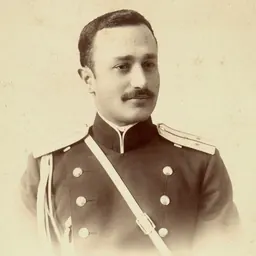



Contemporaries
People whose lives overlapped Cornelius C. Smith's

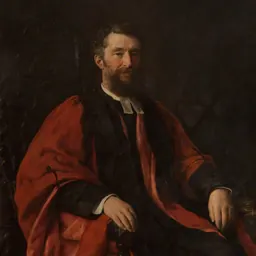



Frequently asked questions
Who was Cornelius C. Smith?
United States Army Medal of Honor recipient
When was Cornelius C. Smith born?
Cornelius C. Smith was born on 7 April 1869 in Tucson.
When did Cornelius C. Smith die?
Cornelius C. Smith died on 10 January 1936 in Riverside.
What was Cornelius C. Smith's occupation?
Cornelius C. Smith was a military personnel.
What nationality was Cornelius C. Smith?
Cornelius C. Smith was American.
Sources & further reading
· Wikipedia: Cornelius C. Smith
Cite this page
APA: Biography.guide. (2026). Cornelius C. Smith. https://biography.guide/cornelius-c-smith/
MLA: "Cornelius C. Smith." Biography.guide, https://biography.guide/cornelius-c-smith/.
Chicago: "Cornelius C. Smith." Biography.guide. https://biography.guide/cornelius-c-smith/.
Data last updated: 2026-09-24 · Spot an error? Report a correction.
Page generated 2026-09-27 05:04 UTC