
About Cornelia Foster Bradford
Lived 1847 – 1935 (aged 87). Cornelia Foster Bradford was a social worker, known for Whittier House (Jersey City, New Jersey).
Cornelia Foster Bradford (December 4, 1847 – January 15, 1935) was an American philanthropist and social reformer. She established a settlement house in Jersey City, New Jersey, in 1894.
Early life Cornelia Foster Bradford was born in Granby, New York, the daughter of Rev. Benjamin Franklin Bradford and Mary Amory Howe Bradford. She was descended from William Bradford of Plymouth. Her father was a Congregational minister and an abolitionist who assisted people escaping slavery on their way to Canada. Cornelia F. Bradford graduated from Houghton Seminary in Clinton, New York.
Career Bradford visited London as a young woman, and became interested in the settlement movement after a visit to Toynbee Hall and a stay at Mansfield House in East London. On her return to the United States, she worked at Hull House in Chicago. In 1893 she moved to New Jersey, and the following year opened Whittier House, a settlement house in the Paulus Hook neighborhood of Jersey City. Through Whittier House and the New Jersey Association of Neighborhood Workers, she established the city's first women's club, neighborhood watch, legal aid society, free kindergarten, and playground; the settlement house also offered a library, a medical dispensary, a kitchen, a gymnasium, classes, sports, performance space, and a summer camp. Her programs were open to city residents of all races and ethnicities. She helped Juliet Clannon Cushing to organize the New Jersey Consumers League and the Child Protective League. She was president of the New Jersey Conference for Social Welfare; she also served a term as vice president of the National Federation of Settlements.
In 1912, she became the first woman appointed to the Jersey City Board of Education. She worked for the establishment of a school in Paulus Hook, culminating in the opening of Public School 16 (PS 16) in 1916. In 1923 she was honored with an honorary master's degree from the New Jersey College of Women.
Personal life and legacy Bradford retired in 1926. PS 16 was renamed Cornelia F. Bradford School in 1944, in her memory. A recent exhibit on New Jersey women's history at the Meadowlands Museum featured a display on Cornelia Foster Bradford.
Bradford's niece, Stella Stevens Bradford (1871–1959), became a medical doctor focused on physical rehabilitation and therapies for children affected by polio, tuberculosis, and other diseases.
Don’t just read it —
keep it.
Full-length biographies made to live with: read them, listen on the way to work, watch them tonight.
- E-book
- Audio
- Video
Instant download · yours to keep · every purchase keeps this site free
Important facts
People in Cornelia Foster Bradford's life
Named in this biography and alive at the same time



Related people
Same field, nearest in time

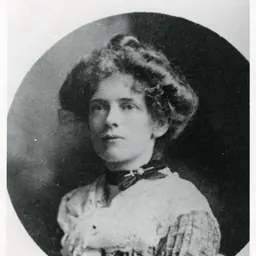

Contemporaries
People whose lives overlapped Cornelia Foster Bradford's

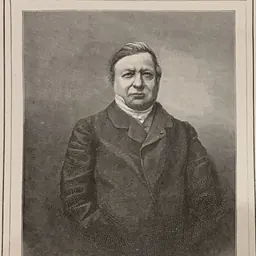
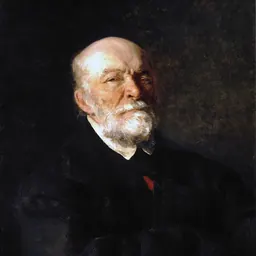



Frequently asked questions
Who was Cornelia Foster Bradford?
1847-1935 , social reformer
When was Cornelia Foster Bradford born?
Cornelia Foster Bradford was born on 4 December 1847 in Granby.
When did Cornelia Foster Bradford die?
Cornelia Foster Bradford died on 15 January 1935 in Montclair.
What was Cornelia Foster Bradford's occupation?
Cornelia Foster Bradford was a social worker.
What was Cornelia Foster Bradford known for?
Cornelia Foster Bradford was known for Whittier House (Jersey City, New Jersey).
Sources & further reading
· Wikipedia: Cornelia Foster Bradford
· DBpedia: Cornelia Foster Bradford
Cite this page
APA: Biography.guide. (2026). Cornelia Foster Bradford. https://biography.guide/cornelia-foster-bradford/
MLA: "Cornelia Foster Bradford." Biography.guide, https://biography.guide/cornelia-foster-bradford/.
Chicago: "Cornelia Foster Bradford." Biography.guide. https://biography.guide/cornelia-foster-bradford/.
Data last updated: 2026-09-26 · Spot an error? Report a correction.
Page generated 2026-09-27 05:13 UTC