
About Cora DuBois
Lived 1903 – 1991 (aged 87). Cora DuBois was an American anthropologist and university teacher.
Cora Alice Du Bois (October 26, 1903 – April 7, 1991) was an American cultural anthropologist and a key figure in culture and personality studies and in psychological anthropology more generally. She was Samuel Zemurray Jr. and Doris Zemurray Stone-Radcliffe Professor at Radcliffe College from 1954. After retirement from Radcliffe, she was Professor-at-large at Cornell University (1971–1976) and for one term at the University of California, San Diego. president of the American Anthropological Association in 1968–1969, and of the Association for Asian Studies in 1969–1970, the first woman to be allowed that honor. Du Bois was more interested in the question of the dividing line between cultural behavior and psychologically foundational human behavior, and thought this specific physiological condition (menstruation) would be a good place to study this question. However, there wasn't sufficient data available to her at that time. Subjects discussed in the text include the puberty and marriage preparation ceremonies for girls. The puberty ceremony includes the piercing of the girl's nasal septum and fasting, while the marriage ceremony includes bride prices discussed before marriage, and the presentation of gifts to the prospective mother-in-law. Of the stories discussed in the text, there are three main categories. First are the bolas, which take up the bulk of storytelling. Second are the ninas, which are based on love songs. The third and final type are anecdotes, which is a name used by the researchers themselves, not the Wintu.
Work in Indonesia and OSS From 1937 to 1939, Du Bois lived and conducted research among the Abui people on the island of Alor, part of the Dutch East Indies, now Indonesia. She collected detailed case studies, life-history interviews, and administered various personality tests (including Rorschach tests), which she interpreted in collaboration with Kardiner and published as The People of Alor: A Social-Psychological Study of an East Indian Island in 1944. One of her major theoretical advances in this work was the concept of "modal personality structure". With this notion she modified earlier ideas in the Culture and Personality school of anthropology on "basic personality structure" by demonstrating that, while there is always individual variation within a culture, each culture favors the development of a particular type or types, which will be the most common within that culture. Her work strongly influenced other psychiatric anthropologists, including Robert I. Levy, with his person-centered ethnography, and Melford Spiro.
Like many other American social scientists during World War II, Du Bois served as a member of the Office of Strategic Services (OSS) working in the Research and Analysis Branch as Chief of the Indonesia section. In 1944 she moved to Ceylon (now Sri Lanka) to serve as chief of research and analysis for the Army's Southeast Asia Command.
Later work and Harvard career She left the OSS after World War II and from 1945 to 1949 was Southeast Asia Branch Chief in the State Department's Office of Intelligence Research. Du Bois asserts that these assumptions have proved valid for the American middle class over the last 300, and expects that to continue in the future. In 1957, she reviewed Chinese Society in Thailand: An Analytical History by G. William Skinner, comparing it to works by Victor Purcell and Kenneth Landon. Du Bois described Purcell's work as a monumental compilation.
She conducted research between 1961 and 1967 in the temple city of Bhubaneswar in the Indian state of Orissa, where a number of graduate students in Anthropology and Social Relations conducted fieldwork.
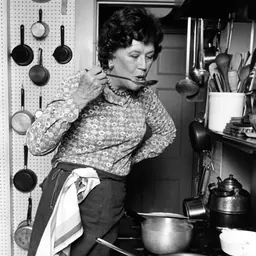
In 1970 she retired from Harvard but continued teaching as Professor-at-large at Cornell University (1971–1976) and for one term at the University of California, San Diego (1976). They lived together as a couple and in the mid-1950s they visited Paul and Julia Child in Paris. Du Bois' obituary in The New York Times called Taylor "her longtime companion."
Selected works
Cora Du Bois (1950). Review of The Kalingas, Their Institutes, and Custom Law. Arlington, Virginia: American Anthropological Association
Cora Du Bois (1957). Review of Chinese Society in Thailand: An Analytical History. Philadelphia, Pennsylvania: The American Academy of Political and Social Science Richard Taub, sociologist Richard A. Shweder, cultural anthropologist and cultural psychologist, Orissa
Don’t just read it —
keep it.
Full-length biographies made to live with: read them, listen on the way to work, watch them tonight.
- E-book
- Audio
- Video
Instant download · yours to keep · every purchase keeps this site free
Important facts
Family & relationships
People in Cora DuBois's life
Named in this biography and alive at the same time




Related people
Same field, nearest in time


Contemporaries
People whose lives overlapped Cora DuBois's
Frequently asked questions
Who was Cora DuBois?
anthropologist, academic (1903–1991)
When was Cora DuBois born?
Cora DuBois was born on 26 October 1903 in New York City.
When did Cora DuBois die?
Cora DuBois died on 7 April 1991 in Cambridge.
What was Cora DuBois's occupation?
Cora DuBois was an anthropologist and university teacher.
What nationality was Cora DuBois?
Cora DuBois was American.
Sources & further reading
Cite this page
APA: Biography.guide. (2026). Cora DuBois. https://biography.guide/cora-dubois/
MLA: "Cora DuBois." Biography.guide, https://biography.guide/cora-dubois/.
Chicago: "Cora DuBois." Biography.guide. https://biography.guide/cora-dubois/.
Data last updated: 2026-09-22 · Spot an error? Report a correction.
Page generated 2026-09-27 05:19 UTC