
Consuelo Berges
Spanish translator, journalist, writer and biographer
About Consuelo Berges
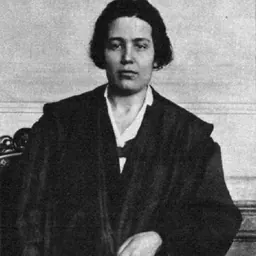
Lived 1899 – 1988 (aged 88–89). Consuelo Berges was a Spanish translator, writer, journalist, biographer and feminist.
Consuelo Berges Rábago (1899 – 23 December 1988) was a Spanish translator, journalist, writer, and biographer.
Biography The daughter of a single mother belonging to a family of freethinkers and republicans, Consuelo Berges did not go to school. She was educated by reading everything in the extensive family library, in Spanish and French.
At 15, she moved to Santander, to the home of her father's family, to prepare for the entrance exam to the Normal School of Teachers, whose instructors came from Madrid's Higher School of Teaching, using methods inspired by the new pedagogical theories of the Institución Libre de Enseñanza.
After finishing her training, she worked in Cabezón de la Sal, where she started at the Torre Academy, an initiative of Matilde de la Torre, who did not have a teaching degree, to prepare high school students. There she met , who was an inspector of primary education, and founder of the Santander afternoon newspaper . like her friend Paul Claudel, and insistently invited the anarchist and anti-clerical Berges to visit churches and attend mass, so she ended up shying away from their relationship.
In the newspapers and magazines to which she contributed, she defended her liberated ideas and the women's vote advocated in the Congress of Deputies by her friend Clara Campoamor, against the opinion of Victoria Kent and those with her who thought that women – under the powerful influence of the church – were not yet in a position to exercise true public autonomy, and would vote mostly conservatively.
At the end of 1931, she arrived in Madrid, summoned by Campoamor, who proposed several positions and destinations in the new Republic, which Berges rejected. She continued writing articles to be able to live, and also to defend her ideas, while working as a librarian at the Archives of the Provincial Charity Board. She collaborated on the publications of the CNT, FAI, and Mujeres Libres. Under the initiation name of Yasnaia, she was a member of the Masonic lodge of Adopción Amor, constituted in Madrid on 2 December 1931 under the auspices of the Mantua lodge and dependent on the Spanish Grand Lodge. Her activities were focused on the achievement of equality of Masonic rights for men and women. In her article entitled "La mujer y la masonería" (Women and Freemasonry), she states:
In 1935, to avoid the censorship of the "black biennium" of Lerroux and Gil-Robles, she clandestinely published her book Explicación de Octubre about the Revolution of 1934, which was widely disseminated in Masonic and revolutionary circles.
In July 1936, with the military uprising, the Provincial Charity Board sent her to take charge of the Guindalera orphanage, which had been abandoned by the nuns. Together with several volunteers, she was able to evacuate the children to save them from the bombings, crossing half of Spain at war, to get to Granollers. Once there, she left the children in the care of her collaborators and went to Barcelona. There, she worked at the magazine of Mujeres Libres with Baltasar Lobo – who created graphic designs and drawings – Rosa Chacel, Soledad Estorach, Carmen Conde, Pepita Carpeña, Sara Berenguer, Suceso Portales, María Jiménez, , Lola Iturbe, Antonia Fontanillas, and Mercedes Comaposada. She actively supported literacy initiatives (50% of Spanish women were illiterate), information about contraceptive methods, against forced prostitution, offering dignified labor alternatives, and claiming the labor, social, and family rights of women that her revolutionary associates wanted to leave in the background or ignore.
In February 1939, Berges joined the human tide that fled on foot, under bombing, to France. In Portbou, the group was detained outdoors for more than 24 hours, without warm clothes or food, until they were taken to Cerbère, vaccinated, and put on a train to an unknown destination. In Perpignan she managed to flee, but was arrested and taken to another train which arrived two days later, to the capital of the department of Haute-Loire, where she was interned along with more than 600 men, women, and children who had fled Spain only to end up confined in concentration camps.
She escaped again, without papers or money, and arrived in Paris, where her friends Baltasar Lobo and Mercedes Comaposada welcomed her, aided by Picasso. She lived in Paris, in hiding, for four years, and survived by teaching Spanish and writing articles for newspapers and magazines in Argentina. In 1943 she was arrested by the Germans, who upon learning she was undocumented, believed that she was Jewish. During the months she remained in custody, she deliberated between declaring herself a Jew or a Spaniard to avoid being repatriated to Spain. In the end the Germans decided for her, handing her over to the authorities at the Spanish border, who sent her to a concentration camp with other repatriates.
Thanks to the help of her friend Matilde Marquina and her relative Luis de la Serna, who offered to act as guarantors, Berges avoided jail. However, she was not allowed to work as a teacher, nor to write in the press. She could not sign the articles she sent abroad without fear of serious reprisals, and as a last resort, to survive, she translated works from French, by authors such as Saint-Simon, La Bruyère, Flaubert, Proust, Stendhal, and .
In 1982, she established the , which, since 1990, has been given for translations from French into Spanish. However, in 1983 she requested a literary creation scholarship from the Ministry of Culture, as a last resort to facilitate her economic subsistence.
Consuelo Berges died in Madrid at age 89.
Works Escalas 1930, Buenos Aires, Talleres Gráficos Argentinos, 1930 Concepción Arenal: Algunas noticias de su vida y obra, Edit Gráf. Maxera y Cia, 1931 "La mujer y la masonería", Boletín Oficial de la GLE, August–September 1932 Explicación de Octubre, 1935 Stendhal. Su vida, su mundo, su obra, Madrid, Aguilar, 1962 Stendhal y su mundo, Madrid, Alianza Editorial, 1983
Selected translations
Don’t just read it —
keep it.
Full-length biographies made to live with: read them, listen on the way to work, watch them tonight.
- E-book
- Audio
- Video
Instant download · yours to keep · every purchase keeps this site free
Important facts
People in Consuelo Berges's life
Named in this biography and alive at the same time






Related people
Same field, nearest in time


Contemporaries
People whose lives overlapped Consuelo Berges's




Frequently asked questions
Who was Consuelo Berges?
Spanish translator, journalist, writer and biographer (1899–1988)
When was Consuelo Berges born?
Consuelo Berges was born in 1899 in Ucieda.
When did Consuelo Berges die?
Consuelo Berges died on 23 December 1988 in Madrid.
What was Consuelo Berges's occupation?
Consuelo Berges was a translator, writer, journalist, biographer and feminist.
What nationality was Consuelo Berges?
Consuelo Berges was Spanish.
Sources & further reading
Cite this page
APA: Biography.guide. (2026). Consuelo Berges. https://biography.guide/consuelo-berges/
MLA: "Consuelo Berges." Biography.guide, https://biography.guide/consuelo-berges/.
Chicago: "Consuelo Berges." Biography.guide. https://biography.guide/consuelo-berges/.
Data last updated: 2026-09-22 · Spot an error? Report a correction.
Page generated 2026-09-27 05:06 UTC